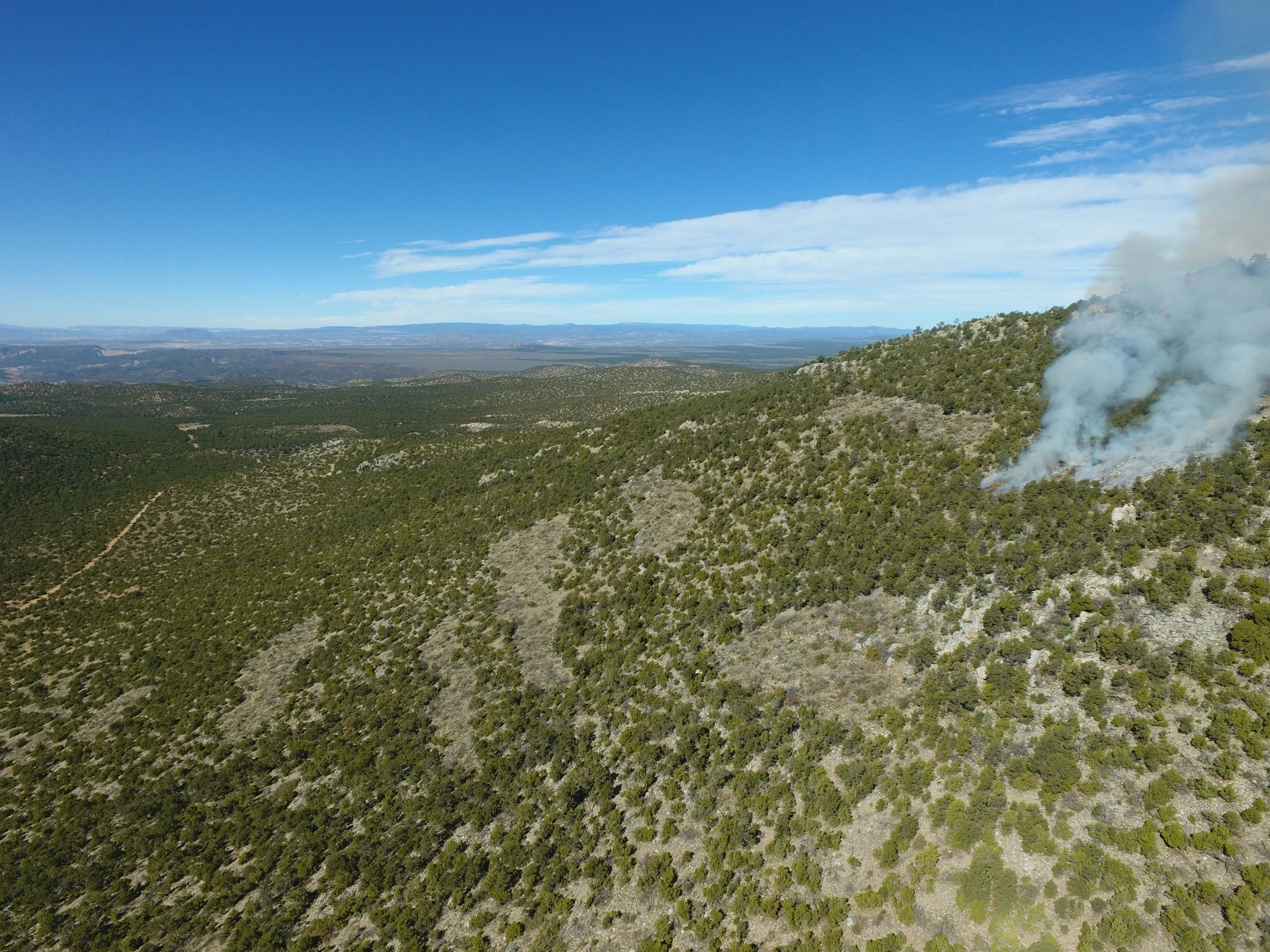
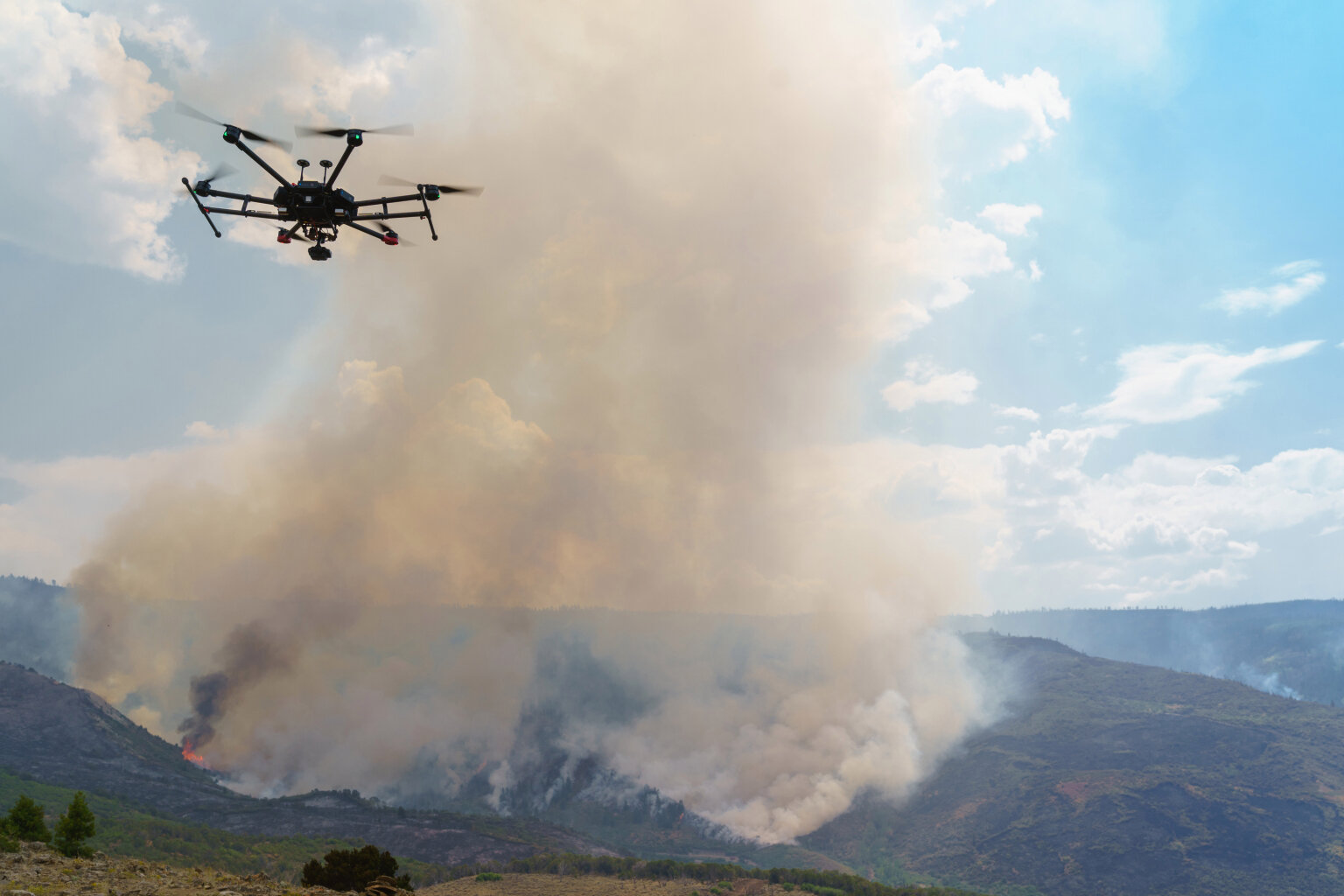
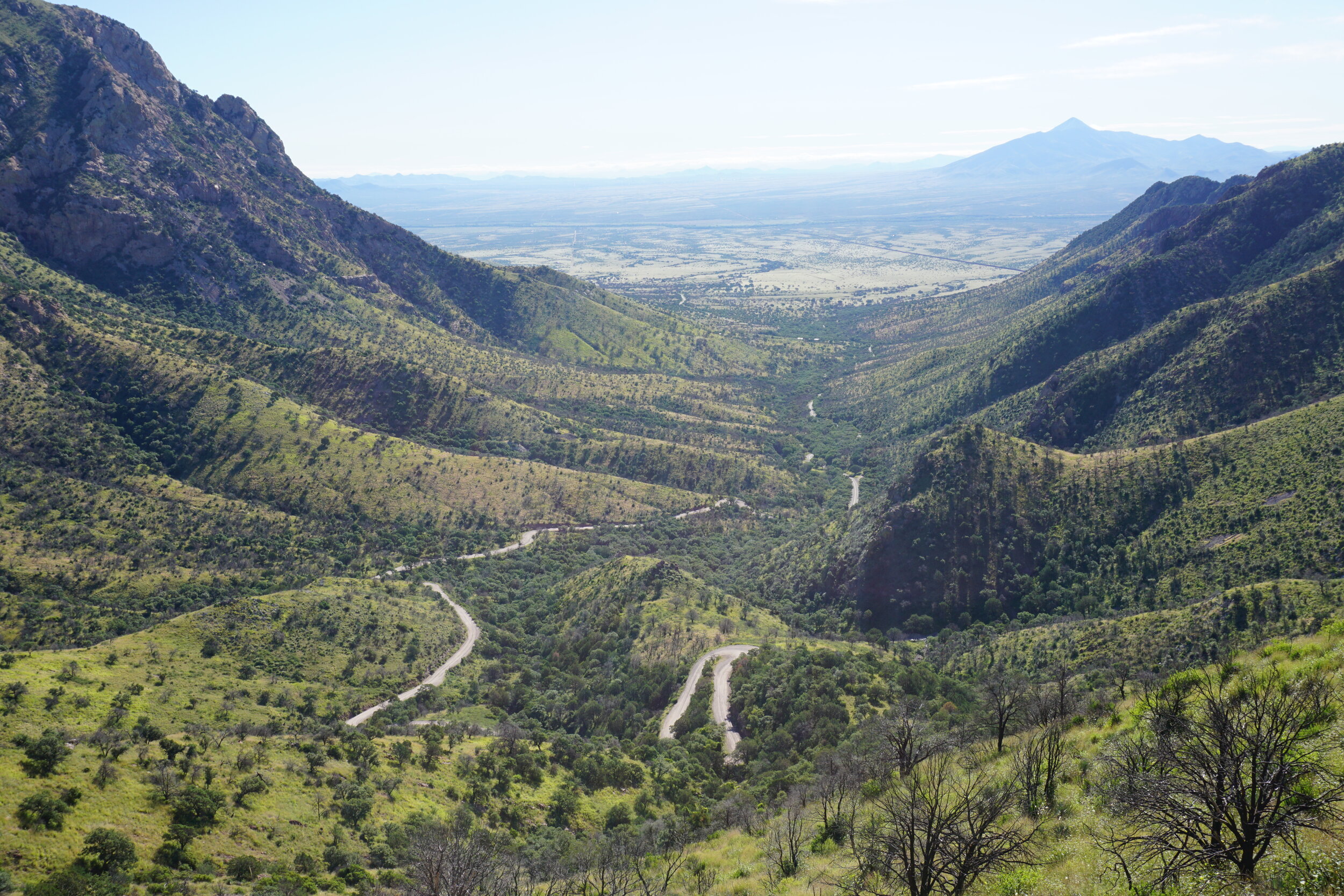
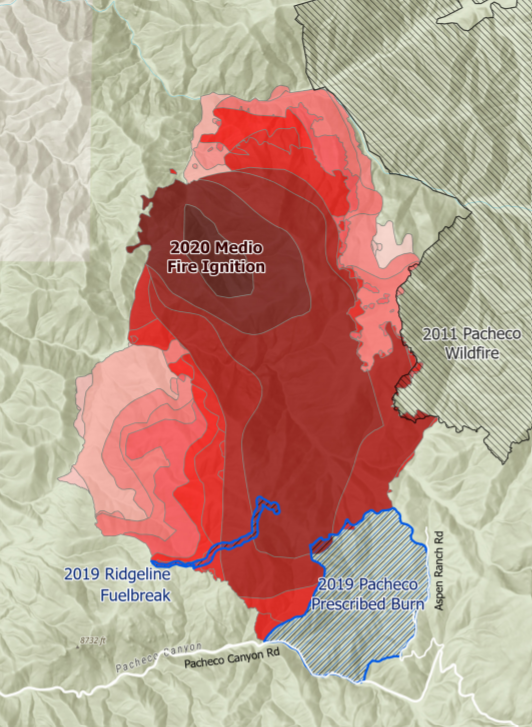
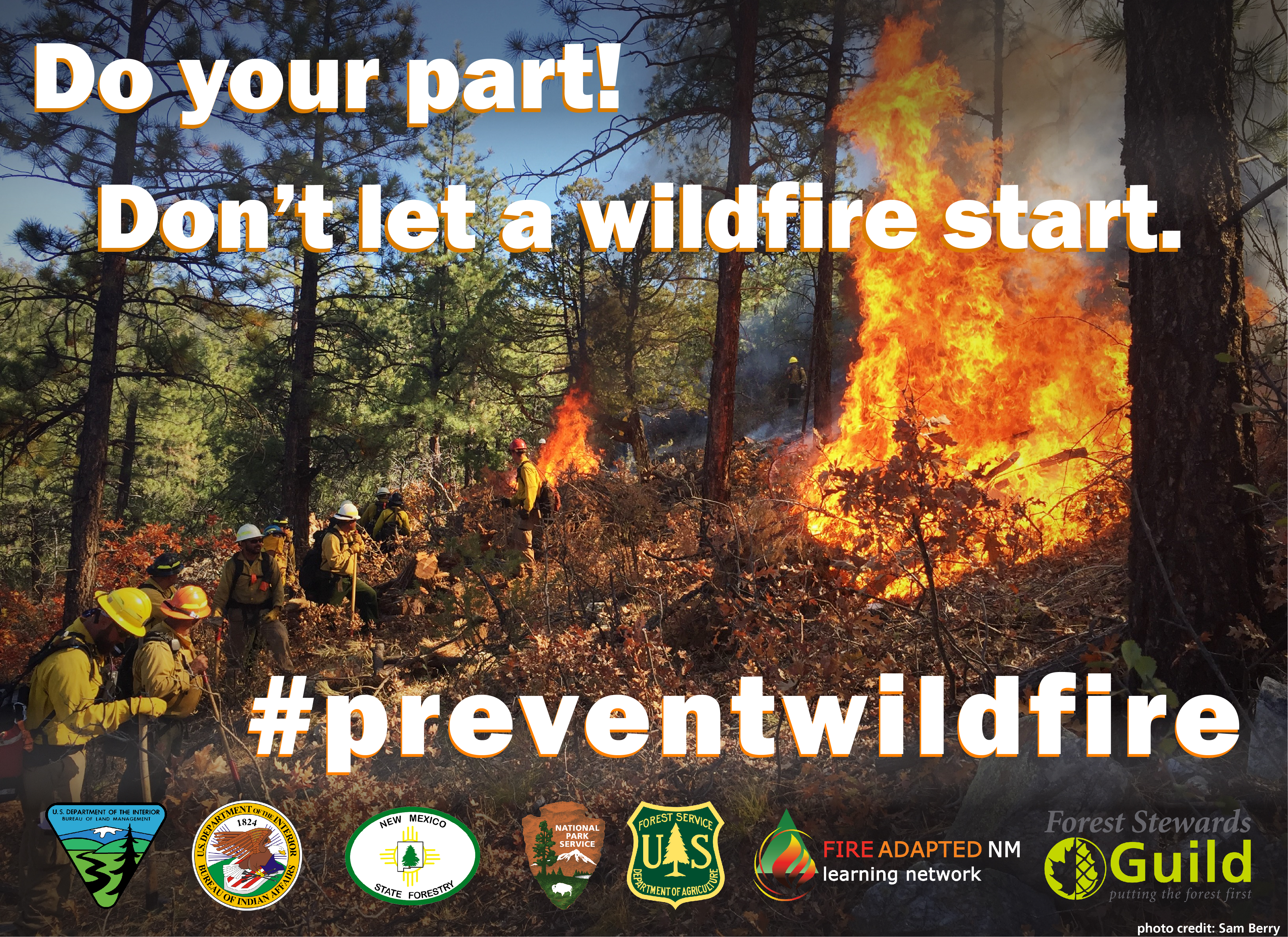
Fire managers on the Santa Fe National Forest (SFNF) are taking advantage of a lightning strike that took place on Mother’s Day to achieve pre-determined resource objectives on about 1,500 acres on the Pecos/Las Vegas Ranger District. Managing the Cuervito Fire will achieve significant benefits on the ground, including safer communities and a healthier forest.
Click here to read the whole press release.
This is a great time to learn a bit more about managing wildfire for resource benefit, and how this is an important component of current and future fire management strategies.
A briefing paper, titled “Managing Wildfire fore Resource Benefit: What is it and Is it Beneficial?” by Carrie Berger, Extension associate; Stephen Fitzgerald, silviculture Extension specialist and professor; Daniel Leavell, Extension agent, Klamath Basin Research & Extension Center and assistant professor (practice); shares the following about managing wildfire for resource benefit:
“In 2009, the Federal Wildland Fire Policy was implemented across agencies to ensure a consistent approach to managing wildfire. The policy allows wildfire to be managed for resource benefit on public land in one area of the fire while actively suppressing it in another area where people, homes, infrastructure, or other values at risk (e.g., ecologically important habitats, historically significant cultural sites) are potentially threatened. Local and state jurisdictions, however, are often bound by law to provide full wildfire suppression to protect private land and values at risk.
Managed wildfire requires extensive, advance land management planning that takes into account the risk of damage or loss from wildfire and the increased probability of positive outcomes. Location, available resources, predicted weather, topography, air quality, and predicted fire behavior are all factors that contribute to fire management decisions within the land management planning process.
So, the question remains: Are managed wildfires for resource benefit beneficial? Under certain circumstances, yes. Managed wildfire has the potential to consume built-up fuels and increase the health and resilience of forests. Reducing fuels may also make the landscape less susceptible to a larger and potentially more severe wildfire later. Additionally, managing naturally ignited wildfires allows fire managers to maintain the important role of fire, where fire is a natural and frequent disturbance component of the ecosystem (see the sidebar case examples). The Science Analysis of The National Cohesive Wildland Fire Management Strategy concludes: “Managing wildfire for resource objectives and ecological purposes is a useful tool for managing fire-adapted ecosystems and achieving fire-resilient landscapes, but has limited potential for broad application throughout the nation because of its inherent risk and statutory constraints.”
To learn more about managing wildfire for resource benefit, click here to read the whole briefing paper.