Happy Wednesday FACNM community!
Today, we’re spotlighting the work and insights of the Placitas Resilience and Emergency Preparedness Alliance (PREP) and its president, Allen Saville. Alongside PREP’s story, we’re also sharing funding resources, upcoming learning opportunities, and job openings to support New Mexico communities in becoming more fire adapted.
This Wildfire Wednesday features:
Wishing everyone a wonderful start to spring,
Megan
March FACNM Leader Feature
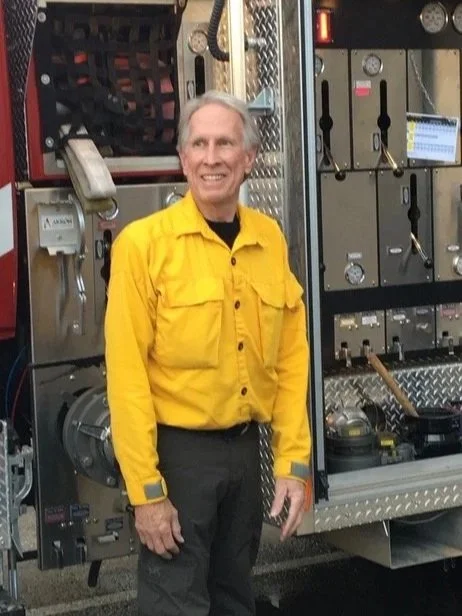
As President of the Placitas Resilience and Emergency Preparedness Alliance (PREP), Allen Saville has become a force within the FACNM Network in less than a year of involvement. Under his leadership, PREP has advanced meaningful community outreach efforts and continues to strengthen wildfire preparedness across Placitas.
Below, Allen shares PREP’s experiences while on the path to building a more fire-adapted community and more about the team that has built such momentum in the past year.
The Beginning
About a year ago there was a meeting at the Placitas Community Library. It was one of those public information sessions and the speaker was telling us about wildfire risk reduction activities in other communities. At some point a member of the audience said: “We need to do something like that here in Placitas.”
The moderator, being both a good facilitator and respectful of the presenter, responded quickly: “Anyone interested in doing something in Placitas stay around after the meeting and we’ll talk.” A dozen people hung around after the meeting. That was the beginning.
There was a second meeting; a clear leader emerged. At the third meeting, it was obvious that people thought there was an important purpose and much work to be accomplished. The group set meetings for twice a month. Two months later, we were an official New Mexico nonprofit corporation and later received our tax-exempt status from the IRS. We composed bylaws, established a board of directors, developed a mission statement, and more.
While all of the organizational administrivia was happening, we organized three successful “community briefings” on emergency preparedness topics: (1) Fire Mitigation, (2) Emergency Evacuation, (3) Homeowner Insurance in Wildfire-Prone Communities. Attendance at these events ranged from 60 to 90 participants. A schedule for 2026 is in place with five such events – one in cooperation with the local Placitas Volunteer Fire Brigade.
PREP’s ongoing point of view is that there is a lot of work to do in cultivating an appropriate level of awareness of the importance of emergency preparedness in our community, but we’re off to a good start.
A Compelling Purpose
The official name of our organization - Placitas Resilience & Emergency Preparedness Alliance - is appropriate in that it tells you what we are all about, but it is a mouthful . . . We have become known as the PREP Alliance or just PREP.
We believe one of the things that has contributed to a good beginning is that the importance of being prepared for emergencies is self-evident:
When disasters and emergencies occur, both emergency service agencies and ordinary individuals have important roles in responding, surviving and recovering. Emergency preparedness on the part of both individuals and emergency services is often the key to a swift and effective response that saves lives and reduces injury and damage.
When you say this out loud, it is hard not to be supportive!
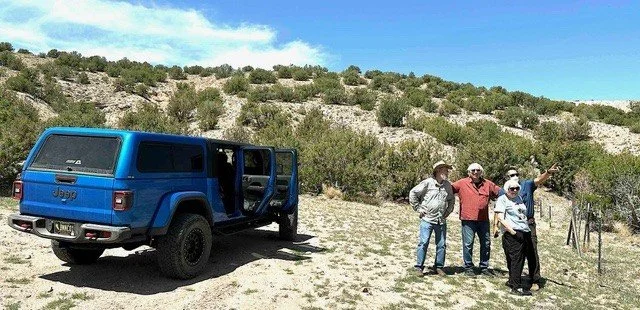
The PREP Alliance is a volunteer, nonprofit organization that organizes community programs and activities that cultivate emergency preparedness and resilience within and among individuals and organizations in the Placitas Area.
The PREP Alliance is concerned with preparedness for all types of emergencies - flood, earthquake, medical emergencies, and more – but the most widely appreciated and obvious emergency in our area today is wildland fire. We all know that wildland fire can be catastrophic and is wildly unpredictable. We also know that there is actually a lot that can, and should, be done to reduce the risk of wildfire. A significant challenge is that too many people do not appreciate the danger and do not know what they can, and should, do to help reduce the likelihood of significant injury and/or damage from a wildfire event.
The PREP Team
Another big reason for the initial successes of the PREP Alliance is serendipity. The word “serendipity” is intriguing to me. It is more than chance or blind luck. The real essence of serendipity is how people recognize the opportunity and how they act on it. There is a positive element of human agency involved. To my mind serendipity does not happen unless the people involved in the occurrence are curious, open-minded, and are actually looking for a break-through or opportunity.
Among the dozen people who attended that first meeting and continued on to form the PREP Team were:
Phillip – the guy who organized that first meeting and was the moderator for the meeting. He has significant professional and organizational experience, lives in a part of Placitas in which the wildfire risk is obvious and palpable, happens to be a part of the Land Grant community, and has a wonderful appreciation for the values of a number of the diverse communities in, and the history of, our area.
Dawn – has a professional background as a well-credentialed environmental engineer and just happens to be a Master Gardener. Dawn also has commitment to, and years of volunteer work with a number of Placitas nonprofit community organizations. She is also a talented researcher, extremely organized and no shy retiring violet in terms of seeing an idea through to a viable action plan.
Myron – another engineer experienced with huge engineering projects all over the world. Myron has tenacity – when he takes on a project he wants to get all of the facts, understand everything, and tries his dead-level best to produce the best possible result. He is also skilled in producing a detailed work break-down structure, estimating costs and identifying all of the risks that might be hidden in the endeavor.
Angelina – unassuming and most people might underestimate her value. She has an extremely diverse background that just happens to include working with the forestry service and has an appreciation for wildfire. Angelina also has “civic spirit,” truly wants the best for our community and is not afraid of learning new things. She also has a knack for finding out the informal and unwritten ways that the community works and seems to be able to strike up a conversation with just about anyone.
Jay – we are still uncovering all of his talents. His professional background is mostly in education at the university level (a lot of that involving communications). He just happens to be a great proof-reader. He is a musician, connected to the artistic community in Placitas and seems to know a fair bit about most of the community-based organizations in the Placitas area. Jay is willing to take on new things and helps manage our organization’s communication activities.
Jon – has been in Placitas ‘forever’ and has had a number of important leadership and management positions within the Coronado Soil and Water Conservation District and the system of acequias in the Placitas area. Acequias are not just about water distribution – they are about ‘water democracy,’ providing water for both irrigation and domestic water supply and stem from both Pueblo Indian and Spanish traditions. Jon has a deep commitment to environmental sustainability and valuable insight into the cultural heritage of the region.
Allen – My experience as a volunteer firefighter and EMT, responding to all kinds of emergency incidents helps me both appreciate the need for, and provides specific knowledge about, being prepared. I was also involved in cultivating emergency preparedness and resilience on a community-wide basis and received the Community Resilience Award in Boulder County. This gave me a perspective about emergency preparedness needs at a community scale.
I have been involved in large-scale, devastating wildland fires (like the Marshall Fire near Boulder Colorado), small wildfires, and structure fires. All of that provides direct, first-hand knowledge about wildland fire behavior. I have helped with evacuation efforts; rescued people in a national disaster flooding event; dealt with power outages that have lasted for more than a week; been a part of mountain search and rescue operations and more. All of this is great experience for appreciating the need for preparedness.
Others that have helped along the way, providing insight into the concepts of marketing, social media, operating audio/visual equipment, and a number of other subjects.
Collaboration and Support
From the very beginning, our outreach to other community-based organizations (CBOs) in the Placitas area has been met with wonderful collaboration in addressing emergency preparedness issues. We quickly established having regular monthly meetings with Sandoval County’s Emergency Manager. The members of the Placitas Volunteer Fire Brigade have been extremely helpful and we have also been invited to attend regularly scheduled board meetings of a number of the more significant Placitas community organizations.
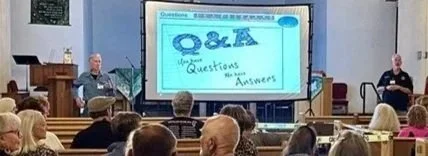
Allen Saville (Left) President of the PREP Alliance and Dan Heerding (Right) Sandoval County Emergency Manager co-presenting on the topic of “Evacuation” in one of the PREP Community Briefing series.
We have learned about a number of projects that CBOs were undertaking that we thought also had a close relationship to emergency preparedness and began to get involved too. We learned more about their community support objectives and they learned about ours. There are real efforts to find synergy in a spirit of mutual assistance.
FACNM has been a great resource in terms of a platform of introduction to individuals and organizations with goals and objectives similar to ours. The FACNM network has also been helpful in providing other sources of information and potential grant funding. Reaching out to individuals and organizations that we found through FACNM has provided our organization with another level of support and informational resources. Learning “who’s who in the zoo,” actually meeting and talking to those people, and learning through hearing about others experiences has been very instructive.
The Long View
The PREP Alliance understands that the distance between “here” and having the entire Placitas area even close to a wildfire prepared community is an extremely “long and winding road.” That distance is concerning, challenging, and intimidating and we are still trying to get comfortable with the frustrations along the way. But, it feels good to be getting started. Thanks to the PREP Alliance, that goal is actually a topic of discussion, and more and more people are paying attention. When you think about it – that’s actually a significant accomplishment all by itself.
Additional Resources and Upcoming Opportunities
Funding
FACNM Spring Microgrant - Application closes this Friday
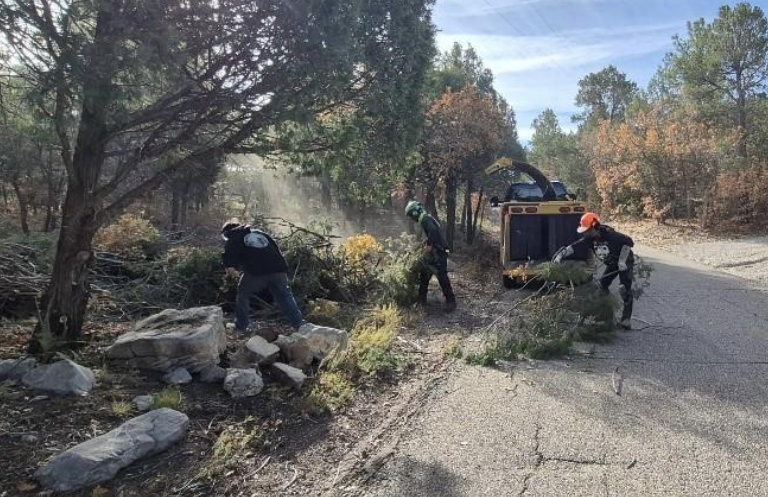
Looking to fund your community fire preparedness event? FACNM Leaders and Members are eligible to apply for grants awards of up to $2,000 to provide financial assistance for:
convening wildfire preparedness events,
enabling on-the-ground community fire risk mitigation work, or
developing grant proposals for the sustainable longevity of their Fire Adapted Community endeavor.
NMDA Noxious Weed Management Grant
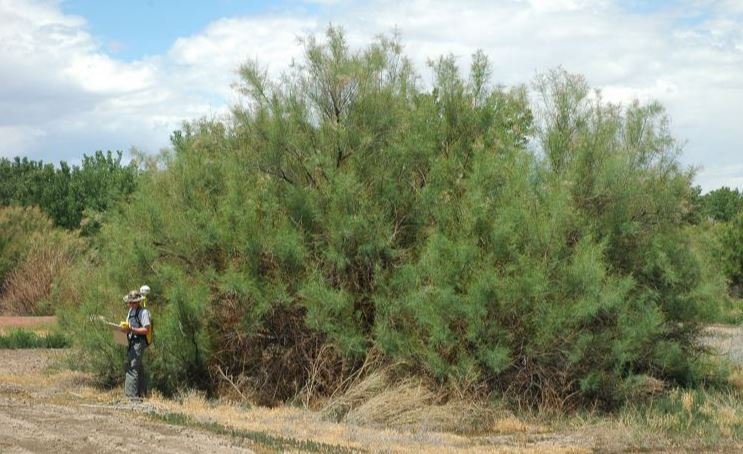
The New Mexico Department of Agriculture (NMDA) is awarding up to $60,000 for projects that improve the state’s economy and environment by managing noxious weeds in New Mexico. Projects must incorporate activities related to the prevention, control or eradication of state-listed noxious plant species. These activities must include some form of mapping or on-the-ground treatment. Projects that are solely Education/Outreach; or Planning, Capacity Development, & Partnership Building will not be considered for funding.
Eligible Applicants include:
Cooperative weed management areas
Soil & water conservation districts
Local governments, state political subdivisions, and special districts
Tribes, nations, & pueblos
Land grants-mercedes & acequias
Non-profits & non-governmental organizations (NGOs) with proven land management capacity
Webinars
Treatment Effectiveness: Lessons from ReSHAPE
March 19 | 10AM MST
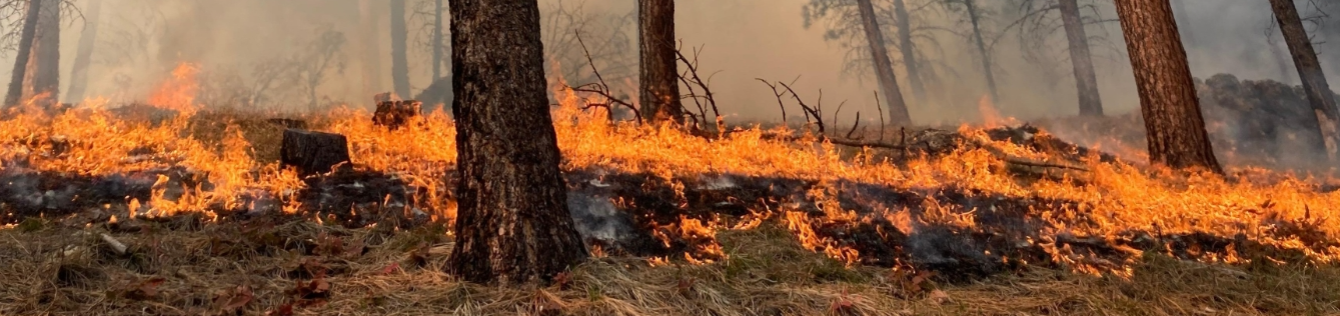
Interested in fuel treatments and wildfires? As one of the most widely used tools in wildfire risk reduction, managers, researchers, and communities want to know how fuel treatments (thinning, prescribed burns, etc.) are working. The answer is more nuanced than you might think.
Join researchers Anson Call and Nate Tomczyk on Thursday, March 19th at 10am MST for a free online webinar hosted by the Missoula Fire Lab. Topics will include:
What the data says about treatment effects on wildfires
How we define “working” and why the definition matters
How to move beyond correlation to causation when randomized experiments aren’t possible
Treating Dry Forest Landscapes to Promote Functioning Fire Regimes in the 21st Century
March 24 | 12PM MT
Managers are increasingly investing in restoration and fuel reduction treatments, yet key questions remain about how much of a landscape must be treated to reduce burn severity and restore functioning fire regimes. Join this webinar to learn about how treating larger areas in key locations impacts fire effects and how land managers can accomplish it. This presentation will dive into the results from an analysis of 5,084 fires over 16 years which allowed researchers to 1) quantify burned landscape treatment composition and 2) evaluate how the percentage of area treated influences inside-boundary, outside-boundary, and cumulative fire effects across three spatial scales and three major ecoregions.
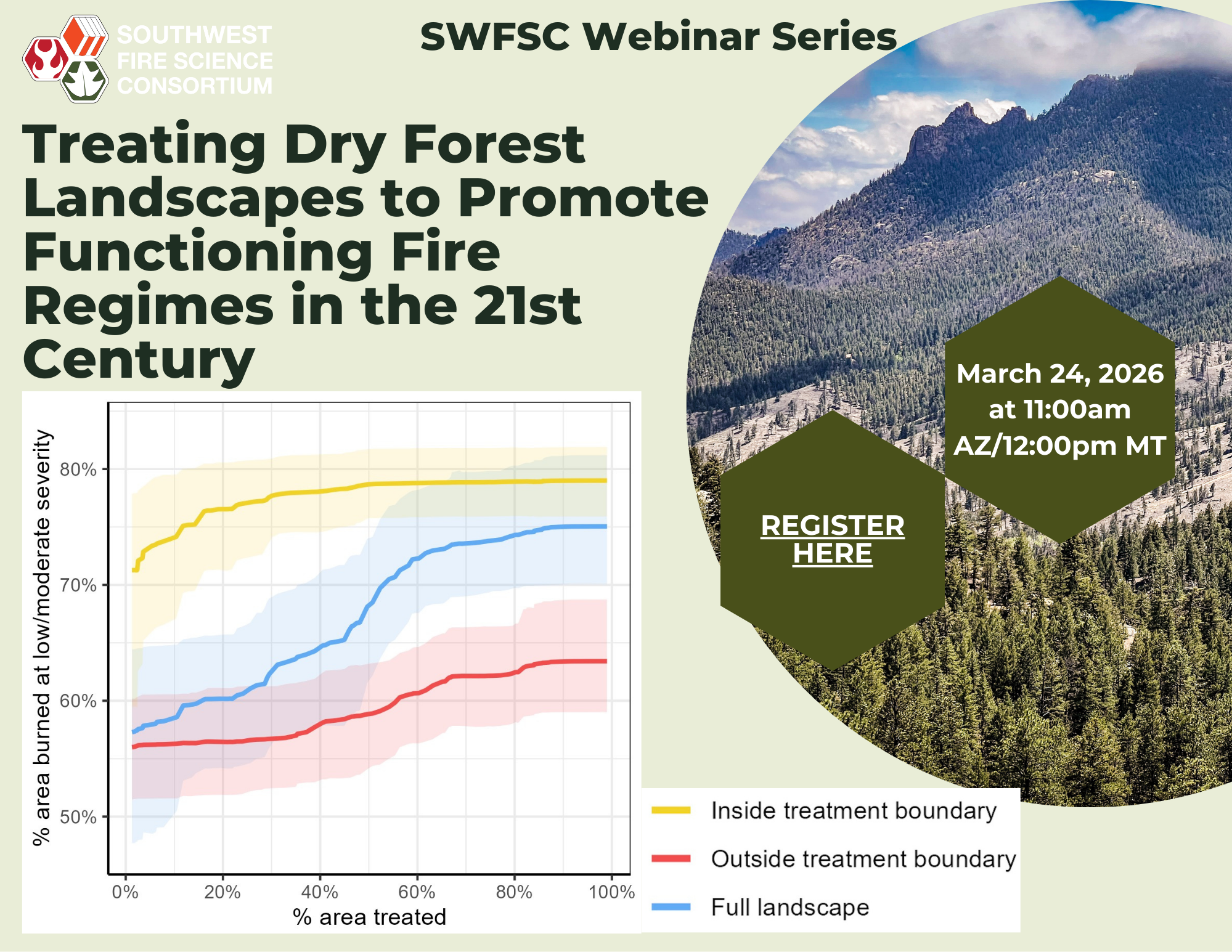
Presenter: Caden Chamberlain, Senior Forest and Fire Ecology Research Associate with the Colorado Forest Restoration Institute
Job Opportunities
The Forest Stewards Guild
Southwest Prescribed Fire Project Coordinator
The Prescribed Fire Project Coordinator will coordinate projects within the Guild’s fire management program in New Mexico, which seeks to find innovative ways to build fire adapted communities and landscapes by increasing implementation of prescribed fire on private and public land, creating training and education opportunities, increasing collaboration, and broadening the definition of fire management. This position supports programs including the All Hands All Lands Burn Network and the Forest Stewards Youth Corps Fire and Fuels Crews, in addition to other existing programs and landscapes across the region.
Application deadline: March 30, 2026
Southwest Forestry and Fuels Coordinator
The Forestry and Fuels Coordinator will support forest contractors and implement forest resilience projects on private and federal lands. This role builds upon the 2-3-2 Cohesive Strategy Partnership and the Rio Chama Collaborative Forest Landscape Restoration Program (CFLRP) to promote forestry projects for small acreage and underserved landowners and build local contractor capacity. This role requires excellent listening skills and the ability to foster relationships with diverse partners and the public. The successful candidate will demonstrate a proactive approach and a genuine enthusiasm for working collaboratively to achieve shared goals.
Application deadline: March 30, 2026
Training and Safety Officer for the New Mexico Forestry Division
The Training and Safety Officer for the New Mexico Forestry Division is responsible for planning, developing, and delivering wildfire training programs to forestry personnel, partner agencies, and local fire departments. This role ensures that all personnel are properly trained, certified, and prepared to respond effectively to wildland fire incidents in accordance with state and federal standards. The coordinator collaborates with various agencies to coordinate training schedules, conduct wildfire drills, and maintain training records and certifications.
Application deadline: March 20, 2026