Last Monday, New Mexico’s state forester enacted statewide fire restrictions prohibiting smoking, fireworks, campfires, and any prescribed, open, agricultural and/or debris burning on all non-municipal, non-federal, and non-Tribal lands statewide. This follows a suite of National Forest and other federal lands fire restrictions or closures in the Southwest. These restrictions, taken together, represent one aspect of wildfire preparedness: fire prevention. How do the other most common aspects - wildfire risk mitigation and evacuation planning and preparation - work in tandem with, or against, one another, and does emphasizing one approach work to the detriment of the others?
Today’s newsletter dives into new research that shows that folks who uptake one approach to wildfire adaptation tend to uptake others and discusses how to get over the initial barriers to engaging in wildfire preparation.
This Wildfire Wednesday features:
How Prevention, Mitigation, and Evacuation work together and encourage uptake of multiple wildfire adaptation actions
Upcoming Opportunities and Additional Resources
Job opportunity: Conservation Ambassadors in NM
Stay safe, and stay fire adapted!
-Rachel
How Prevention, Mitigation, and Evacuation work together
Complementarity of fire preparedness actions
“Homeowners are being asked to be prepared to leave and evacuate safely, and they’re also asked to make changes on their property to withstand a wildfire event... If we ask people to do evacuation preparation and mitigation, is it possible that there will be tradeoffs? We didn’t know how people make decisions about evacuation preparedness in relation to mitigation actions” (RMRS, May 2026).
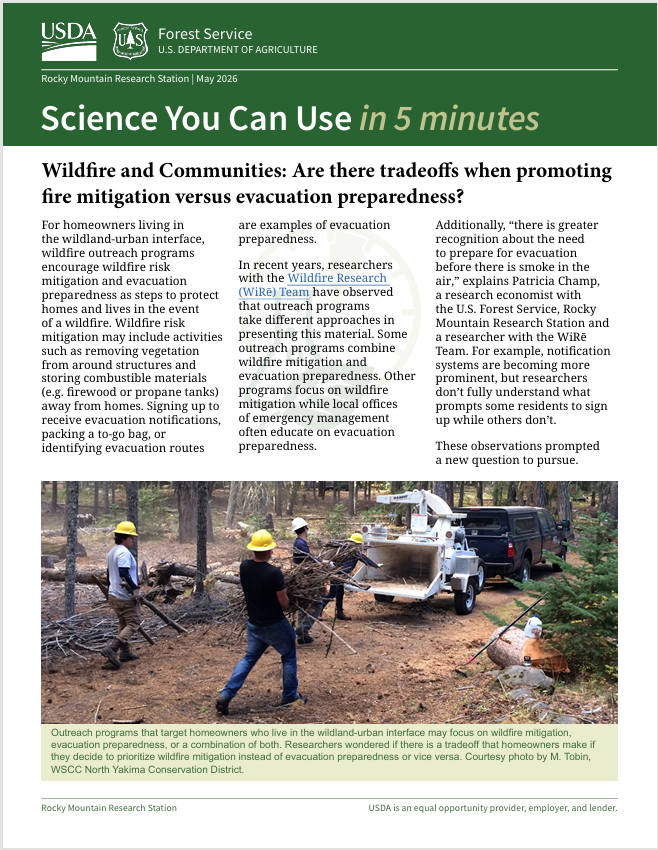
This excerpt from a new Science You Can Use publication from the USDA Rocky Mountain Research Station poses the question of whether there will be tradeoffs in resident fire preparedness actions if land managers and educators emphasize one proactive risk-reducing action - like evacuation preparation - over another - like risk mitigation via defensible space creation and home hardening. At a time when the number of people exposed to fires is growing and about half of Earth’s population resides in the wildland-urban interface, the need for locally-led, science-informed, multi-faceted, and grassroots fire preparedness is increasing. What researchers from WiRē found is that there is actually a positive feedback loop: homeowners who do more mitigation - and individuals who have more conversations about fire with their neighbors and fire professionals - are more prepared for evacuation. This is important, because completing evacuation preparation activities means lives may be saved.

This positive correlation is only one piece of the proactive puzzle; financial barriers, household beliefs on the efficacy of mitigation, and more continue to be major deterrents to risk mitigation actions. Effective wildfire management, as seen in the Fire Adapted Communities (FAC) framework, relies on combining mitigation with preparation (clear evacuation plans and alerts) and other parts of the FAC wheel for true fire preparedness. However, this research does suggest that residents who recognize the high risk of fire are more motivated to take all necessary precautions - in other words, if residents can be motivated to engage with fire preparedness in one way, they may be more likely to engage in multiple other ways, increasing their overall fire adaptation. . What does it all mean, taken together? Talking to your friends, neighbors, family, constituents, and community about fire adaptation - from prevention to risk mitigation to evacuation - matters, because the more that people are exposed to accurate and actionable fire preparation information, the more likely they are to take action.
The role of community planning
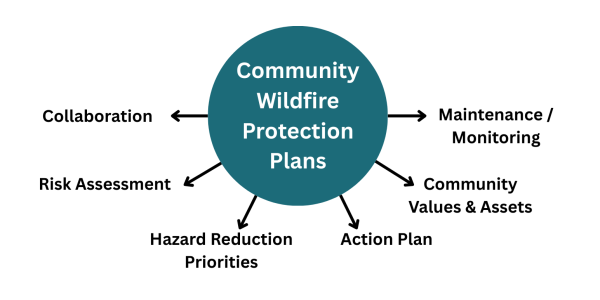
Since wildfires do not respect property lines or administrative boundaries, cooperation across landowners, government agencies, and jurisdictions is essential. Successful wildfire mitigation calls for collaborative planning and management where communities integrate various strategies – land-use planning, development regulations, building codes, and homeowner education – to live more safely amidst the ongoing threat of wildfires. Local government programs (like Community Wildfire Protection Plans) often incentivize both home mitigation and evacuation planning as a comprehensive package. Community preparation for fire and extreme event-related emergencies and potential evacuations is critical for ensuring community safety. Learn more about community emergency planning and the overlapping and complementary steps your community can take to be better prepared: North Coast recommendations and FAC Community Preparedness facilitation guide.
Upcoming Opportunities and Additional Resources
Webinars
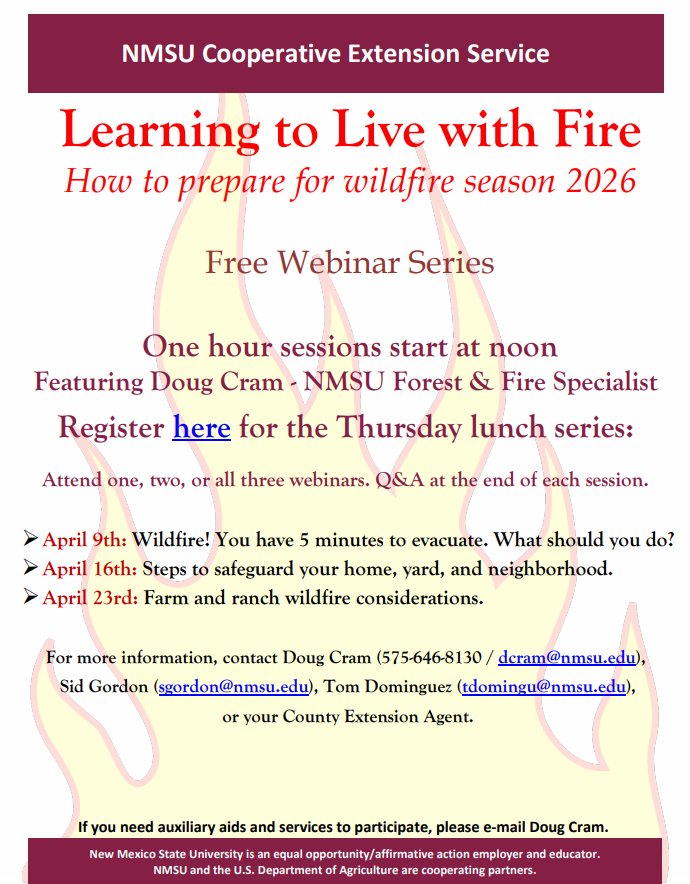
NMSU “Learning to Live with Fire” webinar series
Fire has no bounds on a dry, windy, spring day in New Mexico, regardless of whether you live in urban or rural environments defined by forest, rangelands, or deserts. Join New Mexico State University Cooperative Extension on Thursdays for a lunch & learn webinar to be better prepared for wildland fire.
April 16, 12 - 1PM: Steps to safeguard your home, yard, and neighborhood.
April 23rd, 12 - 1PM: Farm and ranch wildfire considerations.
RSVP here or on the website: Learning to Live with Fire
Post-Fire Assessment and Recovery training webinar series
The Washington DNR, Okanogan Conservation District and Washington State Conservation Commission Center for Technical Development (wactd.org) are offering a six-part series on post-fire assessment and recover for foresters and land managers. This series follows an early-April post-fire conference, After the Flames, hosted by the same organizations in Cle Elum, WA.
📅 Webinar Schedule:
April 22 – Post-Fire Hazard Assessments
April 29 – Using the LEAF Assessment Template
May 6 – Erosion Assessment & Mitigation
May 13 – Debris Management & Danger Trees
May 20 – Building a Recovery Funding Portfolio
May 27 – Pre-Fire Recovery Planning
…………………………….
Cultivando Conservación Job Opportunity
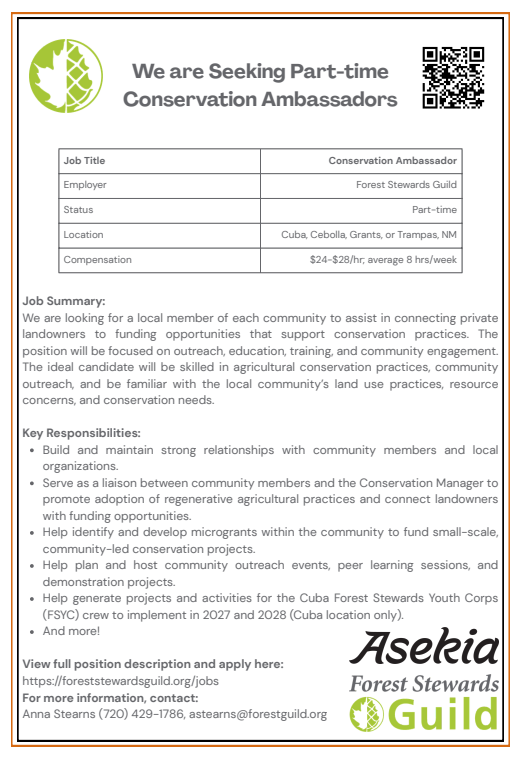
Cultivando Conservación, a program run in partnership between the Forest Stewards Guild and Asekia Inc., is working to connect northern New Mexican landowners to networking and funding opportunities that promote conservation practices in four rural New Mexican communities Cuba, Cebolla, Grants, and Trampas.
The program is hiring part-time conservation ambassadors in each community to assist in connecting private landowners to funding opportunities that support conservation practices. The position will be focused on outreach, education, training, and community engagement.
If interested, apply here: Conservation Ambassador, Forest Stewards Guild - Forest Stewards Guild
…………………………….
Educational videos for home hardening
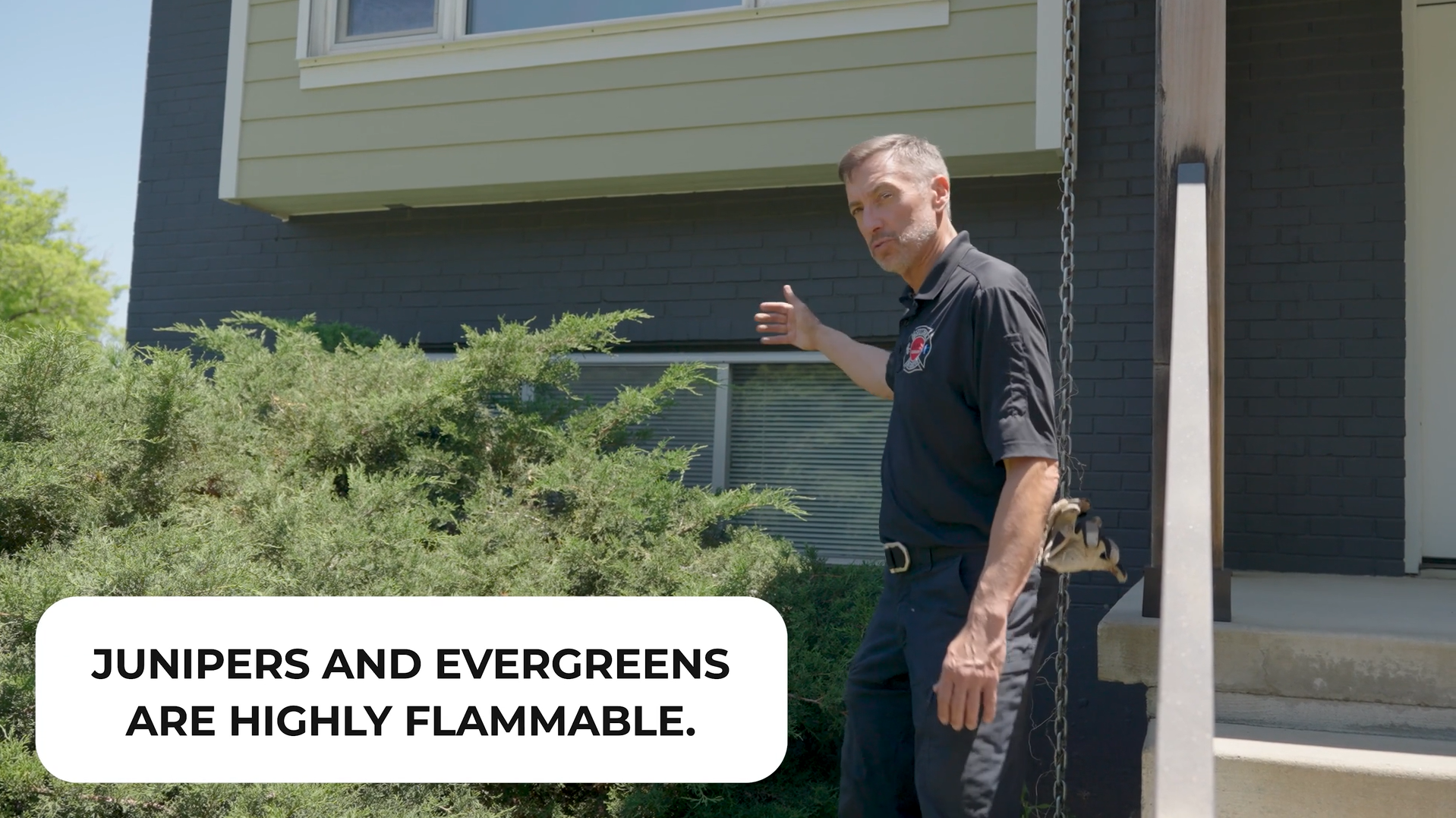
Still shot from the video on The Non-Combustible Zone. These videos contain recommendations for simple fire-resiliency actions in an easily digestible format.
Tools for drought conditions
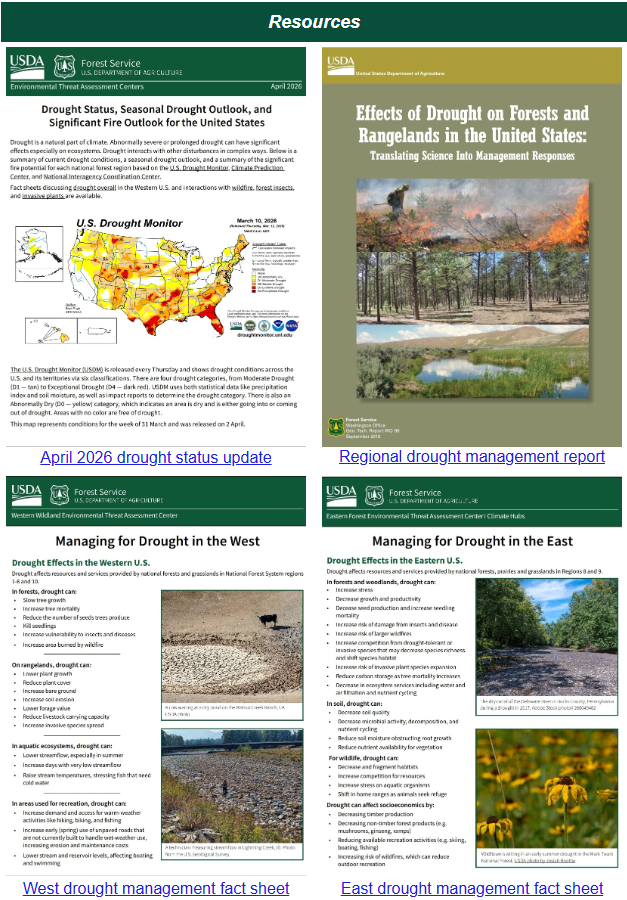
A warm winter across the West has reduced snowpack to record-low levels. This snow drought means less abundant fodder in rangelands and less streamflow in the waterways that shelter fish and give us drinking water, among other impacts. A recent special edition newsletter from the USDA Forest Service has a collection of resources, tools and fact sheets (including a fact sheet for managing for drought in the West) that may be useful following the warm and dry winter seen across much of the West.
…………………………….
Resources for prescribed burning
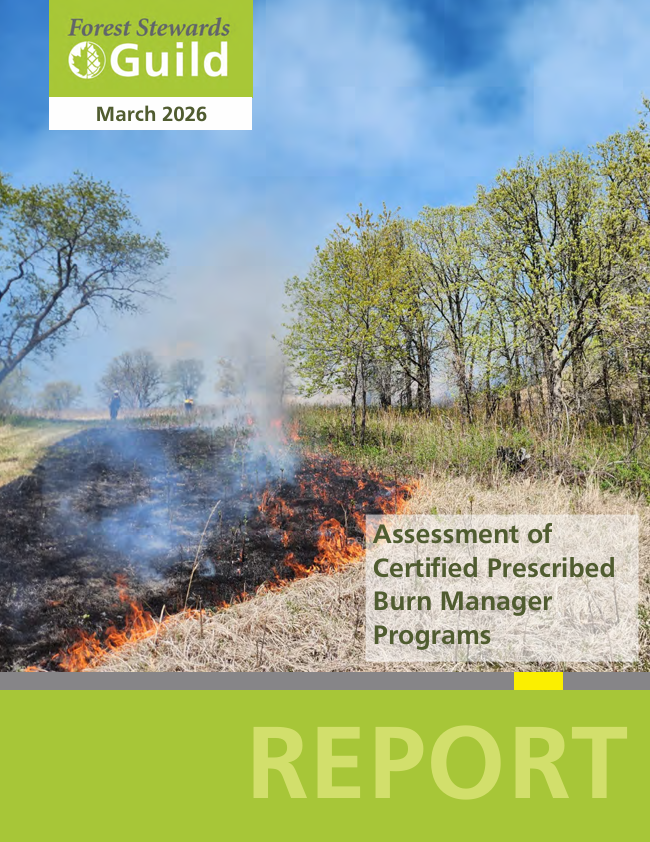
The Forest Stewards Guild, with support from the Fire Learning Network and others, has released the report National Assessment of Certified Prescribed Burn Manager Programs. The assessment, which follows-up on a 2020 report and is based on interviews across 43 states, is intended to help states that are considering creating or updating these programs. It contains lessons and recommendations by region and scenario as well as additional resources for managers. A recording of a webinar on the report will be available on the Southwest Fire Science Consortium YouTube page in the coming days.
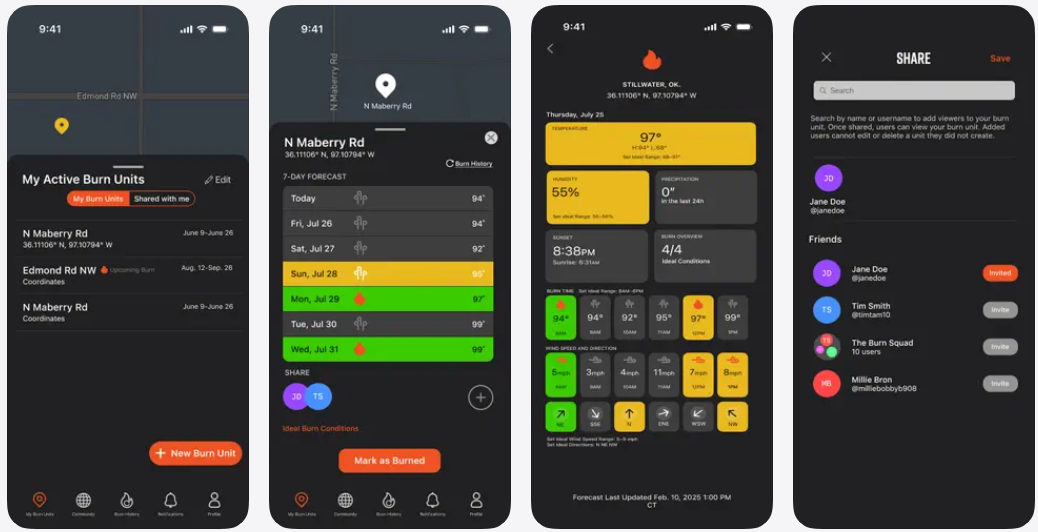
Oklahoma State University Extension, with support from the USDA, has developed a phone application for burn mangers and planners called Burn–Prescribed Fire Planner. It is now available for iPhones and iPads at the Apple Store (Android coming soon). The app helps fire practitioners monitor burn prescriptions and when conditions align with safe prescribed fire objectives by allowing users to enter multiple burn units then choose weather parameters for each burn. The app will notify users, up to seven days in advance, when weather conditions will be met for that burn. It can be used anywhere in the U.S., and burn units can be shared with others who have the app.
In the news: the High Country News article Why Intentional Fires Can Still Be Safe During This Dry Spring looks at some of the ways fire managers and cultural burners are getting important burning done ahead of wildfire season, in spite of widespread warm and dry drought conditions in the West. The article highlights how land managers are finding pockets of cool wet conditions, allowing them to safely reduce future fire risk. As a TNC Fire Program Manager says, “prescribed fires are all about the right place and the right time.”