Hello Fire Adapted readers,
The Frijoles Fire burning on the rugged and relatively inaccessible western slopes of the Sangre de Cristo Mountains is approaching 13,000 acres as of Wednesday morning (8/20/26). With 780 fire personnel responding, firefighter and public safety are the number 1 objective and the fire is being handled as a full suppression incident (inciweb.wildfire.gov). The namesake of this fire is the Rio Frijoles, near where the fire ignited. This cold snowmelt-fed river descends out of the Pecos Wilderness Area of the Sangre de Cristo Mountains, flowing roughly 13 miles before emptying into Santa Cruz Lake near Chimayo. The Frijoles Fire is an important reminder that forest health and water health are deeply connected. This week’s newsletter touches on watershed resilience to fire as we consider the impacts on this scarce desert resource.
This Wildfire Wednesday features:
Webinars
Upcoming Art x Fire art show opening weekend
Be well,
Rachel
The Connection Between Fire and Water
The basics
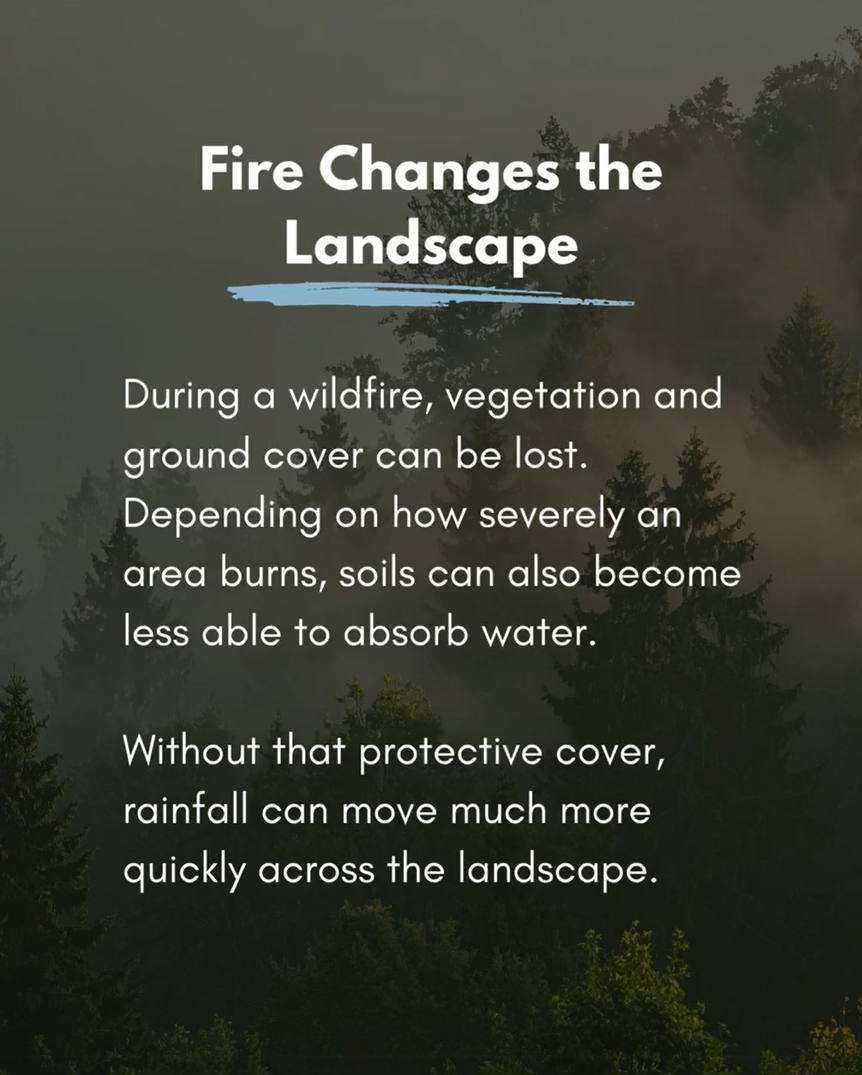
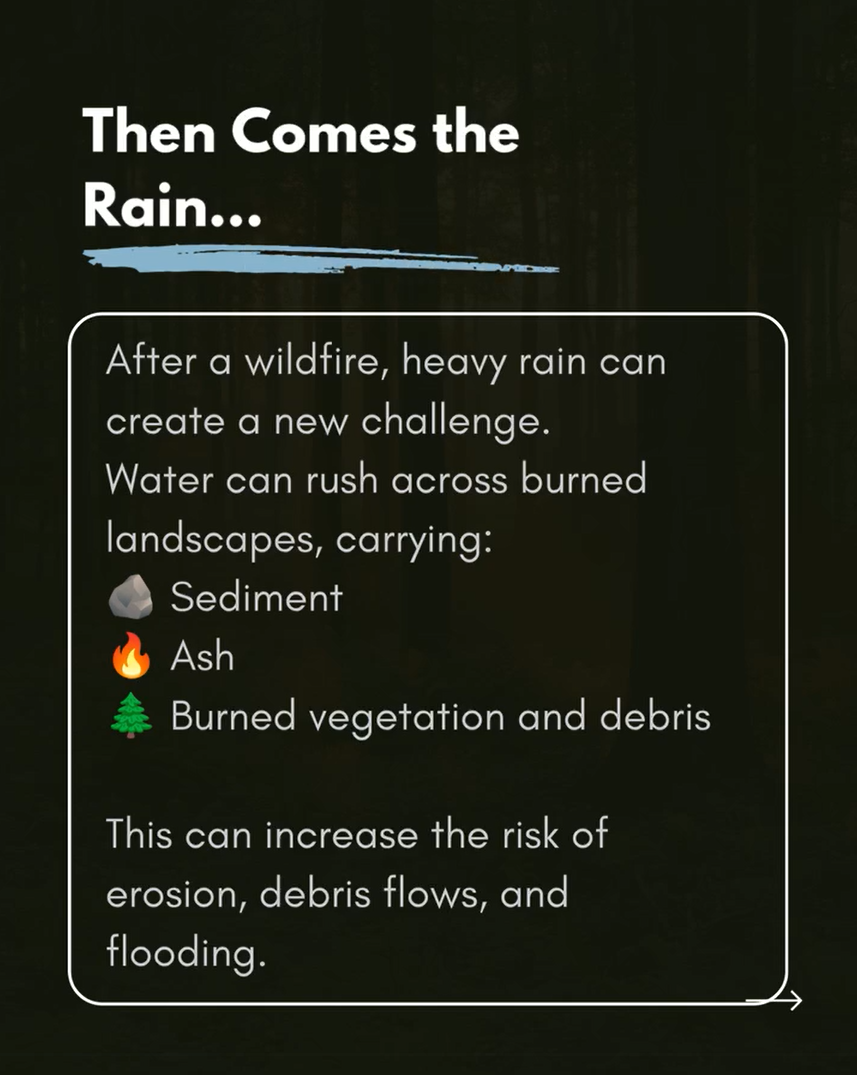
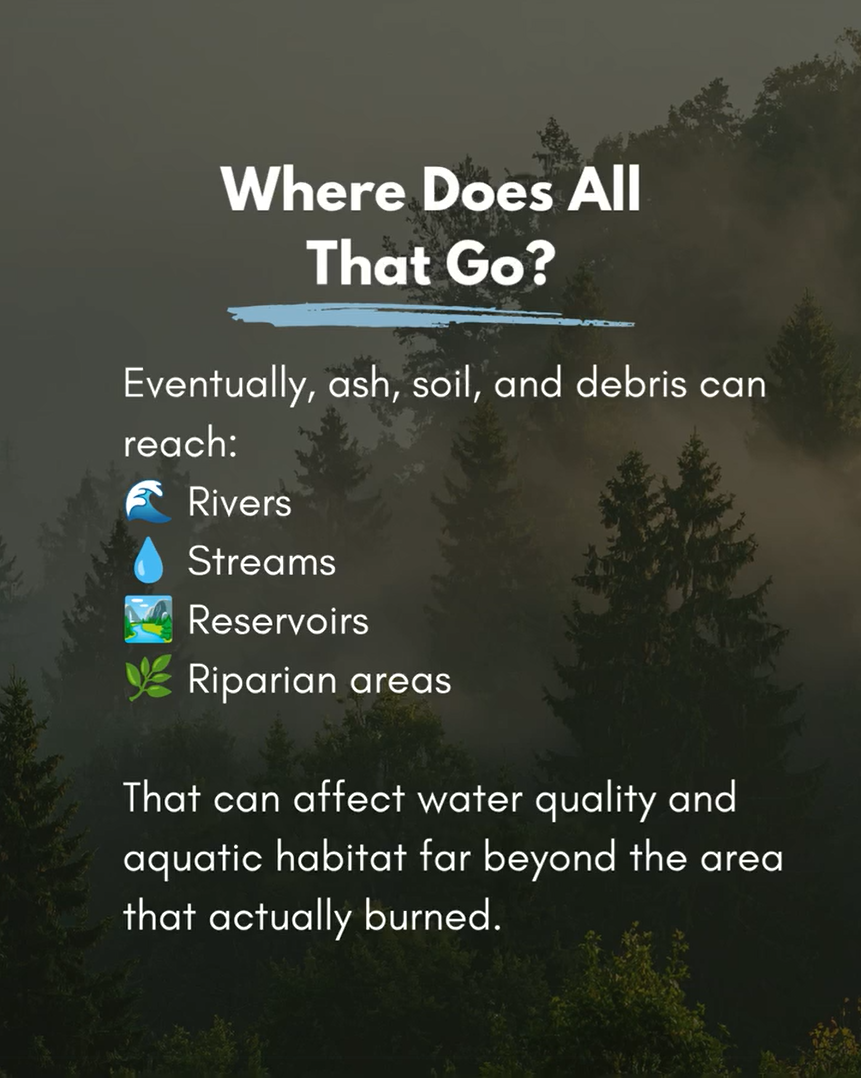
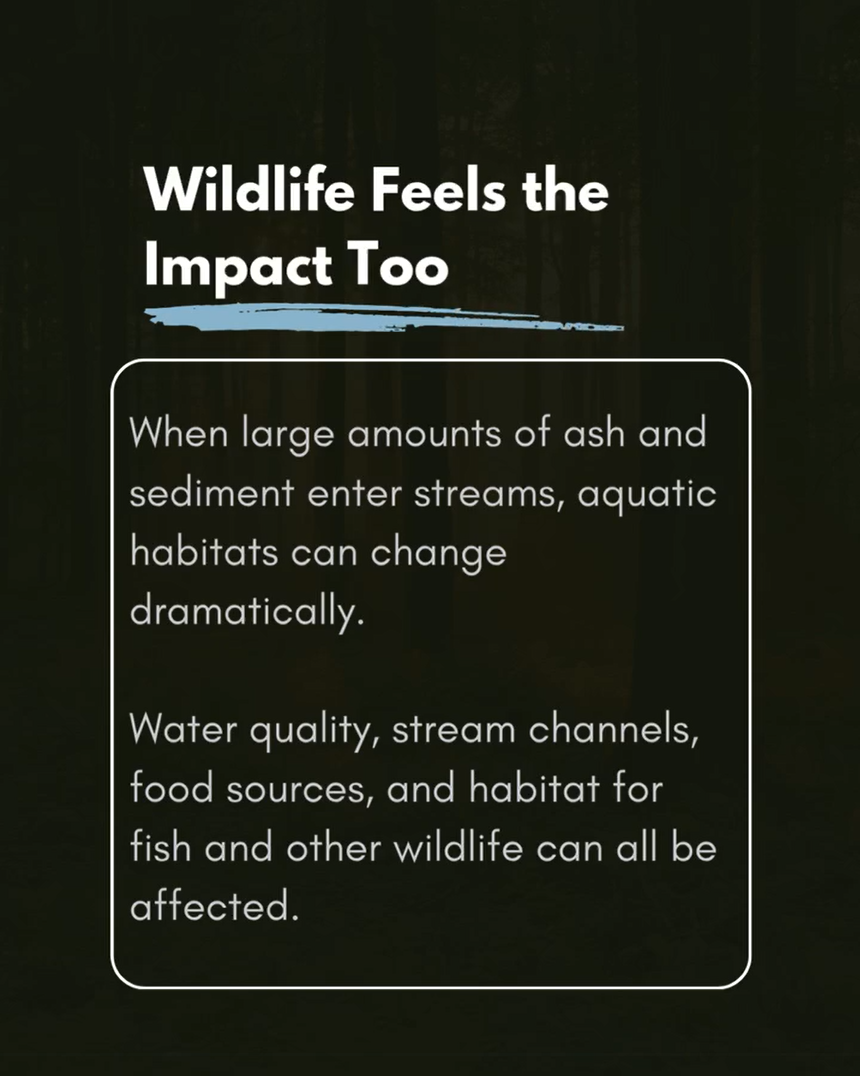
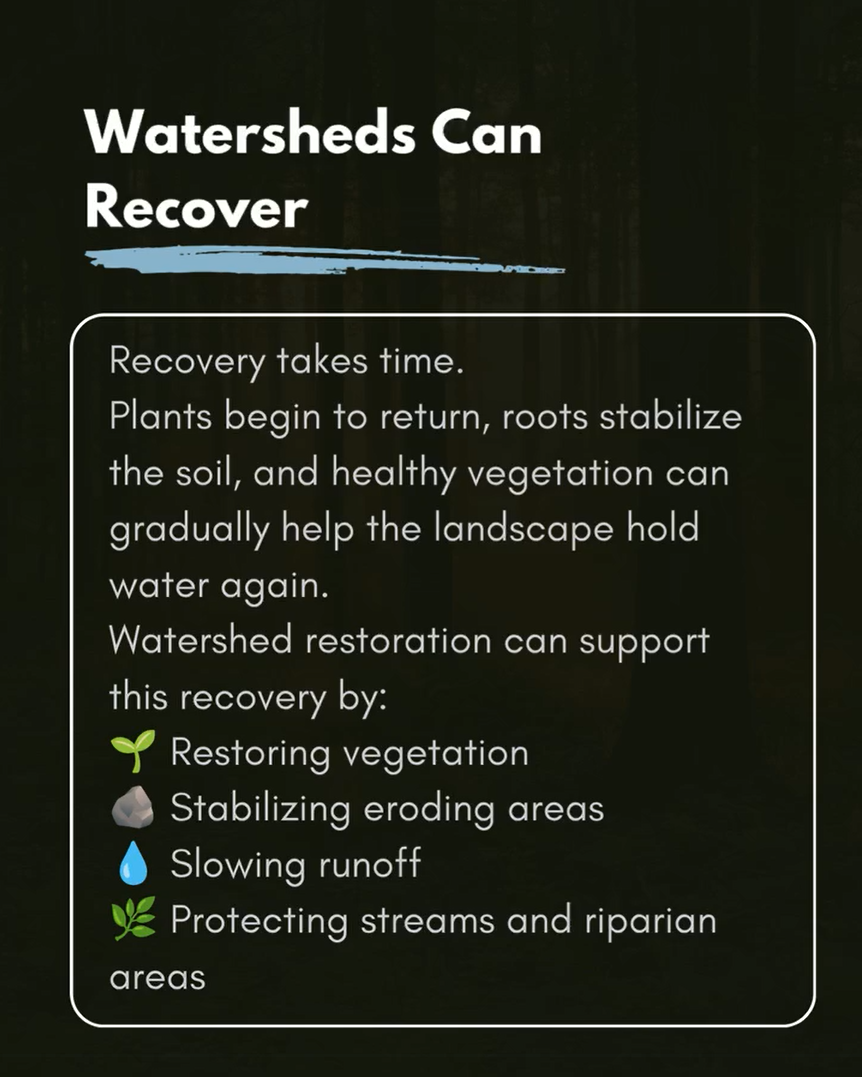
Healthy forests help protect our water. Trees, vegetation, roots, and healthy soils slow rainfall, hold soil in place, reduce erosion, and help water soak into the ground. After a wildfire, that protective layer can be lost. When heavy rain arrives, water can move quickly across burned landscapes, carrying ash, sediment, and debris into streams, rivers, riparian areas, and reservoirs. The effects don't stop at the edge of the burn scar. Increased erosion and sediment can affect water quality and wildlife habitat downstream. The good news is that watersheds can recover. Restoring vegetation, stabilizing soils, slowing runoff, and protecting waterways can all help landscapes heal over time (Santa Fe Watershed Association).
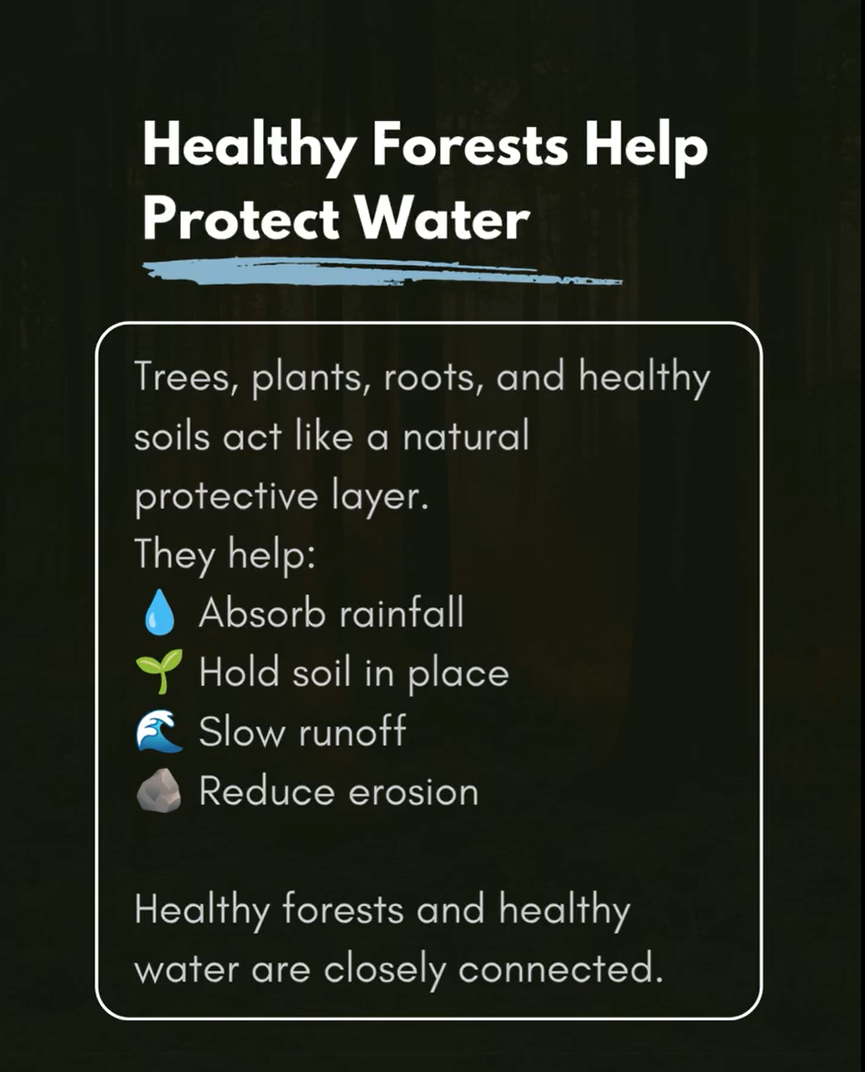
The importance of water to New Mexico cannot be overstated. The water that flows from our forested headwaters irrigates our fields and sustains our communities - surface water is the source of just over 50% of water use in the state and rural communities often rely almost entirely on ground water. Our communities have grown from settlements and villages built near reliable water sources. Maintaining this connection to a clean and dependable water supply is vital to the future of all New Mexicans.
Why watersheds are at risk
A changing climate, wildfire, and other hazards threaten our water resources. Rising temperatures increase demand and prolong droughts, while wildfires threaten the water quality and supply, and post fire debris flows threaten diversions and other water infrastructure. Wildfire alters vegetation and soil properties that then alter watershed function. Soils in severely burned areas often have different hydrologic properties (including hydrophobicity) that negatively impact infrastructure relied on by water users. Hydrophobic soils are subject to extreme erosion, producing large quantities of sediment and increasing the potential for post-fire debris flows. These debris flows and erosion increase sediment loads that can obstruct stream channels and water diversion and conveyance structures, disrupting transmission and use of surface water. Flash floods are the deadliest precipitation-driven hazard, and burned areas produce flows that are significantly more intense and damaging than floods produced during comparable pre-fire precipitation events (2020 New Mexico Forest Action Plan).
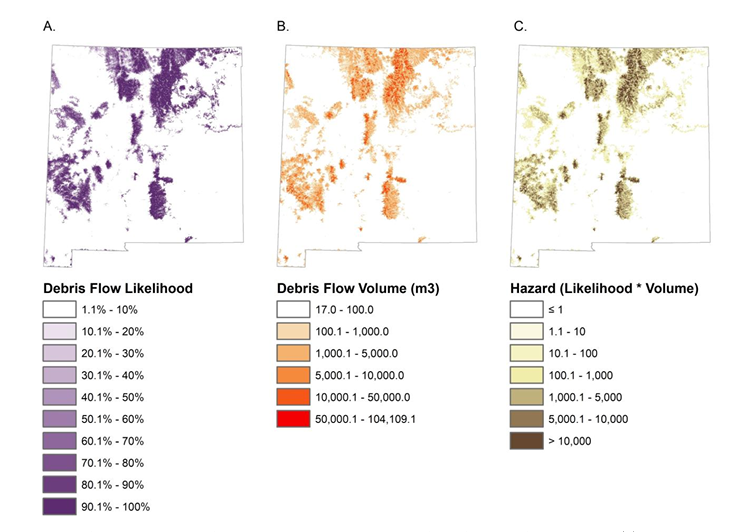
Debris flow hazard modeled for New Mexico. Conditional hazard of post-fire debris flow is shown in (C) which is the combination of the conditional likelihood (A) and conditional intensity (volume, B). Conditional hazard is contingent on a fire occurring. To map annual risk of post-fire debris flow, the probability of fire occurring within each basin is multiplied by the conditional risk. From 2020 New Mexico Forest Action Plan pg. 16.
Part of the challenge is that the headwaters of our many watersheds often begin in high-elevation mixed conifer forests. When fire enters these decadent systems, it tends to burn very hot and move very quickly, leading to high tree mortality and severe soil impacts. This can interrupt the ability of these headwaters to accumulate snow and allow for water percolation into the soil, the beginning process of feeding downstream rivers and reservoirs. Degradation in the headwaters can also lead to erosion and post-fire debris flows which move downslope, impacting the lower reaches of the watershed as well.
Even when fires burn in lower elevation ponderosa pine or piñon-juniper forests, as the Frijoles Fire is, if they burn during hot and windy weather the associated mortality and other consequences can still be extreme, impacting the soils and function of the middle portions of watersheds and once again impacting downstream flow, water availability, and water quality.
Learn about how land managers in northern New Mexico have been working to protect the Santa Fe Watershed through forest thinning and prescribed burning.
How Watersheds are Impacted and What We Can Do
The impacts of fire on our water
Water quality can be compromised by wildfires both during active burning and for months and years afterward. Burned watersheds are prone to increased flooding and erosion, which can negatively affect water-supply reservoirs, water quality, and drinking-water treatment processes. Runoff from burned areas contains ash, which may have significant effects on the chemistry of receiving waters such as lakes, wetlands, reservoirs, and rivers. It also produces higher nitrate, organic carbon, and sediment levels, warmer temperatures, and more unpredictable streamflows.
Debris flows can overfill riverbeds and drainages, tear out trees and move boulders, and destroy homes, businesses, and entire towns in a slurry. They can also fill reservoirs with a heavy load of sediment, taking the reservoir off-line in the short-term and forcing municipal water suppliers to rely on a secondary water source for residents, shortening the reservoir lifetime, increasing maintenance costs, and potentially rendering reservoirs unusable for storage or potability.
Learn more about the impacts by looking back at Wildfire Wednesday #75.
What we can do to protect our watersheds
Watershed work before wildfire
Restoration ecology is broadly defined as the branch of ecology concerned with how human intervention in multi-species, biotic-abiotic assemblages can mitigate damaged or destroyed ecosystems. The general understanding is that damage has been done, and that some function or component of an ecosystem might be restored in function, or even existence. Another pathway, not entirely new but worthy of renewed attention given emergent threats today, considers the value of pre-emptively intervening in systems prior to the potentially destructive effects of fire, such as soil and species loss, and permanently reduced ecosystem function.
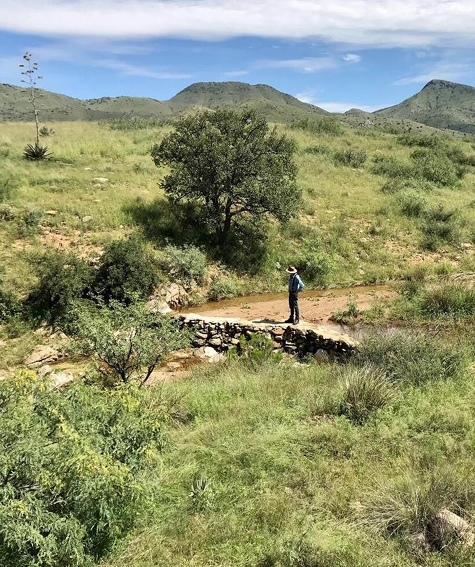
Installation of a rock structure in arid grasslands works to retain moisture in an ephemeral creek. These types of structures have shown to reduce wildfire severity. From 250513_Watershed-Restoration-White-Paper-2.pdf
Photo credit: US Geological Survey.
Through this approach and perspective, restorative work is proactive rather than reactive, and positions practitioners to avoid some of the “uh-oh” effects of large and small-scale environmental disruptions. Pre-restoration deliberately arranges the interactions of hydrology, vegetation, and fire to increase a system’s resilience to the threats of fire and flood (Techniques for increasing watershed resilience to wildland fire, 2025). In order to maintain a stable watershed, we need fire-resistant forests. That is, forests with an ecologically-appropriate amount of fuel which will ultimately create a sustainable forest system - one that is not irreparably damaged by fire and other disturbances (Audubon, 2023). In fire-adapted ecosystems, this means thinning overly-dense forests and reintroducing fire to the system, as well as preparing drainages and downstream communities for the potential impacts of a high-severity fire. The goal is to retain watershed function, even if the watershed form is changed by fire.
While experience with post-fire flooding and watershed recovery tools is increasingly common, there is a critical need to explore proactive measures in fire-prone areas before the flames ignite. Post-fire mitigation is not only expensive, but watersheds may never fully recover. By emphasizing foresight, planning, and leveraging decision support tools, land managers can proactively strengthen watersheds against future wildfire risks. Yet, a significant knowledge gap exists regarding actionable steps and potential barriers for preemptive measures to reduce the severity of post-fire floods and preserve watershed function. The Hermits Peak/Calf Canyon Fire Resources Hub from NMFWRI provides recommendations, guides, and resources for pre-fire mitigation work, both within our communities and in our watersheds.
Watershed work after wildfire
The post-fire effects within a watershed can last decades. For the first few years after a high-severity burn, the slopes and soils upstream will be unstable and we can expect impacts such as debris flows to occur regularly during this time. This is the most challenging window since any in-stream restoration work meant to mitigate erosion and flooding is at risk of being washed away. This is a good time to focus on protecting downstream residents and water users and to survey the watershed, identifying the areas which have been most severely impacted (learn about the new federal post fire recovery environmental assessment). Land managers may find it most effective to begin earnestly working on watershed restoration after several years have passed and soils in the burned area have begun to stabilize. The main goals in this type of restoration are:
Slow water down
Catch ash and sediment before it moves downstream
Reduce erosion
Assist with revegetation to improve soil stabilization and water filtration
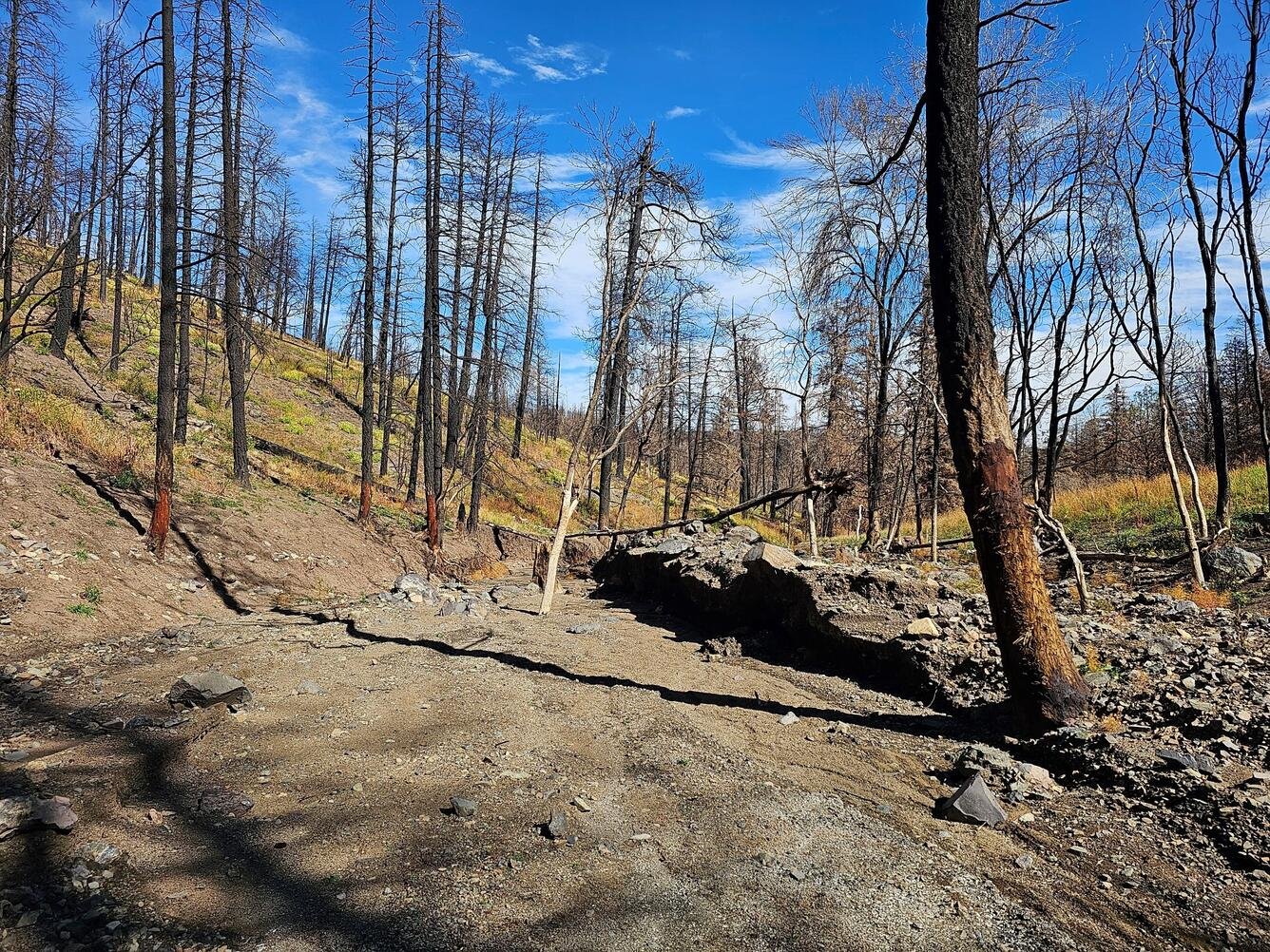
Mud- to boulder-sized sediment fill a channel in the 2024 South Fork Fire burn area. The sediment was deposited by flooding and debris flows during rain events following the summer wildfire.
Source: US Geological Survey
Erosion and runoff can increase dramatically postfire in the Southwest when high burn severity, high rainfall intensity, and steep slopes converge. After a fire burns through a watershed, the most common impacts include sever loss of vegetation and resulting soil destabilization, debris flows, hillslope and channel erosion, and downstream impacts such as road and reservoir damage. Selecting the right treatment is a complex decision, but understanding the treatment costs, implementation methods, and ecological impacts can help inform that decision. Working Paper 44: Mitigating Postfire Runoff and Erosion in the Southwest using Hillslope and Channel Treatments from the Ecological Restoration Institute offers detailed land management recommendations and treatment implications as well as examples of lessons learned and trade-offs among methods.
Following the HP/CC Fire, a coalition of place-based land stewardship organizations published a field guide on post-fire watershed restoration. This landowner-focused guide features lower-cost and -impact techniques using low-tech nature based solutions using the rocks, logs, and other materials already present on the landscape. It includes instructions on how to build various erosion control and water-slowing structures, as well as when each structure would be the appropriate choice. It is available as a PDF or may be purchased in print.
Emergency flood insurance following a fire
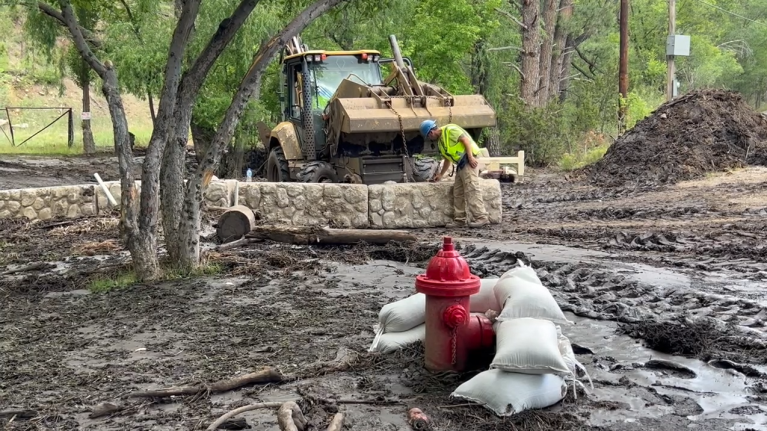
Emergency workers build flood protection in the South Fork Fire burn scar June 24, 2024.
Photo courtesy of the Lincoln County Office of Emergency Services.
Over and again in New Mexico, homeowners find themselves in an area which is newly at risk of flooding due to a fire upstream or upslope (NYT, 2024). New flood insurance policies have a 30-day waiting period; however, coverage can start sooner if flooding is caused by post-wildfire conditions. This is because of a special rule from the Biggert-Waters Act of 2012, known as the Post-Wildfire Exception. Under this Exception, the usual waiting period may not apply to new policies (or added coverage) when the following conditions are met:
The insured property is privately owned (i.e., property not owned by a federal, state, local, territorial or tribal government);
Flooding is caused or worsened by a wildfire on federal land; and
The policyholder purchased the new, additional or increased coverage either on or before the fire was contained, or within 60 days of containment.
How to Apply
Reach out to your current auto or home insurance agent, or find a participating provider using the National Flood Insurance Program (NFIP) Provider Locator.
Tell your agent you are applying under the post-wildfire exception. They will help verify if the burn scar originates on federal land and submit the policy request immediately.
If your agent is unsure or you need direct assistance, call the NFIP call center at 877-336-2627.
Learn more about applying for insurance on an emergency basis.
Additional Resources
Webinars
Thursday, August 20th at 12:00pm MDT: Ecological and Social Fire Resilience: Findings and Implications from Six Post-Wildfire Communities in Arizona and New Mexico
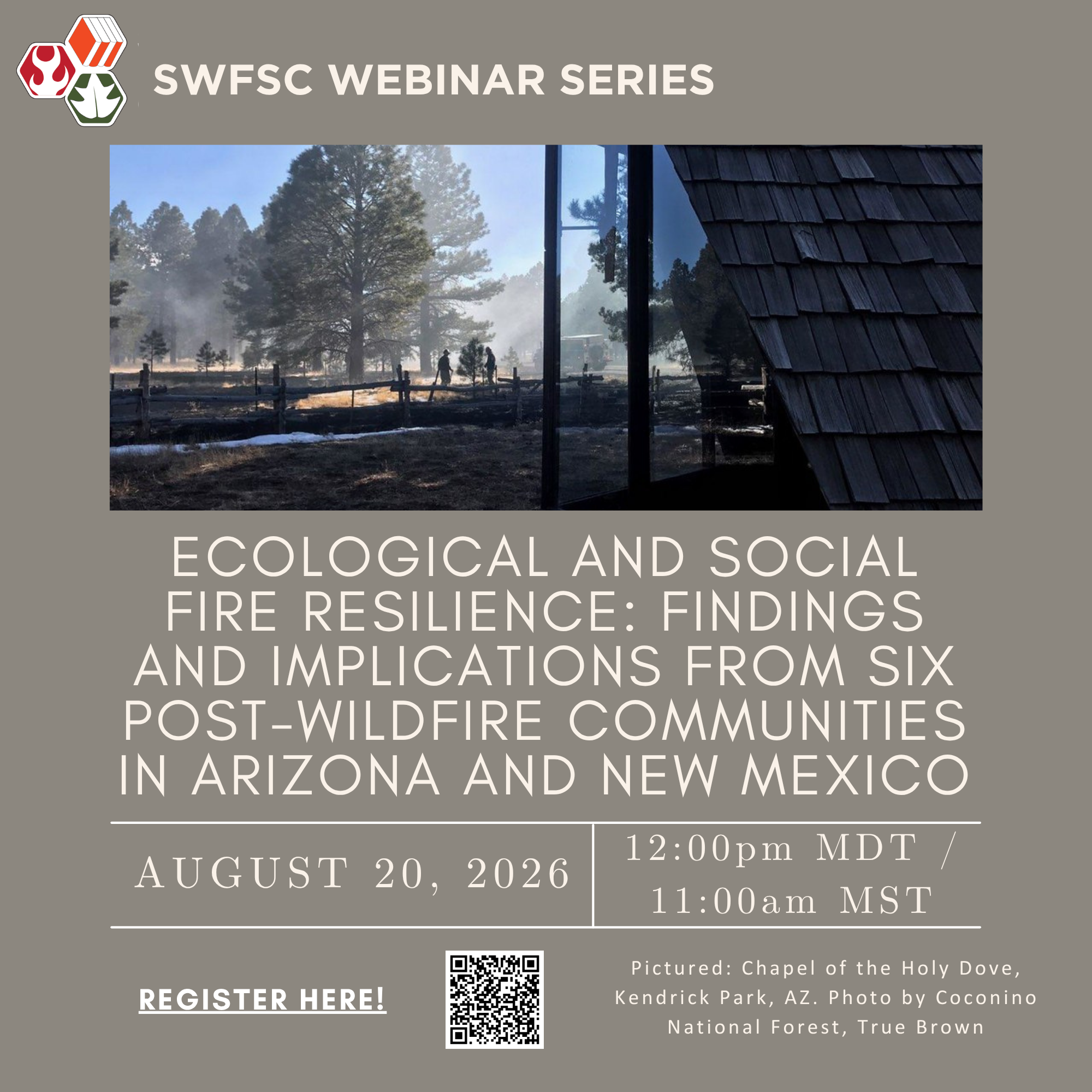
Please join the Southwest Fire Science Consortium for an extended length webinar on Thursday, August 20th to learn about the overlap between social and ecological fire resilience, how these systems interact during recovery from fire, the ongoing need for transparent and inclusive collaboration and conversation about what progress toward recovery and resilience looks like, and suggestions for more integrated post-fire recovery in social-ecological systems moving forward.
Tuesday, October 6th at 12:00pm MDT: Fire deficit across North American forests
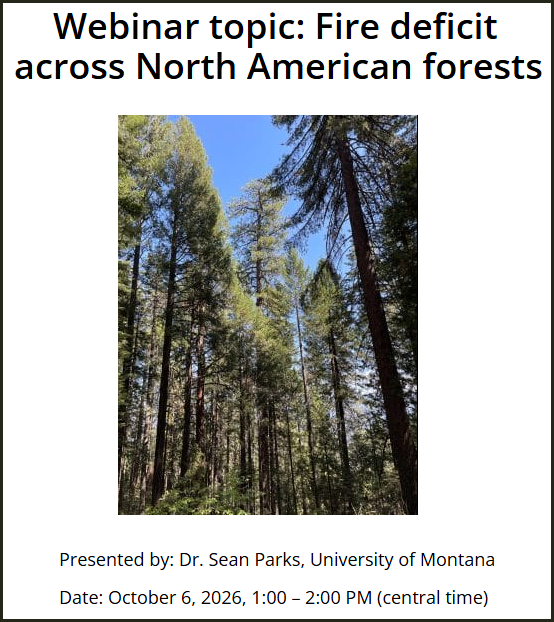
Rapid increases in wildfire area burned across North American forests pose novel challenges for natural resource managers and society at large. Increasing area burned raises questions about whether, and to what degree, contemporary fire regimes (1984–2022) are still departed from historical fire regimes (pre-1880). This webinar presentation asks and answers whether there is a contemporary fire surplus or fire deficit, and whether recent fire years are unprecedented relative to historical fire regimes.
Upcoming events
Art show opening weekend, August 28th: Disturbance: the Art of Ecology and Change

Wildfire is rapidly reshaping ecosystems and communities across Northern New Mexico, the Southwest, and beyond. Once an integral cycle of renewal, fire has become increasingly destructive due to climate change, forest mismanagement, and expanding human settlement in fire-prone landscapes. Disturbance resists simplified narratives of catastrophe, instead inviting artists and audiences to grapple with fire as a complex system—one that holds grief, adaptation, resilience, and transformation in tension.
This interdisciplinary project by The Paseo Project, Del Fuego, and the Forest Stewards Guild brings together artists, scientists, and community members to examine wildfire as both a destabilizing force and a generative ecological process. Join us for a community exhibition opening August 28, 2026 and keep an eye out for announcements of artist-led workshops, public conversations, youth-focused engagements, educational partnerships, and additional events designed to invite reflection, dialogue, and shared learning throughout the fall.