Hello FACNM community,
No single code, standard, program, or guidance document can address every aspect of wildfire mitigation. Each approach has a different purpose, scope, and level of applicability, and each has potential limitations. Understanding these differences can help communities identify the tools that best fit their needs and build more comprehensive wildfire mitigation strategies.
Inspired by a comparative analysis conducted by the Community Wildfire Planning Center for the state of Washington, this Wildfire Wednesday explores the landscape of wildfire mitigation codes, standards, programs, and guidance, with examples of how each can support wildfire resilience.
This Wildfire Wednesday features:
Hope you all are just as happy to see moisture in the air as I am!
Megan
There are both regulatory and voluntary approaches to mitigating wildfire risk to structures, individual parcels, neighborhoods, and communities. While these approaches can overlap, understanding the differences between codes, standards, programs, and guidance can help communities determine how each tool can contribute to a broader mitigation strategy.
Codes
Codes are sets of regulations, rules, or requirements established by a recognized authority or government agency. They typically establish minimum requirements and can be legally enforceable, meaning compliance is mandatory within the jurisdictions where they have been adopted. Failure to comply may result in penalties, restrictions, or other enforcement actions.
Codes applicable to the wildland-urban interface (WUI) can address a variety of vulnerabilities in the built environment. Depending on the code and how it is adopted, requirements may address building construction and materials, access to homes and subdivisions, emergency water supplies, fire protection planning, defensible space, hazardous vegetation, fences, and other combustible materials.
International Code Council’s International Wildland-Urban Interface Code (IWUIC)
The International Wildland-Urban Interface Code (IWUIC) is a model code published by the International Code Council (ICC), a nonprofit association focused on building safety. The IWUIC establishes requirements and minimum standards for land use and the built environment within designated WUI areas.
The IWUIC includes requirements related to access and water supply for individual structures and subdivisions, fire protection plans where applicable, ignition-resistant construction, defensible space, automatic sprinkler systems, and optional appendices. It also references standards published by the ICC and other organizations that provide additional requirements for construction materials and methods.
NFPA 1 Fire Code, Wildland Urban Interface (Chapter 17)
NFPA 1 Fire Code is a model code published by the National Fire Protection Association (NFPA). The Fire Code establishes minimum requirements intended to provide a reasonable level of fire and life safety and property protection from hazards created by fire, explosions, and other dangerous conditions.
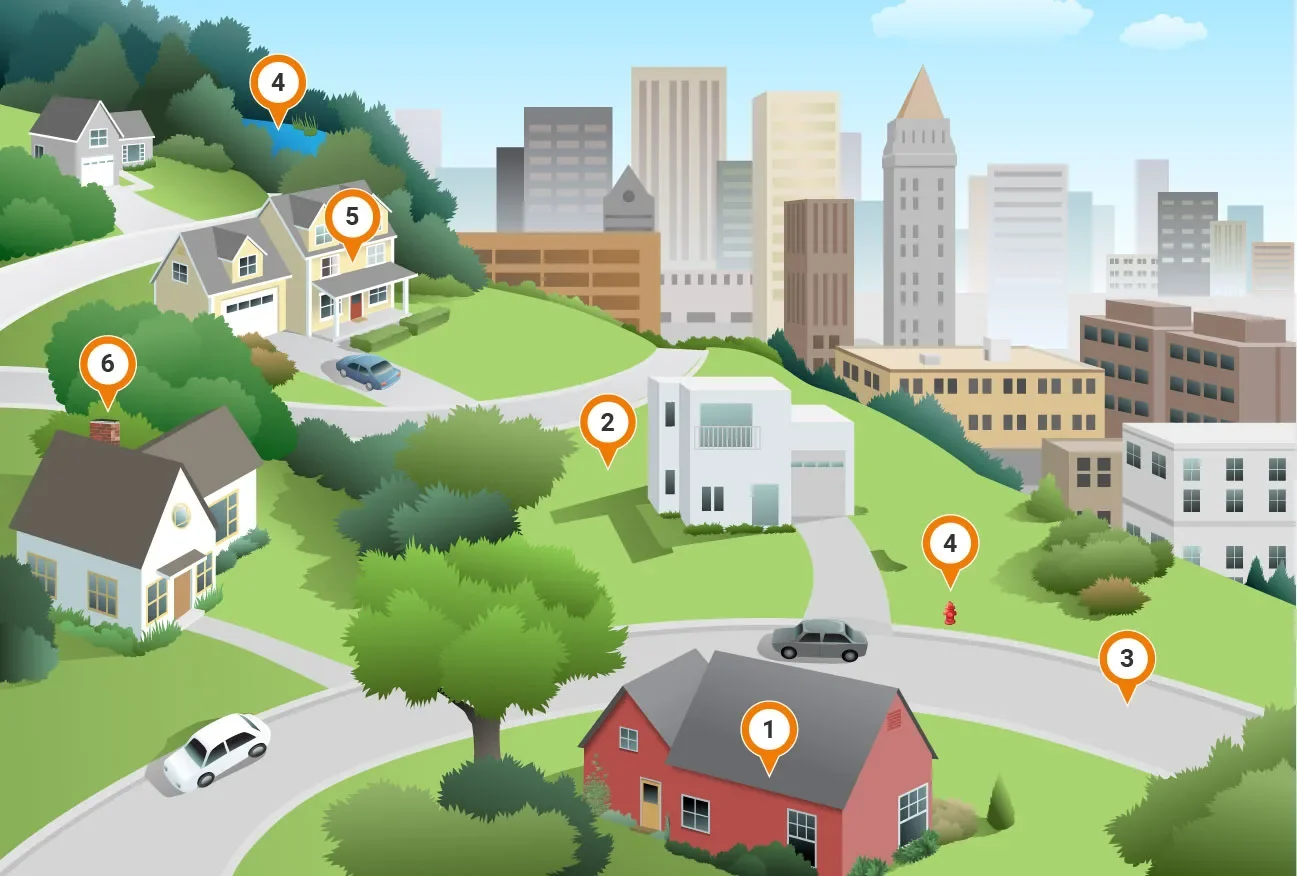
Chapter 17, Wildland-Urban Interface, focuses specifically on planning, construction, maintenance, education, and management measures intended to protect life and property from wildfire. Key elements include assessing a structure and its surroundings—referred to as the Structure Ignition Zone (SIZ)—developing a wildland fire hazard mitigation plan, and addressing other fire hazards in wildfire-prone areas, including vegetation, brush, fireworks, and explosives.
Standards
While codes are legally enforceable documents and specify what needs to be done, standards typically describe how to meet code requirements. Standards are documents or specifications developed by recognized standard-setting organizations. They establish consistent approaches to processes, services, systems, materials, or practices. Unlike codes, standards are generally voluntary unless they are referenced or incorporated into a legally enforceable code, regulation, or other requirement, but adherence to standards is often seen as a mark of quality, safety, or best practices.
NFPA 1142 Standard on Water Supplies for Suburban and Rural Firefighting
NFPA 1142, Standard on Water Supplies for Suburban and Rural Firefighting, provides a method for determining the minimum water supply needed for structural firefighting in areas where there is no water supply or where existing supplies are inadequate. The standard addresses approved and alternative water supplies, dry hydrants, and calculations for minimum water supplies for structures with and without exposure hazards, as well as structures equipped with automatic sprinkler or other fire suppression systems.
IBHS Wildfire Prepared Home Technical Standard
The Wildfire Prepared Home™ Technical Standard defines science-based requirements used to evaluate whether a property qualifies for a Wildfire Prepared Home designation. Developed by the Insurance Institute for Business & Home Safety (IBHS), the standard provides detailed specifications intended to reduce vulnerabilities that can contribute to home ignition during a wildfire.
In winter 2025, the NM Fire Planning Task Force adopted Wildfire Prepared Home as the statewide voluntary standard for home hardening and defensible space in New Mexico.
Programs
WUI mitigation programs are often designed to reduce wildfire risk at the parcel, neighborhood, or community scale. They may be administered by government agencies, nonprofits, or other organizations and can vary considerably in their purpose and requirements. Some programs are primarily educational and do not require participants to complete specific mitigation actions. Others provide a designation or recognition when participants complete defined actions or meet established criteria.
IBHS Wildfire Prepared Home Program
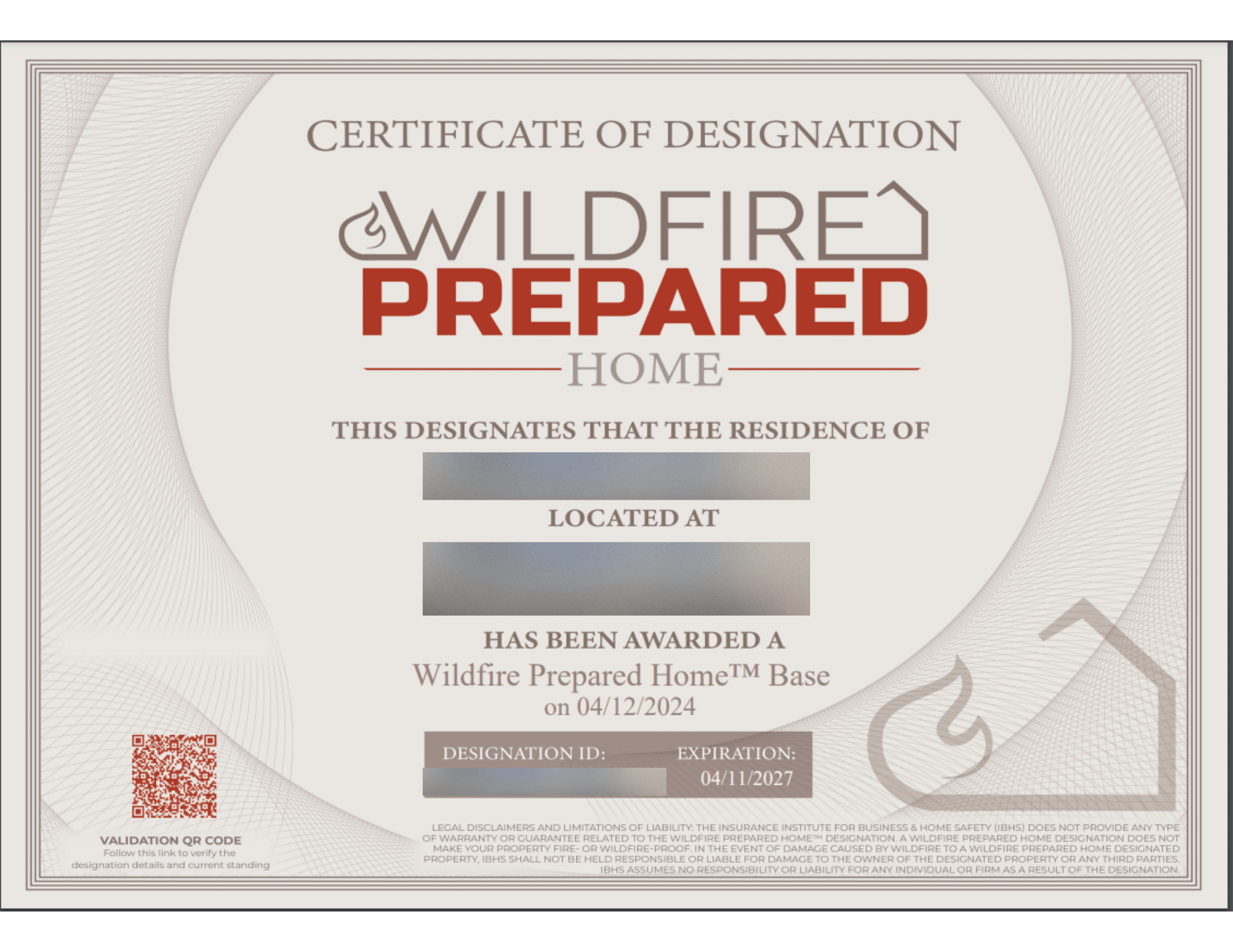
Wildfire Prepared Home is a program of IBHS, a nonprofit scientific research and communications organization supported by property insurers, reinsurers, and affiliated companies. The Wildfire Prepared Home program offers two designation levels: Wildfire Prepared Home Base (Essential) and Wildfire Prepared Home Plus (Enhanced). Each level has different mitigation requirements, which are identified in the IBHS Wildfire Prepared Home Technical Standard.
The program uses an owner-driven process. Homeowners take the lead in completing a home checklist, completing required mitigation work, and submitting an application and photographs for review. Homes that meet the requirements receive a certificate from IBHS. The process can take anywhere from a few months to many months, depending on the amount of work required. Program fees include an application fee and annual review fee, and recertification is required every three years.
NFPA Firewise USA
Firewise USA® is administered by the National Fire Protection Association (NFPA) and provides a collaborative framework to help neighbors in a geographic area get organized, find direction, and take action to increase the ignition resistance of their homes and community and to reduce wildfire risks at the local level. New Mexico has numerous communities from the across the state voluntarily participating in the national Firewise USA® recognition program.
Recognized Firewise USA sites are required to have a minimum of eight dwelling units and a maximum of 2,500. The process includes completing a community wildfire risk assessment, developing a three-year action plan with annual communitywide priorities, and implementing mitigation activities. Common activities include community education workshops, Firewise Days, and sharing wildfire preparedness information at local events. Participating communities track volunteer hours and costs to document their investments and meet program reporting requirements. There is no application fee to participate, but communities must meet an annual investment requirement, which can be met through documented volunteer hours, in-kind services, or monetary costs.
Guidance
Guidance generally refers to recommendations, models, frameworks, or suggested approaches for addressing a particular issue. Unlike codes, guidance is not typically legally enforceable. It can nevertheless provide valuable information and frameworks for communities, planners, homeowners, and other practitioners developing wildfire mitigation strategies.
Many national organizations have developed guidance related to community wildfire risk reduction. The examples below represent just a few of the resources available.
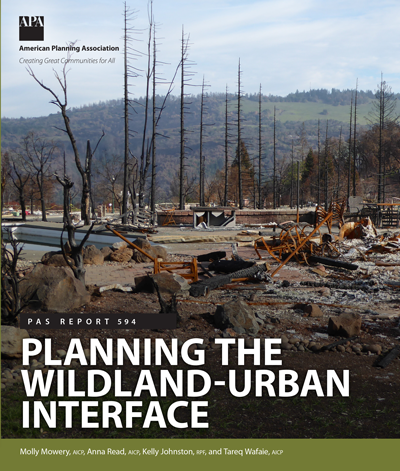
APA: Planning the Wildland-Urban Interface
The American Planning Association (APA) is a professional organization providing resources for planners and communities on a wide range of planning topics, including hazard mitigation, disaster recovery, and the WUI. Planning the Wildland-Urban Interface, published in 2019, provides planners with an in-depth introduction to the WUI and wildfire basics, covering challenges, trends, and historical context along with content on understanding wildfire ignition science. The report also provides solutions through a holistic planning framework and practical guidance on how to address WUI and wildfire challenges in plans, policies, and regulations, opportunities for collaboration with fire departments, federal and state agencies, and other key stakeholders.
NIST: Hazard Mitigation Methodology
National Institute of Standards and Technology (NIST) is non-regulatory government agency within the U.S. Department of Commerce that develops standards, guidelines, and best practices. NIST’s Fire Research Division’s research projects and programs cover a range of WUI and fire topics, including fire risk reduction in communities, improving WUI community fire protection through fire-resistant building design and materials, and more.
NIST’s Hazard Mitigation Methodology (HMM) is a comprehensive performance-based approach to WUI fire hazard mitigation for structures, parcels, and communities. The proposed methodology was developed to reduce structural losses in WUI fires by hardening structures and parcels across a community. The HMM demonstrates the complexities of structure hardening, and how and why hazards associated with both fire and ember exposures need to be mitigated, describes the relationships between exposure and hardening within the methodology, and addresses housing density, structure separation distance, and parcel layouts. The HMM was designed to address current building stock with efforts made to limit retrofit expenses; while developed primarily for retrofits it can be applied to new construction.
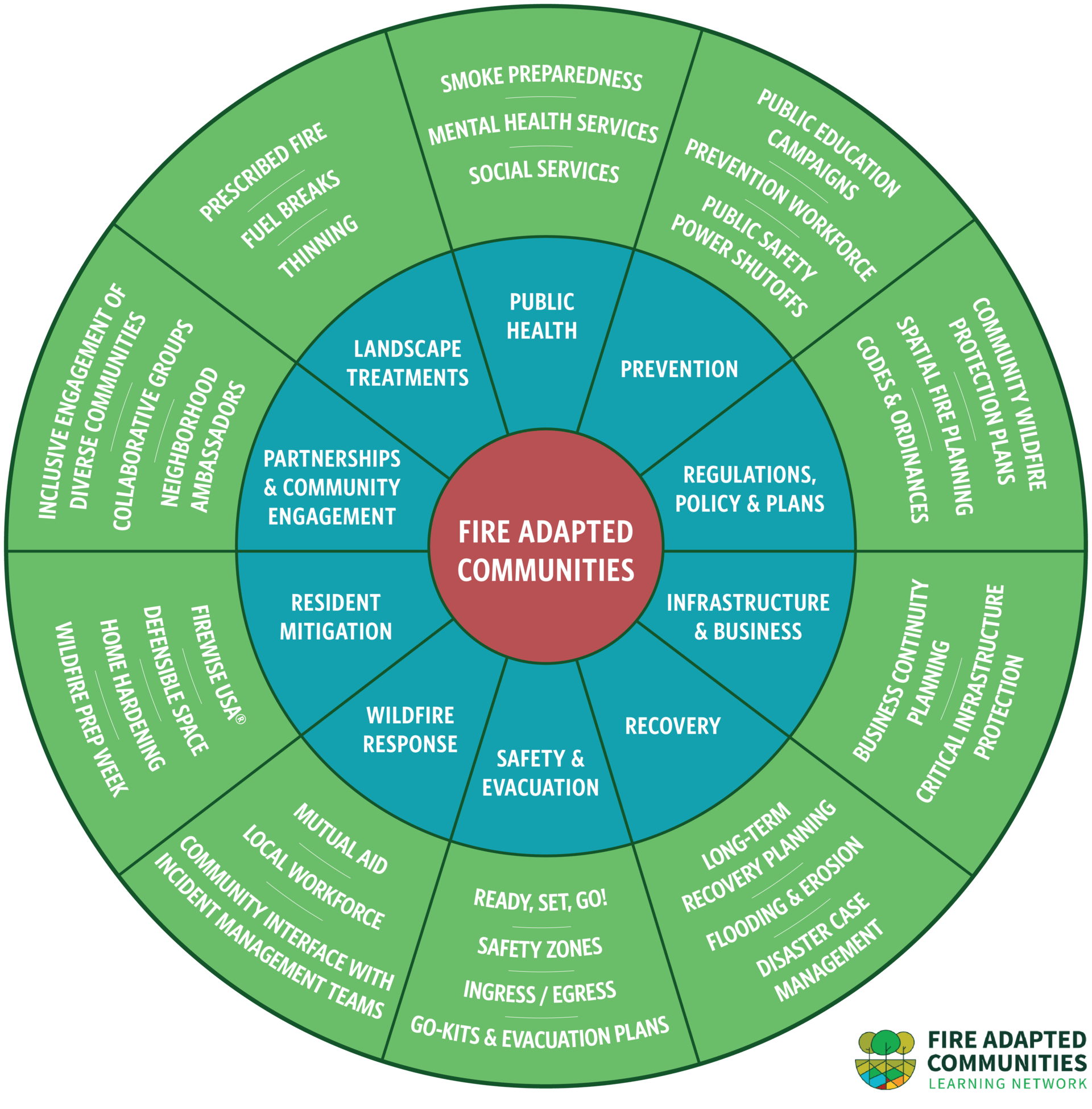
Fire Adapted Communities Pathways Tool
The Fire Adapted Communities (FAC) Learning Network supports and connects people and communities working on wildfire resilience across the country. FAC Network tools include sources such as a Fire Adapted Communities Pathways Tool and a Fire Adapted Communities Self-Assessment Tool (FAC SAT). The FAC SAT helps communities assess their fire adaptation efforts and to plan and track their capacity to live safely with fire over time, while the FAC Pathways Tool helps communities identify a set of strategies which are tailored to their strengths and needs, and based on practices which have been successful in communities similar to theirs. These tools help communities complete their own assessment to better understand their fire adaptation needs, priorities, and opportunities.
Each of the codes, standards, programs, and guidance resources highlighted above offers potential benefits, but each also has limitations. The differences in scale, scope, requirements, and intended users are important when considering how these tools fit into a broader wildfire mitigation strategy. For example, some programs provide detailed home-hardening standards but do not address larger parcels that may require more tailored vegetation management to address hazardous fuels in Zone 3. Similarly, some codes and standards may provide robust requirements for assessing the Structure Ignition Zone but may not address the neighborhood or community scale, or may offer limited flexibility for local conditions.
These differences highlight why no single code, standard, program, or guidance document can provide a comprehensive wildfire mitigation strategy on its own. Instead, communities can consider how different approaches complement one another. Codes may establish baseline requirements, standards can provide technical specifications, programs can support implementation and community engagement, and guidance can help communities plan and adapt strategies to local conditions.
Additional Resources
FACTSHEET:
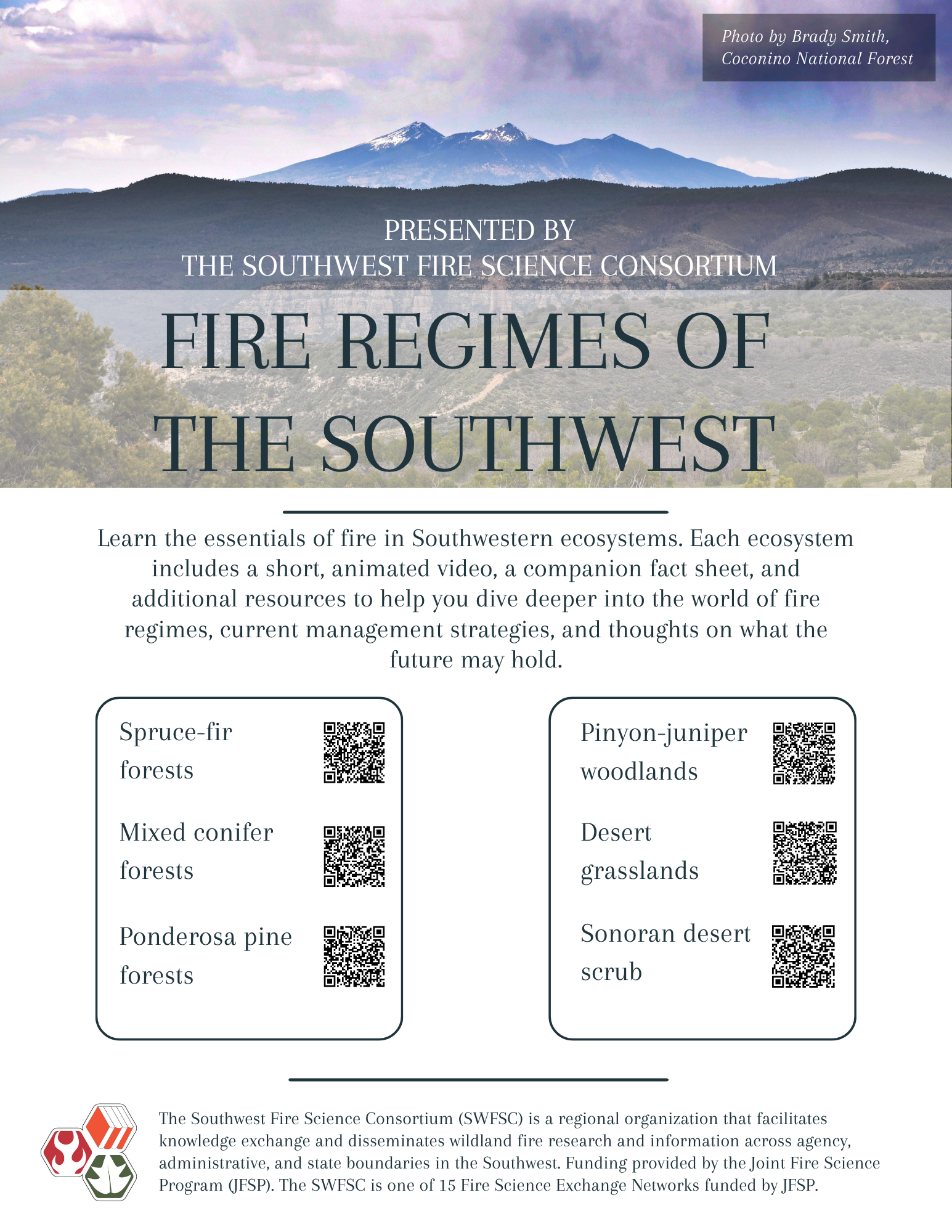
Fire Regimes of the Southwest
The Fire Regimes of the Southwest Series, developed by the Southwest Fire Science Consortium, explores fire regimes of different vegetation types, examining historical fire frequency, intensity, extent, and seasonality. The document below can be used to easily share fire regime series fact sheets and videos on six ecosystems in the Southwest.
TOOLKIT:
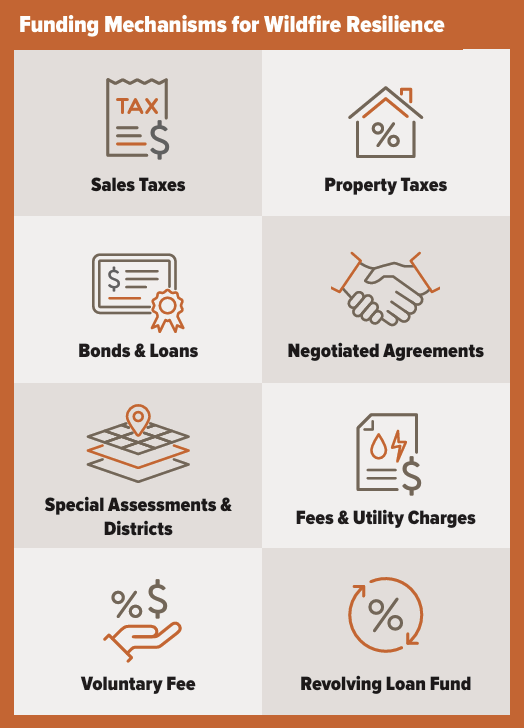
Local Funding Options for Wildfire Resilience
Headwaters Economics published a guide to help leaders identify local funding strategies for wildfire resilience that could work best for their communities. The guide includes tips for local wildfire funding measures, revenue strategies, and community examples.
VIDEO:
Biochar's Role in Forest Restoration
A new video by #forestproud highlights how biochar can support post-fire recovery while creating innovative wood products that benefit forests and communities. The film explores how biochar supports forest health, improves soil productivity, creates new markets for low-value wood and forest byproducts, and helps reduce wildfire risk through active forest management. It also showcases biochar applications from forest restoration projects to agricultural landscapes.
https://youtu.be/S16DIBjP8KM?si=byD-pEbeXKciyAXF