Happy first Wednesday of 2026, FACNM community!
People living in fire-prone landscapes regularly make decisions about how they live with and plan to respond to wildland fire and smoke based on their perceived risk. As professionals, community leaders, and engaged neighbors, being able to effectively communicate that risk is essential. As defined by Steelman and McCaffrey, “risk communication seeks to inform people about a potential future harm and the associated dangers so that they might take action to mitigate the risk” (Steelman and McCaffrey, 2013). Clear risk communication helps motivate action to mitigate potential impacts, helps people stay calm during incidents due to increased understanding of the hazard, and/or increases public acceptance of fire management strategies that help lower overall risk to fire hazards.
While there is no single message or messenger that works best in every context or for every audience, research has identified best practices for creating effective wildfire risk communication. This Wildfire Wednesday highlights key recommendations related to message content for communicating about wildfire risk. Other important elements, such as the most effective platforms for sharing messages and the processes by which messages are delivered, are critical but not addressed in this publication.
This Wildfire Wednesday contains:
Effective Wildfire Risk Communication
Additional Guidance from the Literature
Best wishes for this upcoming year,
Megan
Effective Wildfire Risk Communication
COMPASS, a nonprofit organization focused on science communication, recently released the publication “Effective Risk Communication: Lessons from Wildfire Science.” The publication emerged from a media communication training for wildfire experts developed with the Federation of American Scientists, in collaboration with Matt Wright of the American Association for the Advancement of Science.
Below are several key principles of wildfire risk communication highlighted in the publication.
Risk Perception
Wildfire presents risk that is both familiar and abstract, influencing the dynamics of wildfire risk perception.
Risk that is familiar and tangible: A structure burning or an evacuation order
Risk that is abstract: Impacts to water quality or long-term public health
Wildfire has become a recognizable risk in many parts of the world, causing this familiarity of the risk to become both an asset and challenge for communication.
Familiarity as an asset: A baseline understanding of wildfire risk to health, income, and property allows communicators to focus on tangible actions communities can take to protect what they value.
Familiarity as a challenge: Repeated exposure to wildfire risk without direct consequences can lead people to underestimate their vulnerability, while those who have experienced loss may perceive heightened or disproportionate risk.
Takeaway: Risk communication should be tailored to the lived experiences of the audience, particularly as wildfire risk evolves, such as in previously unaffected areas or where fire intensity and frequency are increasing.
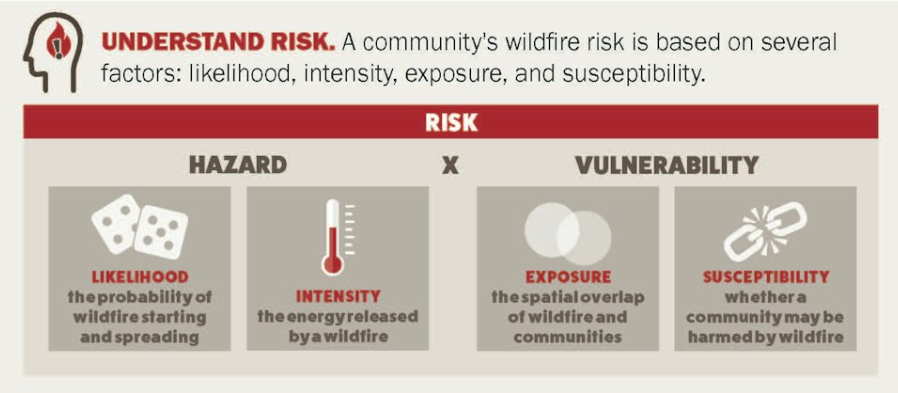
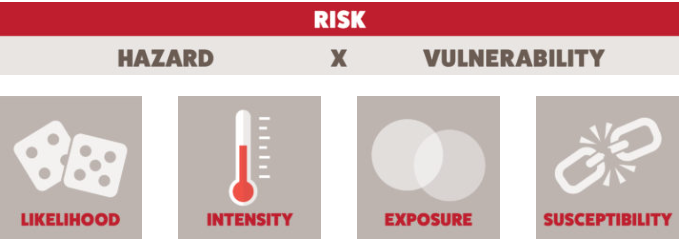
Wildfire Risk to Communities, created by the USDA Forest Service, defines a community’s wildfire risk as the combination of likelihood and intensity (together called “hazard”) and exposure and susceptibility (together called “vulnerability”).
Promoting Understanding and Agency
Ecological and fire behavior models are critical tools for understanding wildfire risk. However, translating these models into clear, actionable messages for nontechnical audiences remains a challenge. Scientists often emphasize technical details when explaining models to demonstrate credibility, an approach that is effective for peer communication but can overwhelm public audiences. Research has proven that when communicating with the public, technical deep dives can cause confusion and even skepticism.
Effective strategies for communicating about risk models include:
Focusing on the implications of the model rather than the technical mechanics is often a stronger communication strategy with the public
Explaining what model predictions mean for how people live, plan, and act now makes the situation more meaningful and clearer for communities and decisionmakers
If modeling shows fire in an area is becoming more frequent and more intense, risk communication with the public should address what implications this has for people in the area (i.e. need for developing more robust evacuation plans, increasing investment in home-hardening, or other strategies).
Providing clear, discrete response strategies helps make risk information more tangible and fosters a sense of agency in communities that might otherwise feel overwhelmed.
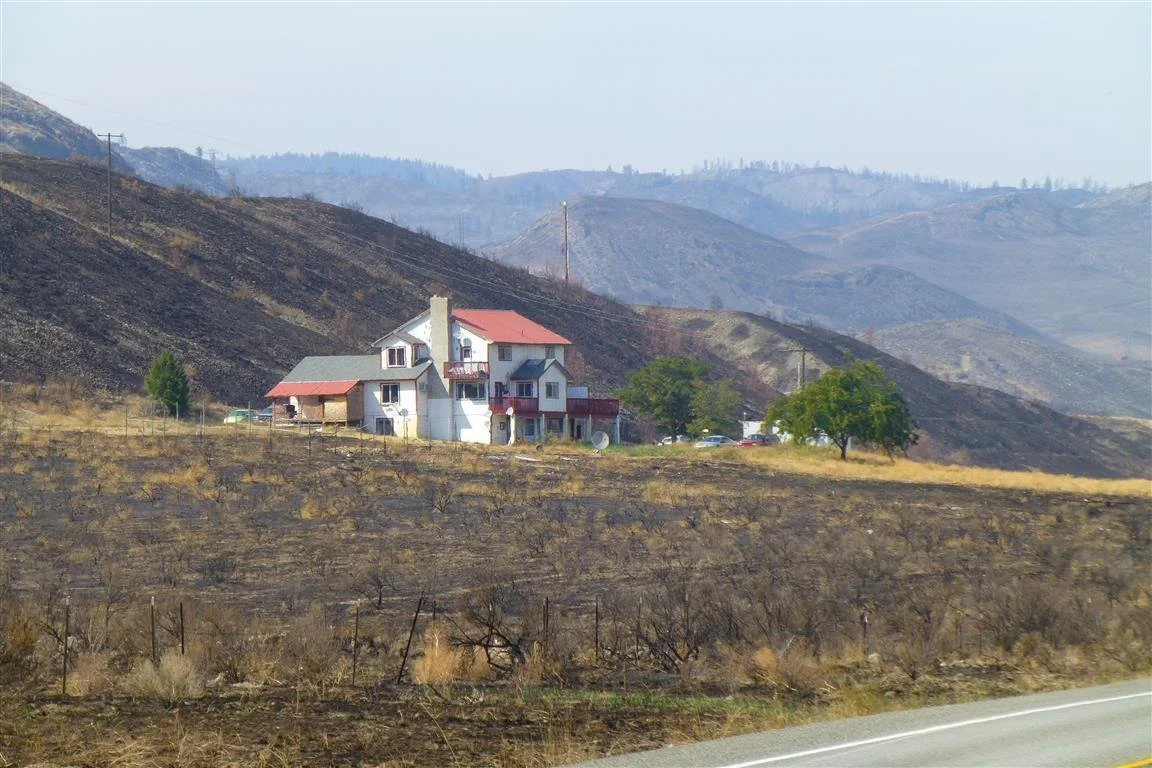
Home on Hwy 97 successfully protected by engines during the 2015 Okanogan Complex Fire.
Because models rely on currently available data, their predictions can change as conditions evolve. This means speaking about model outputs also requires speaking about uncertainty.
Openly explaining the sources of uncertainty allows communicators to help decisionmakers better understand how and why forecasts and predictions may change.
Acknowledging uncertainties in risk builds trust and supports more adaptive, flexible planning that can accommodate a wider range of possible outcomes.
A Multifaceted Approach
Wildfire is not a single-issue challenge. It intersects with land management, public health, urban planning, conservation, and more. Effective risk communication must reflect this complexity by balancing multiple perspectives, clearly explaining trade-offs, and situating decisions within a broader risk management framework.
“Ultimately, risk communication is about helping people understand their options...”
Additional Guidance from the Literature
Understanding Mental Models and Local Context
Building on these principles, a 2013 review by Steelman and McCaffrey triangulated research across risk communication, crisis communication, and wildfire literature. Several common characteristics of effective risk communication content emerged:
Account for local and social context in which the threat is situated.
Considering contextual conditions from the perspectives of the participants, and relating explanations of action to why they are needed and how they will make a difference given local conditions, can facilitate understanding and action. Designing culturally sensitive messages that understand the social context of the risk can help effectively frame, present, and discuss risk in ways that resonate.
Relate information to familiar and relevant experiences
Connecting wildfire risk to issues people already care about, such as health, livelihoods, or local landscapes, supports learning and engagement. Effective communication builds on participants’ prior experience with wildfire and smoke rather than assuming a uniform baseline of knowledge.
Be honest and transparent about uncertainty
Credible risk communication acknowledges the inherent uncertainty in wildfire forecasting and risk assessment. Transparency about what is known, what is uncertain, and why strengthens trust and supports informed decision-making.
Plan messages intentionally
Developing an effective risk communication message requires:
Clearly defining the purpose of the communication effort
Selecting a strategy appropriate to that goal
Tailoring the message to the characteristics, needs, and perspectives of the intended audience
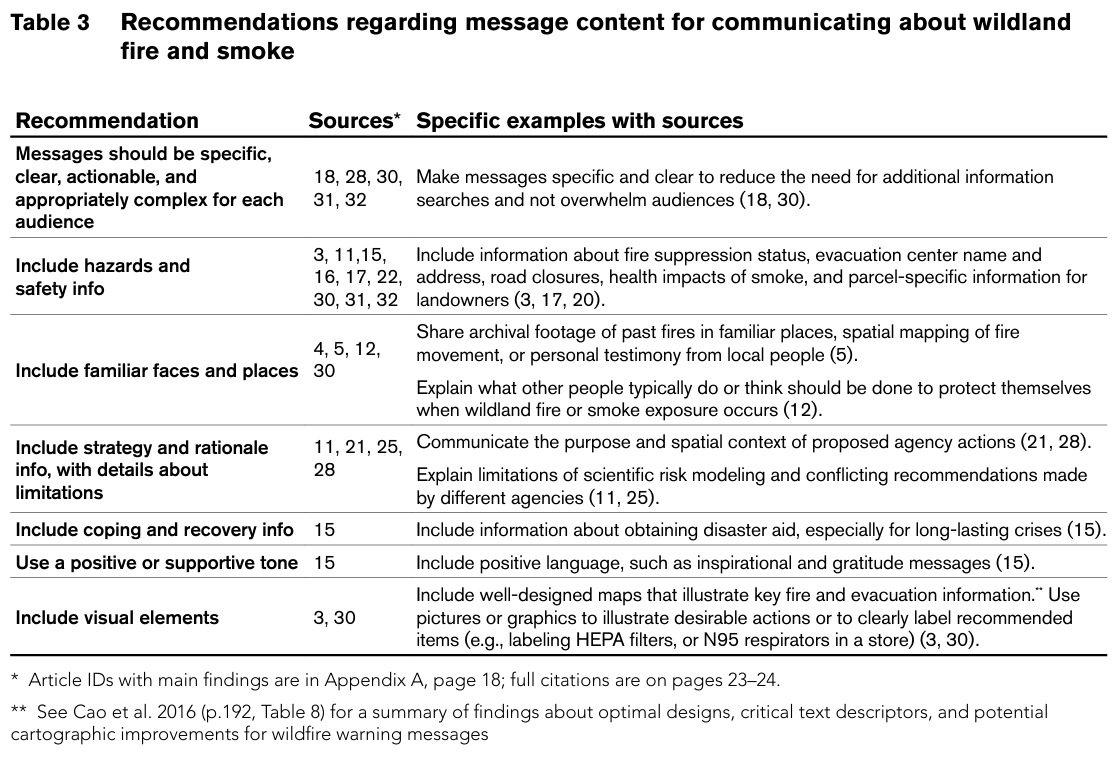
Further reinforcing these findings, the Northwest Fire Science Consortium published a 2021 literature review on communicating with the public about wildland fire preparation, response, and recovery. The authors identified seven recommendations related to message content that communicators should include when engaging the public; the four particularly relevant to risk communication are highlighted below:
Use clear, specific, and actionable language that is appropriately complex for the target audience
Clear, specific messages reduce the need for additional information-seeking and help avoid overwhelming audiences.
Include familiar faces and places to make the risk or hazard more relatable and locally relevant
Include strategy and rationale information, with details about limitations
Communicate the purpose and spatial context of agency actions, acknowledge modeling limitations, and clarify why recommendations may differ across agencies.
Incorporate visual elements
Use picture or graphics to illustrate desirable actions or to clearly label recommended items
As wildfire risk continues to change across landscapes and communities, effective risk communication remains a critical tool for supporting preparedness, response, and long-term resilience. By grounding messages in local context, acknowledging uncertainty, and emphasizing clear actions people can take, communicators can help communities better understand their options and feel empowered to act.
Additional Resources and Upcoming Opportunities
Video - Nature-Based Restoration: Forest Ecosystem Restoration with Tree Planting
Hermit’s Peak Watershed Alliance launched a post-fire restoration video series, with their fourth video focusing on tree planting. This video takes an in-depth look at reforestation work in New Mexico, hearing from researchers and foresters on how to get seedlings, making a plan that best fits the property, and planting trees in a way that gives them the best chance to thrive!
New Mexico Facilitation Trainings
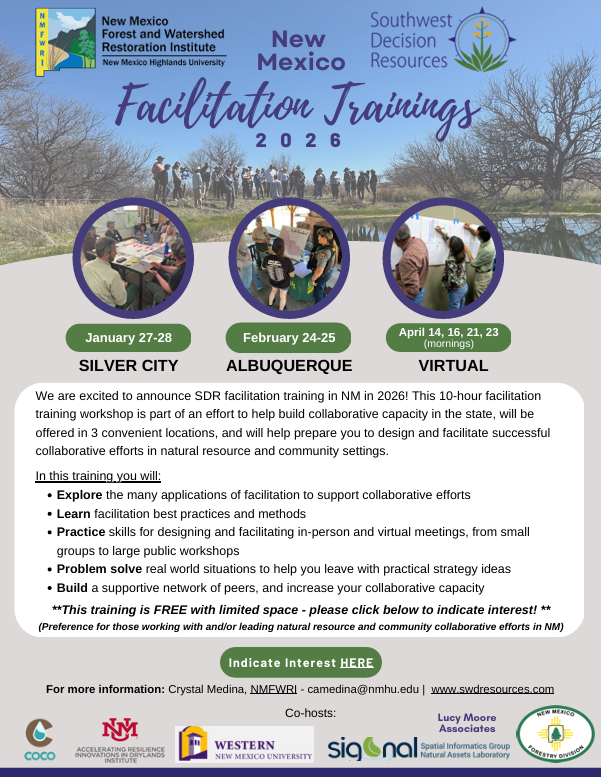
The New Mexico Forest and Watershed Restoration Institute, in partnership with Southwest Decision Resources, are hosting facilitation trainings to help organizations and community leaders bolster skills in effective methods for collaborating. The trainings will focus on designing and facilitating successful collaborative efforts in natural resource and community settings. This free training has limited space. For more information contact Crystal Medina, NMFWRI at camedina@nmhu.edu.
Preference for those working with and/or leading natural resource and collaborative efforts in NM.
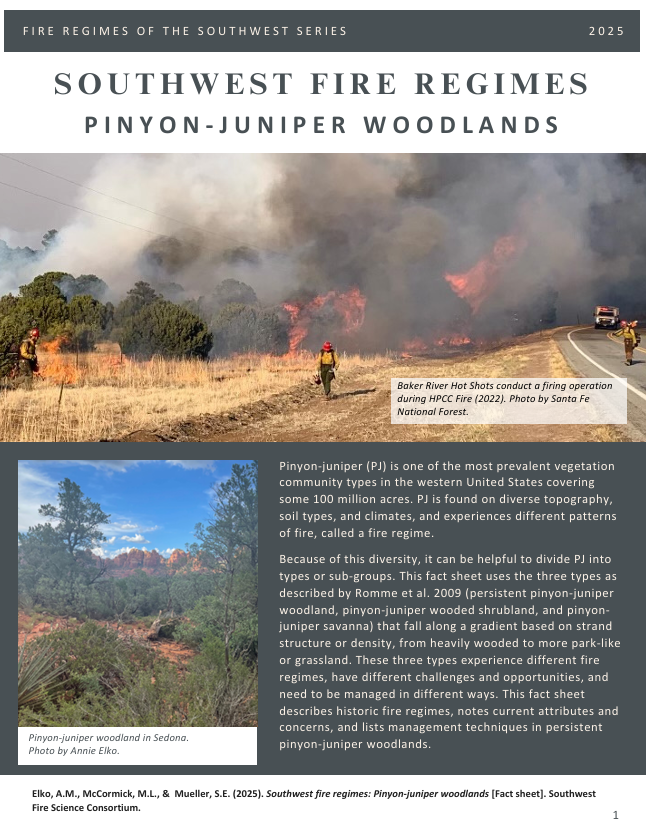
Video and Factsheet: Pinyon-Juniper Persistent Woodland Fire Regime
Pinyon-juniper (PJ) is one of the most prevalent ecosystem types in the West and through its presence across a wide geographic range, different types of PJ experience different fire regimes. Last month, the Southwest Fire Science Consortium released a video and fact sheet that covers the historic fire regime, current management, and the potential future of PJ persistent woodlands in the Southwest.