Hello Fire Adapted community,
Like many places in the Western US, the majority of the state of New Mexico faces high wildfire risk and a widening socioeconomic disparity among its residents. The need to address fire hazards has never been greater, but mitigation activities are time-intensive and expensive. Traditional mitigation programs often rely on who has the money, time, or resources to apply for grants and cost-share programs or prepare their properties; this approach, however, can cause low-income, underserved, or vulnerable communities - who often live in higher-risk areas - to fall through the cracks. Equitable Mitigation Programs (EMPs) fix this gap by actively providing financial aid, technical help, and language access to people who need it most. As the folks from Fire Adapted Methow Valley put it, “to truly be a fire adapted community, we can’t leave behind the folks without access to resources or the ability to do mitigation work.”
This Wildfire Wednesday features:
Equitable Mitigation Program basics and how to build one
Local news
Upcoming Legislation
Webinars
Enjoy the autumn,
Rachel
Equitable Mitigation Programs
What is equity in disaster planning?
Although the overall trend in wealth has been upward in the U.S., over the past four decades income inequality has been increasing as well. Natural disasters exacerbate this gap. The financially poor are more vulnerable to natural catastrophes because of geographic location (e.g. the industrial zone effect) and poorer quality of housing. Being less able to afford investments in mitigation or insurance has a direct correlation with increased recovery costs following a natural disaster (Efficient and Equitable Design of Wildfire Mitigation Programs, 2007).
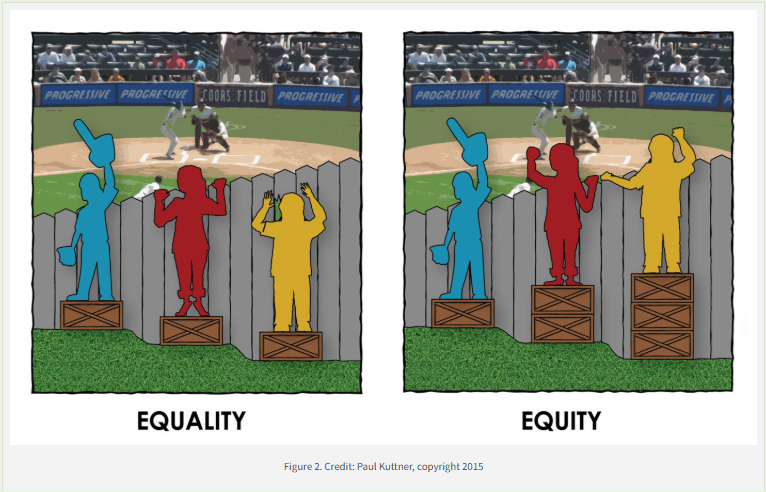
Creating intentional equity in disaster preparedness can help close the gap - but what exactly is equity? The answer to that question is both elusive and central when working toward fire adaptation. Finding a definition starts by asking another question: “What does each person need to prepare for and recover from a disaster in this community?” and, essentially, how can we ensure that they have the resources to meet that need?
It might seem that wildfire is a great equalizer since all community members in proximity to a wildfire are affected; however, neither wildfire impacts nor the ability to prepare one’s home, oneself and loved ones are experienced equally by all. A suite of factors influences wildfire outcomes, including, but not limited to, access to emergency alerts, and having an emergency plan, a way to carry out that plan and a place to evacuate to. In addition, outcomes depend on the ability to retrofit one’s home, reduce surrounding fuels and opportunities for ember ignition and fire spread, and provide safe ingress and egress (Developing an Equitable Wildfire Risk Mitigation Program, 2023). Equity carries the implication of unequal advantage held by some groups through recognition of knowledge and experience (recognitional equity), involvement in governance procedures (procedural equity), and the distribution of burdens and benefits across a population (distributional equity;). The conditions that lead to unequal advantage shape experiences and conceptions of resilience across a community (Equity in resilience: a case study, 2025). The practice of equity requires the recognition that we are not starting from the same place given historic and present systems of oppression (Equity in Action, FACNet, 2018).
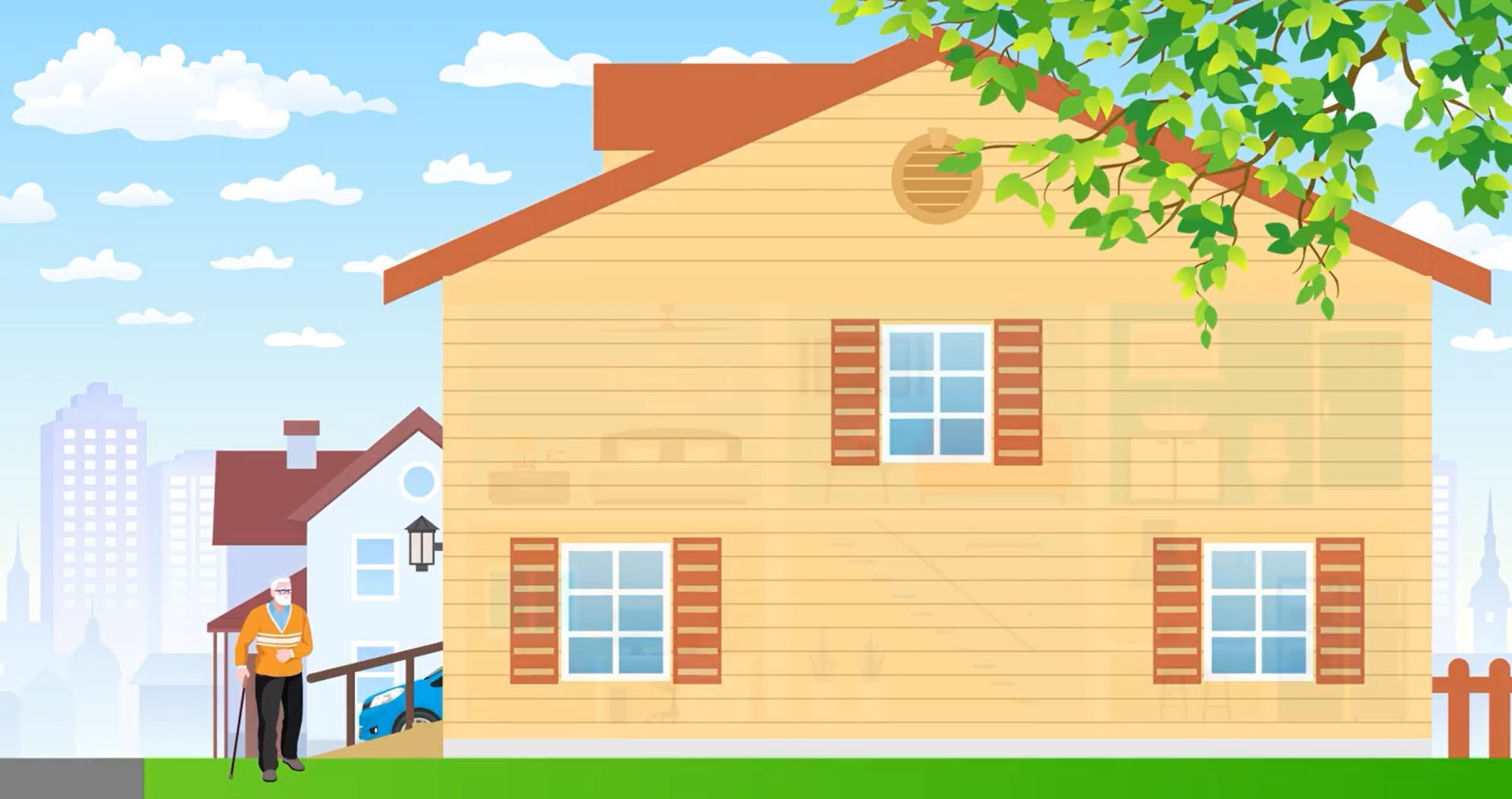
Financial and geographic inequity get the most attention, but we also need to think about age and physical limitations and how that might impact ability to mitigate disaster risks. More than 11% of the U.S. population live in areas with moderate-to-high wildfire risk. Over the past 15 years, the vast majority (87%) of population growth in higher wildfire risk locations has been among people over the age of 60, many of whom had been living in higher risk places for years and are growing older (i.e., aging in place). This percentage is expected to increase over the next 20 years as the population as a whole continues to age, and it is particularly pronounced in the West. Older people face a greater relative risk of dying in a fire than younger people, and older people need different kinds of resources and programs tailored to their unique needs to mitigate the risk from wildfire (Aging and Wildfire Risk to Communities, 2025).
We know that there is a lack of equity in fire adaptation - resources are most available to those who have the luxury of time to pursue them, so financial and professional assistance tends to go to communities and individuals who do not have the greatest need. Even though no one is immune to the effects of climate change, the historically marginalized, financially poor, ability limited, and geographically isolated are, increasingly, feeling the brunt of its catastrophic effects. People impacted by adversity know better than anyone else what they need, and it is up to them to define the terms of their preparedness and recovery.
………………….
What are EMPs?
Those who have the ability or means to reduce wildfire risks and do so will likely have far better outcomes than their neighbors who cannot. If the intention of equitable fire adaptation is to improve wildfire outcomes for everyone who lives in the community, then mitigation and other resiliency work needs to incorporate measures that bring equity to the outcomes of that work. In short, this means all residents, regardless of their circumstances, who they are, and their histories, must have access to the means to ensure that they, their homes and any surrounding land are prepared for wildfire. This is where Equitable Mitigation Programs, or EMPs, come in.

Social vulnerability factors collated from various sources: Developing an Equitable Wildfire Risk Mitigation Program, 2023
EMPs seek to provide a roadmap for filling the gaps left by traditional mitigation programs. For example, many state and federal financial assistance cost-share fire mitigation programs are unlikely to serve those who have the most to lose from wildfire, such as people who rent, and those who cannot meet the 25%-50% match required, or those who have mitigation treatment needs not covered by the cost-share programs (e.g. cost-shares only paying for defensible space thinning, not removal of human-generated fuels in the home ignition zone or home hardening). EMPs also recognize that everyone is in this together – each person’s situation and actions impact others because fire knows no boundaries and overall community preparedness can dictate whether or not your home survives, even if you as an individual have taken mitigation actions on your property. With proper individual, collaborative and community-wide preparation, community members, their homes and infrastructure in their built environment can withstand wildland fire without relying strictly upon fire suppression.
Finally, EMPs work under the assumption that everyone – regardless of their means or ability – must have access to the information, resources and assistance they need to prepare for and be safe during a fire, and to have a clear way forward to recover from wildfire (Developing an Equitable Wildfire Risk Mitigation Program, 2023).
While lower income rural households have fewer resources to mitigate wildfire risks, at least one institutional trend holds promise for improving equity in wildfire protection. Coordinated multi-partner networks - which include traditional actors such as government entities and nonprofits, as well as newer actors like individual neighborhoods and households - can help homeowners mitigate the worst risks through information and educational resources, technical assistance, and in some cases, limited funding, to help with wildfire safety (Considering equity in wildfire protection, 2021).
………………….
How to develop EMPs in your community
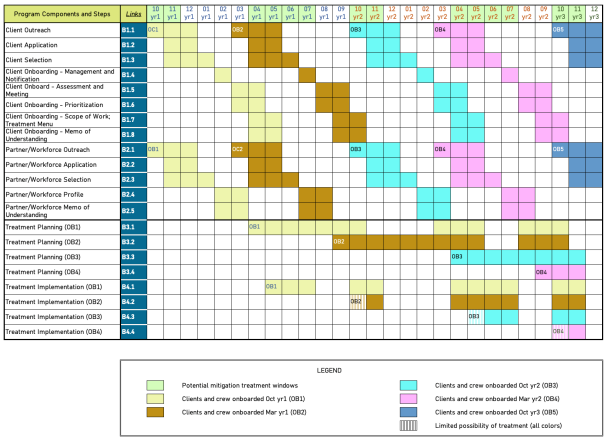
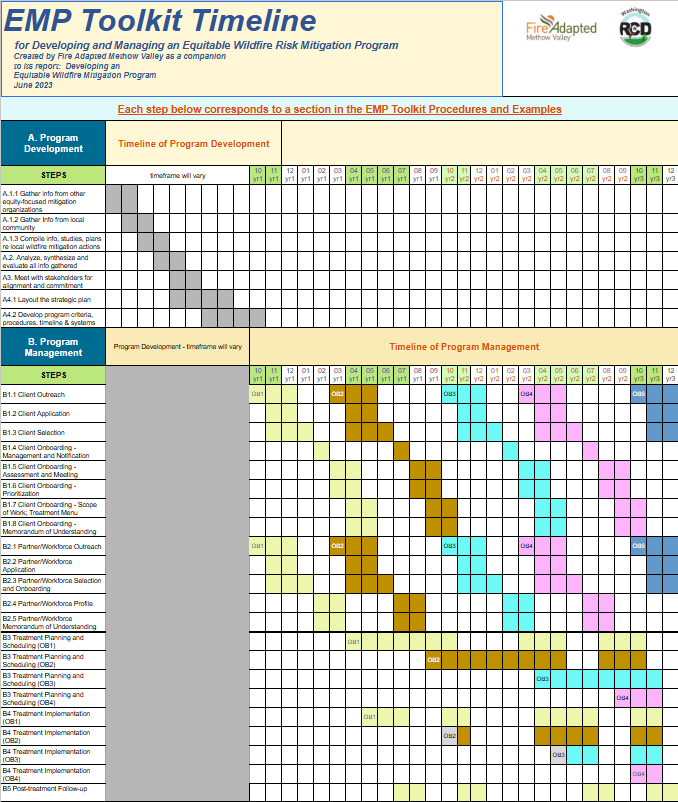
The Equitable Mitigation Program Cycle Timeline, a Gantt chart illustrating major steps of each program cycle and the overlap between consecutive cycles over a 27-month time period.
First, understand that equity does not happen overnight. Actions can be taken now to improve equity, but building and implementing a fully-fledged EMP takes dedication and a lot of time. An EMP’s framework must be based on the unique characteristics of the targeted landscape and the community living there, including their specific needs, strengths and challenges. An assessment can help identify:
The likely EMP clients (those who need the help) and their likely contribution levels. Social or community service organizations, including certain affinity groups and faith communities, can help identify clients.
The likely EMP workforce members (those who can provide the help).
What type of technical assistance will be most impactful.
What type of financial assistance will be most helpful.
The specific barriers for historically marginalized, underserved and overburdened community members that must be mitigated to clear the way for fire preparedness activities.
High-level overview of EMPs
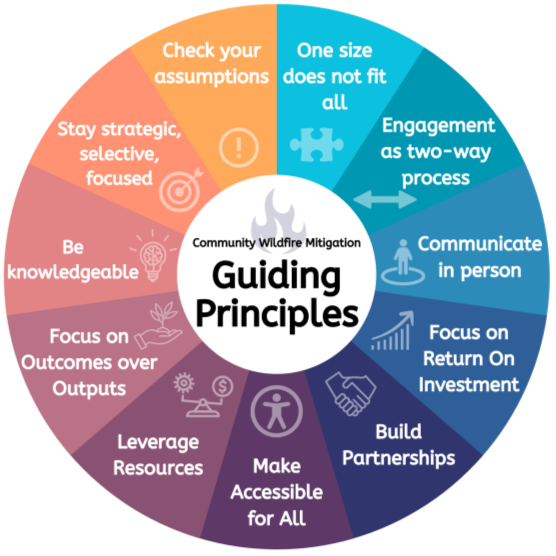
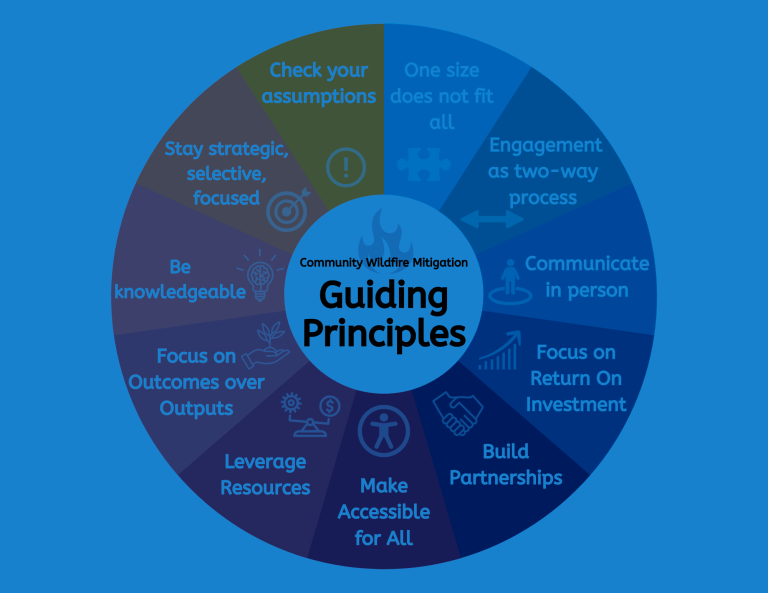
Community Wildfire Mitigation Guiding Principles are the foundation for effective work with communities. From: Community Wildfire Mitigation Best Practices Toolbox
Target funding to high-need areas. Direct government grants, tax relief, and low-interest loans to historically under-resourced or high-risk neighborhoods rather than on a first-come, first-served basis where wealthy residents dominate.
Provide free labor-based support. Avoid expecting low-income or elderly homeowners to pay out-of-pocket or perform heavy physical labor (like clearing 0-5 feet of defensible space or cleaning gutters); instead, provide free local crews and volunteer programs.
Include renters and manufactured home residents. Expand wildfire hardening programs, retrofits, and smoke-relief plans to cover renters, mobile home parks, and other often overlook housing types who often face high eviction or displacement risks and lack landlord-funded upgrades.
Engage communities early. Involve local residents in designing Community Wildfire Protection Plans (CWPPs) so that local knowledge, language needs, and cultural values guide where and how work is done.
Update codes without punishing residents. When modernizing building codes or defensible space ordinances, pair them with financial assistance so low-income families are not priced out, fined, or displaced by compliance costs
To develop an EMP Plan in your community, you can follow all of some of these steps (depending on your needs):
Establish a baseline. Research, gather, and analyze data on equity-focused mitigation organizations, community stakeholders, and existing local plans, studies and reports.
Identify the common themes that emerge evaluate and begin to conceptualize the desired outcomes and objectives for the EMP and the community and possible program parameters (scope and methodology), e.g., who will you serve, what mitigation treatments will be performed, and who will perform the mitigation treatments.
Based on what you learn, determine what you will do by preparing a strategic plan which includes:
The program framework
The roles and responsibilities of EMP leadership, staff, contractors and collaborating partners
A budget for program start-up and management
A multi-year funding plan
Determine how you will carry out the program by finalizing program component procedures, criteria, protocols, timelines and systems.
Once the plan has been developed, you can begin implementation:
Partner/network outreach and onboarding (who can help and in what ways?)
Creation of a treatment menu (what specific assistance can the EMP offer?)
Client identification, outreach, and onboarding
Mitigation treatment planning and scheduling (including prioritization by risk and access)
Mitigation treatment implementation
Post treatment follow-ups
………………….
Resources for EMP development
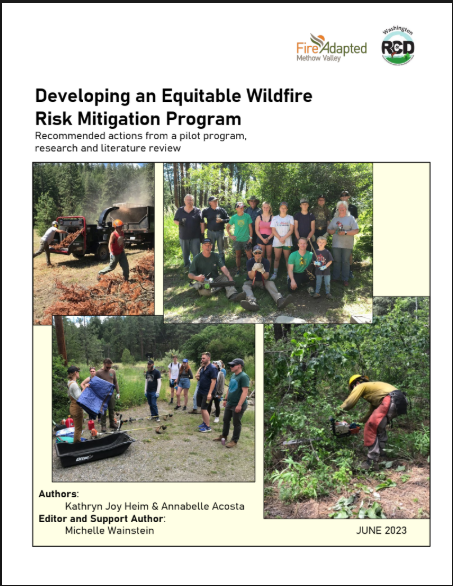
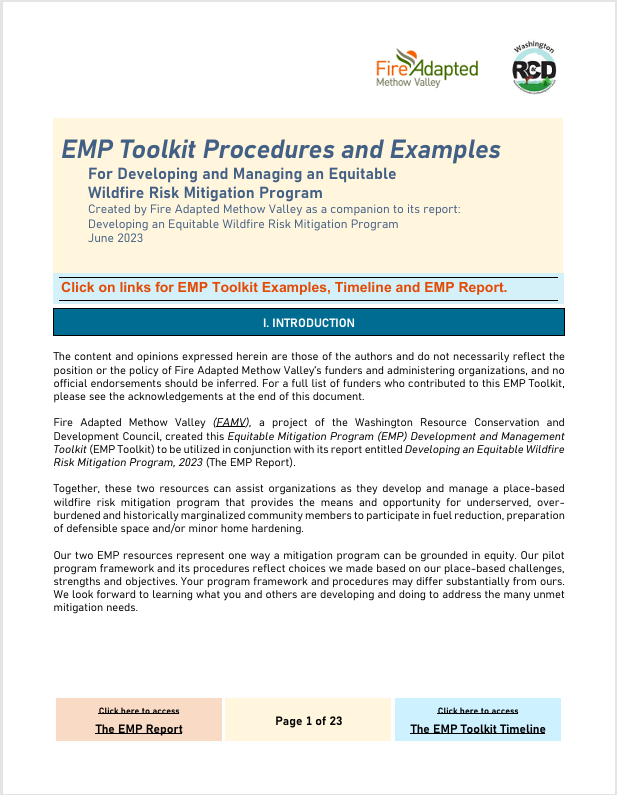
Learn more and access resources for development in the EMP Toolkit Report, Toolkit Procedures, and Toolkit Timeline from FAC Net and Fire Adapted Methow Valley.
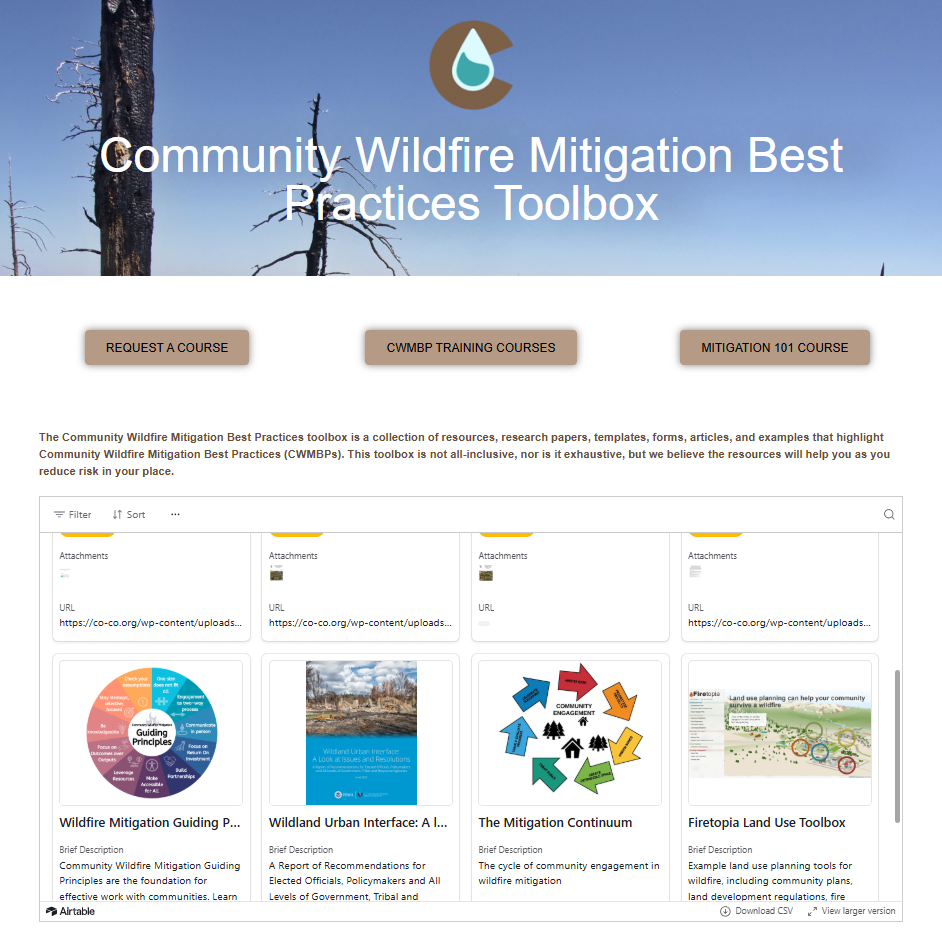
Access tools and resources to guide community-based mitigation in the Community Wildfire Mitigation Best Practices Toolbox from Coalitions and Collaboratives.
Additional Resources
Local news
Some Taos forest users welcome increased thinning for reducing fire risk (9/22/26)
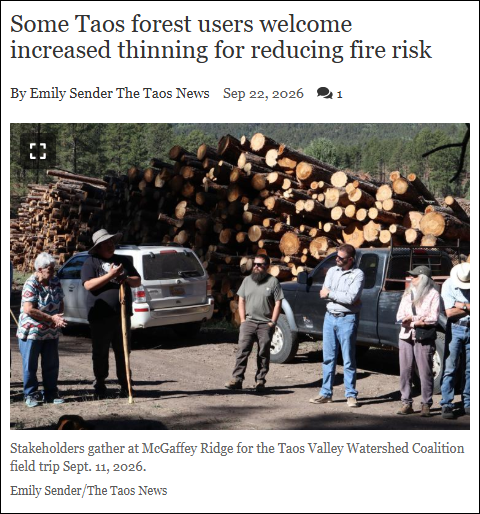
From the Santa Fe New Mexican: “In recent months, the look of the forest along and around N.M. 518 near Taos has changed as tens of thousands of trees have been thinned and harvested from the area. The Carson National Forest’s McGaffey Forest and Rio Grande del Rancho Watershed Restoration project was proposed in 2018 and underwent review under the now-gutted federal National Environmental Policy Act in 2023. A Tussock moth outbreak had already changed the look of the landscape, with defoliated, reddish-brown trees sticking out against the green forest. The insect damage along N.M. 518 is a symptom of what foresters say is the central challenge facing Northern New Mexico’s forests: overgrowth due to a century of fire suppression in fire-adapted landscapes.
Forestry professionals’ response to the simultaneous, large-scale, landscape-altering projects was to celebrate what they consider the culmination of years of work and planning. Conversely, many nearby residents are shocked by the thinning and timber harvesting… On Sept. 11, the Taos Valley Watershed Coalition hosted a field trip to the McGaffey Ridge project site, an opportunity for forest officials and other stakeholders to observe and analyze the project work. Most Taos Valley Watershed Coalition field trippers assessed the project largely in terms of reducing the threat of catastrophic wildfire.
Some Taos County forestry professionals said even if they don’t agree with the values of the federal government, directives aimed at increasing resource extraction help them achieve their goal of thinning the forest to reduce fuel loads and wildfire risk.”
“As the coordinator for the Taos Valley Watershed Coalition for seven years, I’m thrilled about the pace and scale of work being accomplished around the Taos. And I’m just as thrilled about the continued dialogue happening on the ground about how best to implement this work to maximize the benefit to our community and our ecosystems.”
………………………
Upcoming Legislation
Reforestation is an issue of growing importance across New Mexico as we deal with the impacts of wildfire, drought, beetle kill, and a simultaneous decline in natural forest regeneration. In light of this, this week’s newsletter contains information about a legislative action that could greatly impact reforestation in the state: GO Bond 3.
The 2026 General Obligation (GO) Bond 3 includes $17.65 million to construct, furnish, and equip the New Mexico Reforestation Center (NMRC) nursery facilities in Mora County. Currently, the NMRC does not have adequate seedling capacity to replant the state’s burn scars, and funding for the Center is a critical next step in addressing this gap. GO Bond 3 includes funding for the third of five planned greenhouses (the first two are already under construction using state and federal funding) at the NMRC. Passing this initiative will not increase tax rates.
NM Reforestation Center Background
Reforestation is essential for stewarding healthy forests and mitigating against catastrophic post-fire flooding. The New Mexico Reforestation Center grows native, drought tolerant tree seedlings to replant our state’s forests post-wildfire. The Center was formalized in 2022 through a partnership between the Forestry Division at Energy, Minerals, and Natural Resources Department, New Mexico State University, New Mexico Highlands University, and the University of New Mexico. The agency and universities work together to grow seedlings, plant trees, do public outreach, and conduct research and climate modeling to maximize seedling survival rates and thus increase the pace and scale of reforestation. The state currently produces between 250,000-300,000 seedlings annually at NMRC facilities. However, it has been estimated that on existing burn scars in New Mexico, there is a need for approximately 385 million trees!
Current legislative action
In 2026, the New Mexico State Legislature is including $17.65 million in House Bill 248, the 2026 Capital Projects General Obligation Bond Act, for planning, designing, and construction to build out reforestation capacity in Mora County to better meet statewide demand for seedlings. GO Bond 3 will be on the ballot for approval by voters this November; if it passes, resources will be available in the summer of 2027 to fund a third NMRC greenhouse which will expand seedling capacity to 2.5 million per year.
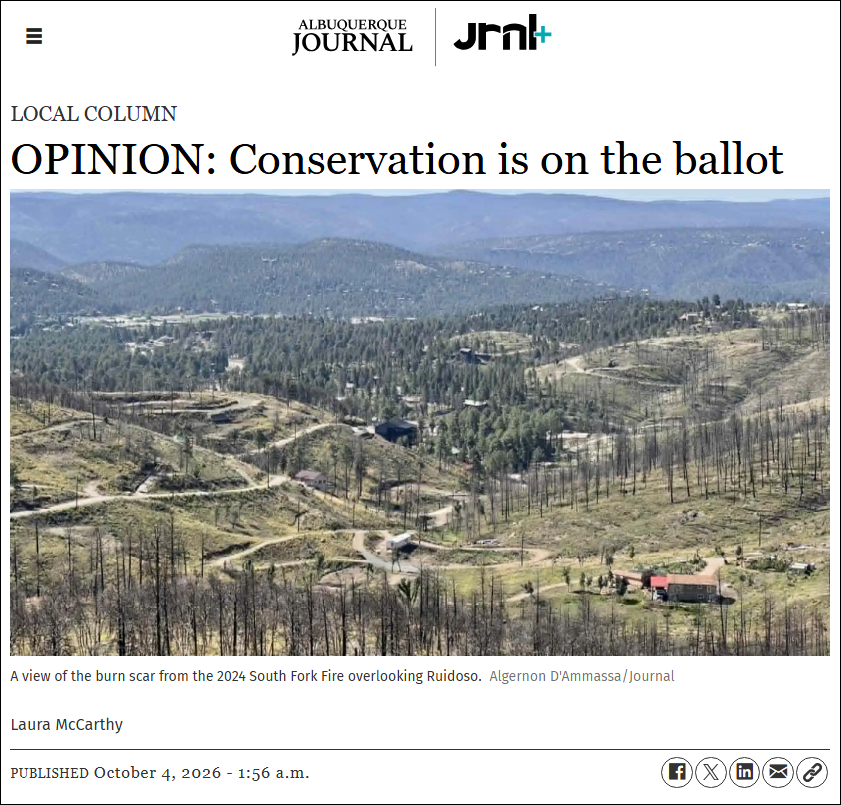
Learn more about GO Bond 3 in this opinion piece from State Forester Laura McCarthy.
………………………
Webinars
27 October 2026 at 12pm MDT: 4D-FUELS: Semi-Automated Forest Structure and Fuel Mapping to Support Treatment Planning and Monitoring in the Southwest
Dry forests in the western US are exposed to heightened risks of large, contiguous high-severity fire patches and limited forest regeneration. Forest managers use fuel reduction activities to address these challenges, however there is room for growth. Planning fuels reduction activities and monitoring their effectiveness could be made more efficient with accurate, up-to-date maps of forest structure that measure changes in forest structure caused by disturbances and treatments.
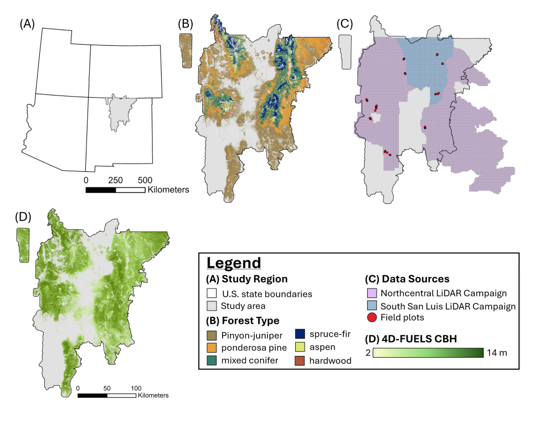
Join the Southwest Fire Science Consortium for a webinar on the 4D-FUELS system, a semi-automated system in Google Earth Engine that maps forest structure and fuels on an annual basis at a 10 meter by 10 meter resolution. This webinar will offer actionable information and a tool tutorial for individual working in Forest Management.