Happy Wildfire Wednesday, FAC readers!
“Best available science”, a term you may have heard tossed around by land managers or fire practitioners, refers to the most reliable, valid, up-to-date, and relevant empirical knowledge in any given field. In the field of Wildfire Preparedness (or Wildfire Resilience), staying up to date on the latest science may feel like it requires a lot of time and attention. However, with a changing climate and continuously evolving vegetation patterns, outdated assumptions or science can render traditional mitigation strategies ineffective. Continuously updating our understanding of the science of fire resilience not only helps us be better prepared - it is crucial for shifting from reactive firefighting to a proactive sustainable coexistence with fire. Today’s newsletter highlights some recent research on Wildfire Resilience and dives into a trove of additional resources.
This Wildfire Wednesday features:
New publications and resources on resilience
Wildfire Resilience Index (WRI): measuring how resilient you are
Building Codes for Resilient Communities: treating wildfire as a built-environment problem
Investment Returns from Forest Fuel Reduction Treatments
Additional Resources and Upcoming Opportunities
Resources for Community Members and Leaders, including:
A guide to fire-resistant landscaping,
Wildfire smoke information and a social medial toolkit, and
A guide to snakebite avoidance for firefighters.
Warm regards,
Rachel
The Science of Resilience: new publications on the topic
Wildfire Resilience Index
“Wildfire resilience is a goal everyone agrees on, but there’s been no shared, quantitative way to measure it.” In the Fire Networks blog post “You Can Now Look Up Your Community’s Wildfire Resilience Score," the authors introduce a new tool for communities to measure wildfire resilience at a landscape scale, with an accompanying dashboard at wildfireindex.org. The creators of the Wildfire Resilience Index (WRI) discuss how the tool looks at both resistance and recovery across eight socio-ecological domains. Explore the dashboard to see how your community compares.
…………………………………….
Building Codes & Resilience
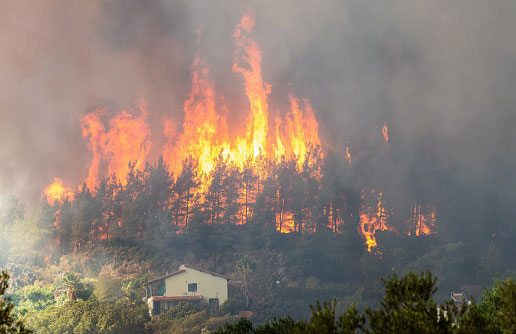
In the article "2026’s Fire Season Is a Warning Light: Building Wildfire Resilience Beyond ‘Fire Season’” from the Building Safety Journal, the authors discuss how considering wildfire a seasonal concern is a) becoming less accurate and b) results in the ideas that it is something to merely respond to seasonally, rather than to build in resilience for. "Wildfire risk has always been seasonal in the sense that fuels dry and ignition patterns change through the year. But the idea of a predictable, bounded “season” is less useful when national outlooks describe meaningful fire potential outside traditional windows" (as is often the case in our current climate). "If 'fire season' is treated as a temporary disruption, the default posture becomes reactive—extra staffing, restrictions, public messaging—then a return to baseline. Resilience, by contrast, is built into the community’s DNA through land use decisions, construction requirements and defensible space practices that persist beyond any one summer."
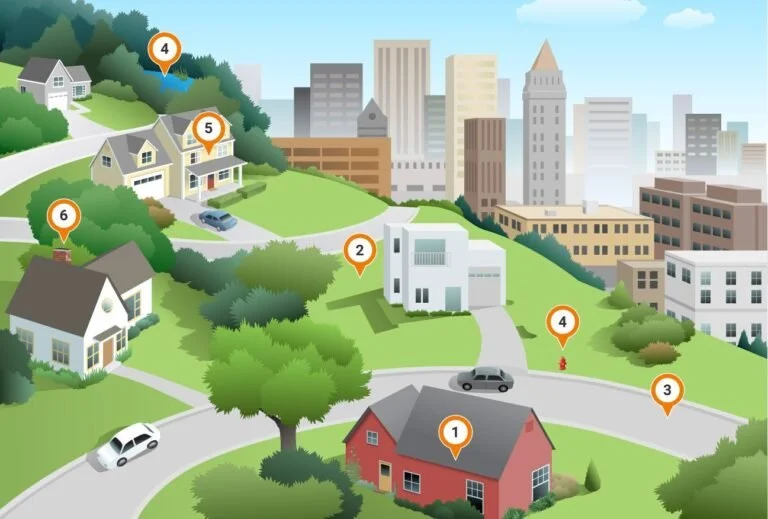
The key components of the IWUIC include: 1. Ignition-Resistant Construction; 2. Defensible Space; 3. Emergency Vehicle Access; 4. Water Supply; 5. Fire Sprinklers; 6. Chimneys with Spark Arrestors
"Wildfire becomes catastrophic for communities when it transitions from a vegetation fire to a structure ignition and neighborhood-to-neighborhood spread problem. That transition happens under extreme weather and fuel conditions, but it is mediated by the vulnerabilities of buildings, parcels and neighborhood layouts… Embers exploit openings and weak points: vents, eaves, under-deck areas, roof edges and combustible materials within the immediate perimeter of structures. Neighborhood-scale factors, such as housing density, attached fences and continuity of combustible landscaping, can turn isolated ignitions into rapid structure-to-structure spread.
"When communities recognize wildfire as a built environment problem, they naturally begin asking different questions - both related to building codes, and related to operational community function." So, in moving from “forecast” to “foundation”, what can communities do now?
Define and map the WUI—then align policy to it
Reduce the dominant ignition pathways
Treat defensible space as a life-safety buffer, not landscaping advice
Build resilience that compounds
…………………………………….
Each dollar invested in fuel treatments yields results
A new peer-reviewed study analyzed 285 wildfires between 2017 and 2023 that intersected with at least one fuel treatment completed between 2007 and 2023. The study integrated data on wildfires, fuel treatments, suppression efforts, and damages across the Western United States, finding that fuel treatments reduced wildfire spread and severity, avoiding an estimated $2.8 billion in damages. This study estimates that each dollar invested in fuel treatments yields $3.73 in expected benefits, underscoring the importance of investing more in preventive forest management. These results differ slightly in the estimated return on investment but otherwise align with the 2024 meta-analysis findings that each dollar invested yields a 600% return. The difference likely owes to the fact that the new research “only captur[es] a specific subset of benefits”, while the 2024 research was more robust in its analysis.
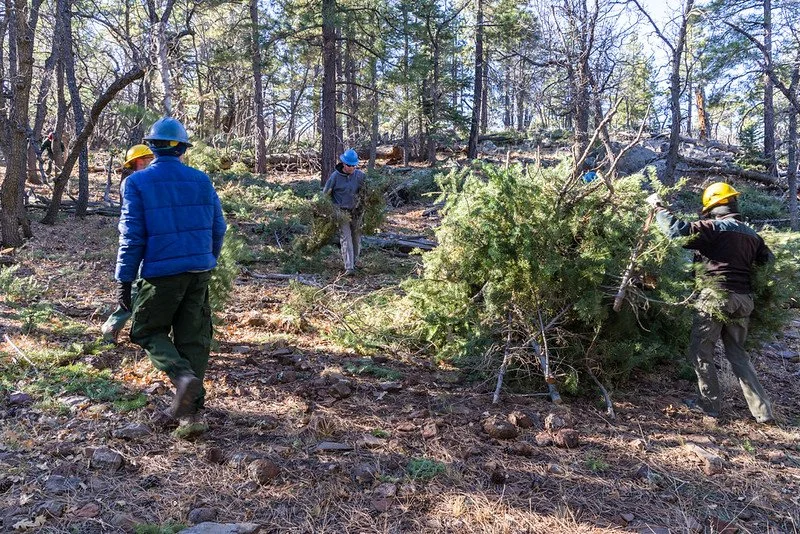
The research also found that larger treatments—those covering more than 2,400 acres—were the most cost effective. Read a summary of the study’s findings here: Every dollar spent on forest fuel treatments saves $3.75 in wildfire damages, study finds.
Additional Resources and Upcoming Opportunities
Resources for Community Members and Leaders
Aesthetics meets Fire Resistance: a guide for landscaping
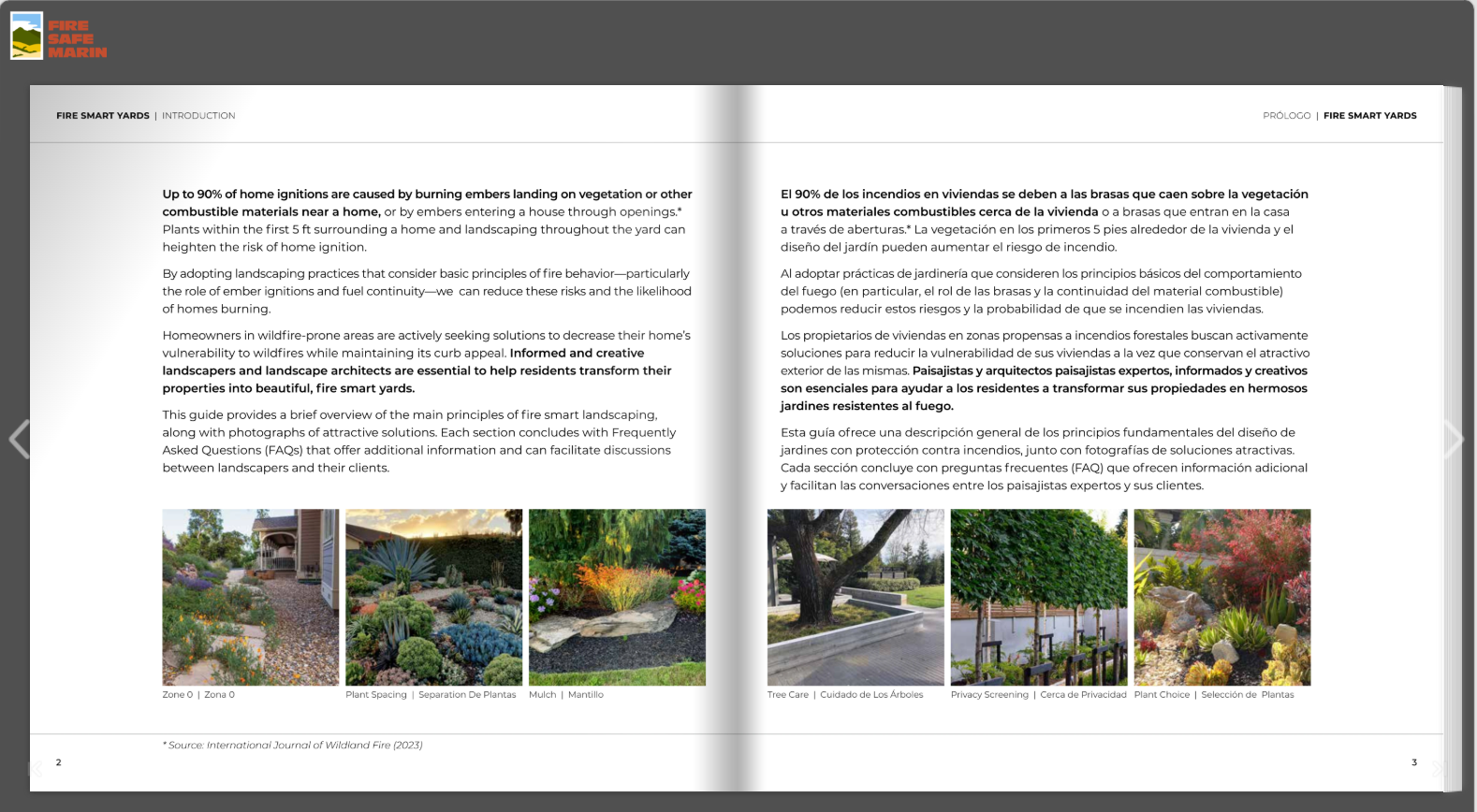
Fire Safe Marin has produced “Fire Smart Yards: A Visual Guide for Landscapers / Una Guía Visual Para Paisajistas,” a bilingual resource that covers the why and how of landscaping in Zone 0 and beyond. It succintly and accurately describes important topics and areas of the house, with recommendations for Zone 0 (0-5' from structures), Plant Spacing, Mulching, Tree Care, Privacy Screening, and Plant Choice. Most of the recommendations are relevant across geographies and provide an excellent resource for homeowners or landscapers who are cautious about defensible space or don't know where to start.
…………………………………….
Smoke Info
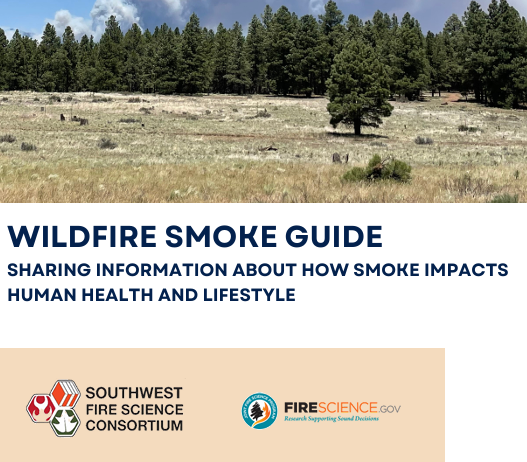
The Southwest Fire Science Consortium has created a new social media kit about wildland and prescribed fire smoke. The kit includes nine messages with versions for both short-form social media (e.g. X, Bluesky) and long-form (Facebook, Instagram, LinkeIn), plus additional background information, resources, and notes on smoke research. Topics covered include: What is Wildfire Smoke; Who is at risk; How to know whether air quality is harmful; Differences between prescribed fire and wildfire smoke; and Resources to stay safe. For more information on smoke, refer to the FACNM resources page and Wildfire Wednesday #183.
…………………………………….
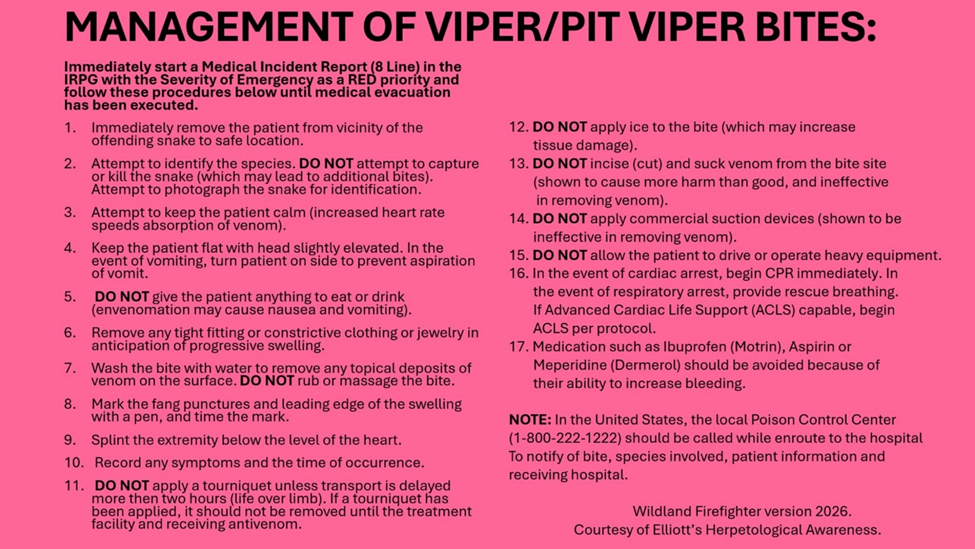
Snakebite avoidance SOPs
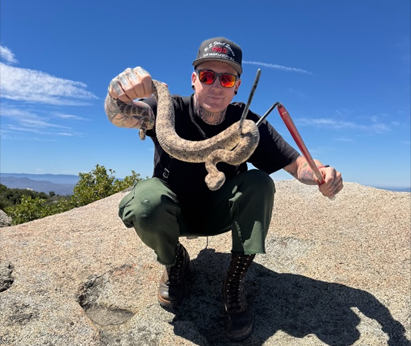
A new blog post from The Wildfire Lessons Learned Center, “Best Practices Around Snakes for Wildland Firefighters,” includes tips for avoiding close encounters, and an image of a pocket guide on managing a bite. Some key takeaways include:
Snake bites typically occur because someone’s situational awareness is down, as in not watching where they step or not noticing the snake because of it blending into its surroundings.
A snake’s temperament can vary from each individual snake and species.
Snake activity typically starts in the springtime during the day, then becomes more active at night during the hotter months. Be mindful in canyons, washes, rock piles, the base of shrubs, and under parked vehicles.
Snake encounters typically happen in passing.
If a facility has a rodent problem, keep in mind that this can attract snakes, both venomous and nonvenomous.
Geospatial Data
New Mexico treatment and buffer map
New Mexico State Forestry Division developed an interactive map that highlights completed, ongoing, and historical mitigation treatments across the state and also identifies communities that could benefit from future mitigation efforts. The map provides detailed information for each community, including average wildfire risk, how that risk ranking compares to communities statewide, and estimated structure density for the community. Communities represented by a circle on the map are considered in the top 100 communities at risk in New Mexico.

Career and Funding Opportunities
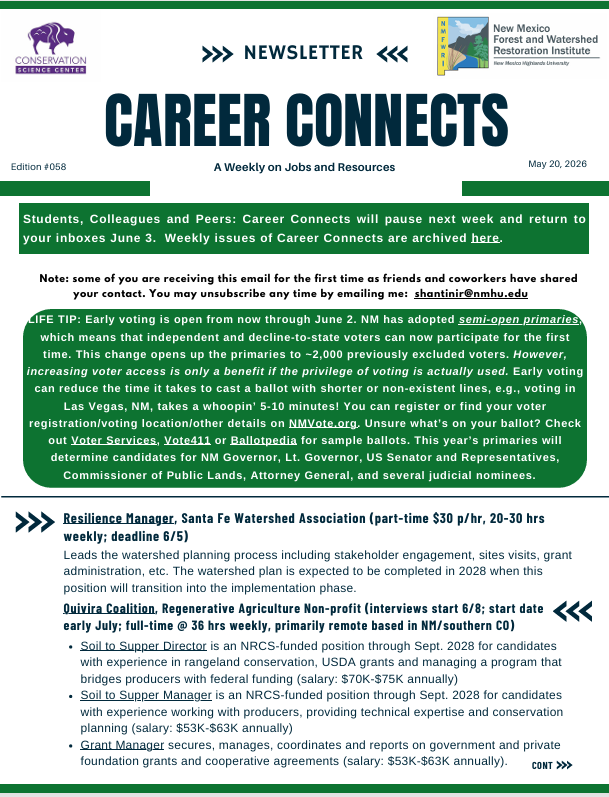
New Mexico Forest and Watershed Restoration Institute’s Career Connects newsletter details open positions, scholarships and grant opportunities, learning opportunities, and more. The May 20 edition included:
Position opening at Ciudad Soil & Water Conservation District for an Education Coordinator
Announcement of Tom Swetnam Book Talk and Conservation Discussion at REI Santa Fe
Workshop opportunity focused on Plants as Restoration Tools, how to use wildflowers and grasses to rehabilitate your land
Art X Fire Exhibition
Disturbance is a new interdisciplinary initiative by The Paseo Project, Del Fuego, and the Forest Stewards Guild, that brings artists, scientists, and community members together to examine wildfire as both a destabilizing force and a generative ecological process. The exhibition of finished projects—ranging from installation and sculpture to media-based and participatory works—will be brought together for the public opening of Disturbance on August 28, 2026, launching a multi-month exhibition and program series in Taos.
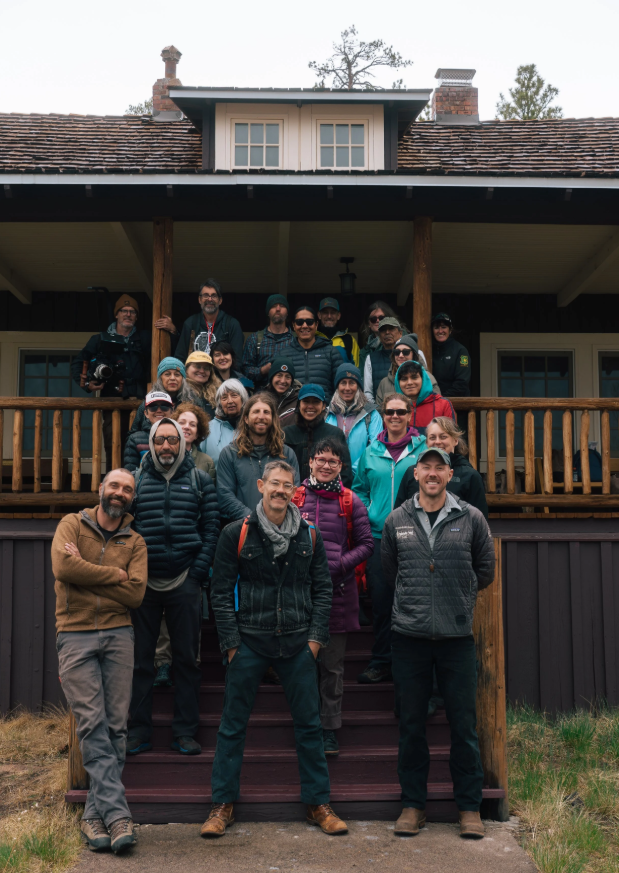
The project began with a call that brought together a cohort of artists who participated in a Northern New Mexico–based Fire Ecology Boot Camp this past April, where artists were paired with fire practitioners, ecologists, land stewards, and community knowledge holders. Through shared learning, field visits to burn scars and post-fire landscapes, and sustained dialogue, the boot camp established a common foundation from which new creative work will emerge. The artists are now in the process of developing new works responding to the ecological, cultural, and emotional dimensions of wildfire.
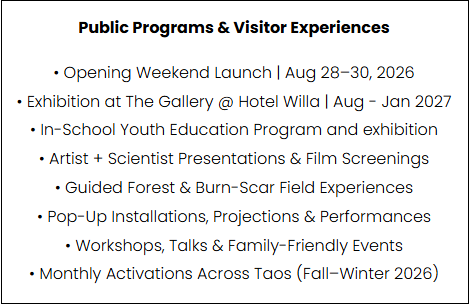
Throughout the fall, Disturbance will continue to unfold through community-centered programming, including artist-led workshops, public conversations, youth-focused engagements, educational partnerships, and additional events designed to invite reflection, dialogue, and shared learning.
Webinars
RestoreNet: A field trial network to improve restoration outcomes across environmental gradients // Tuesday, June 30, 2026 at 11am AZ/ 12pm MT
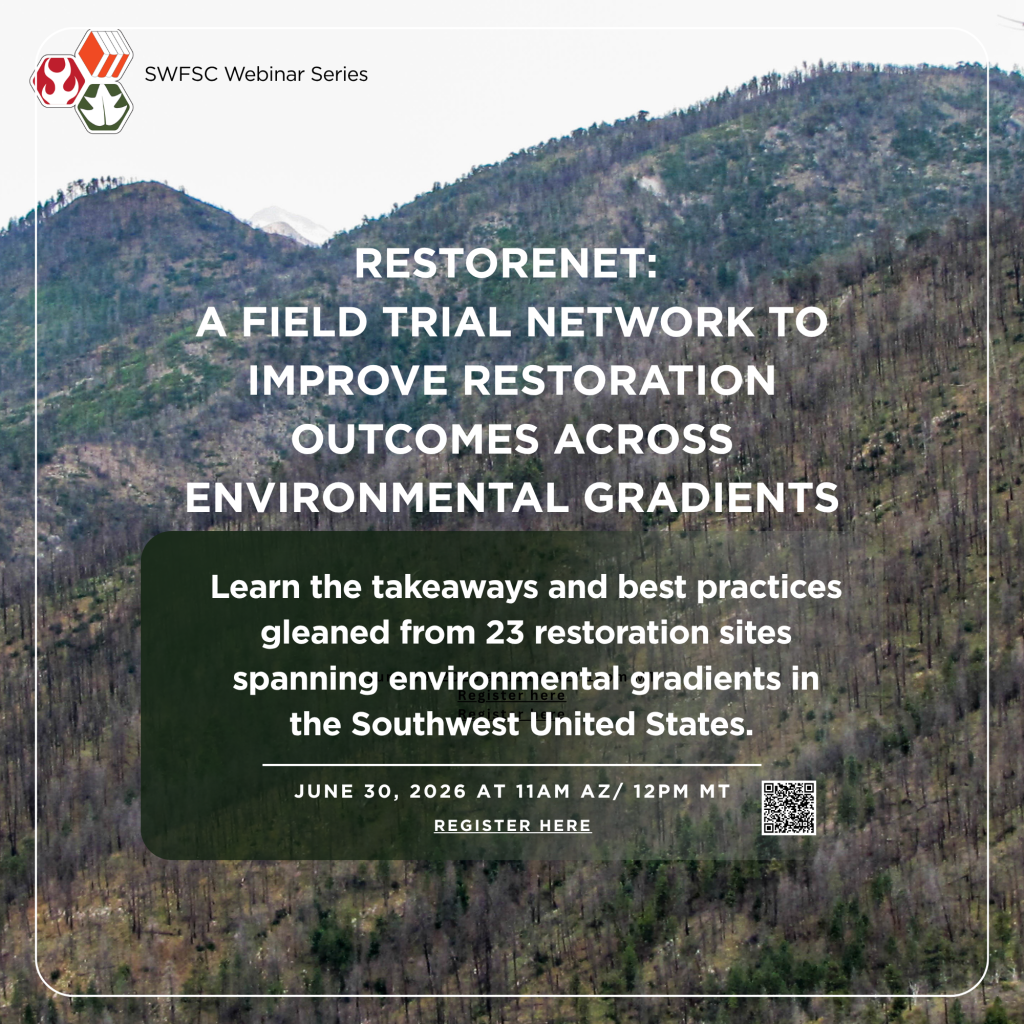
RestoreNet is a restoration field trial network co-produced by scientists and land managers that, since 2017, has systematically produced and tested restoration treatments across a growing network of 23 sites spanning environmental gradients in the Southwest U.S.. RestoreNet treatments include use of different seed mixes, periods of seeding, outplanting greenhouse-grown seedlings, soil surface modifications, soil microbial inoculations, seedballs, and targeted livestock grazing. Presenter Laura Shriver with the USGS Southwest Biological Science Center will summarize lessons learned from RestoreNet over the past nine years and distill results into best management practices for land managers and restoration practitioners across the Southwest.