
Happy Fire Friday, Fire Adapted New Mexico!
In many areas, May is Wildfire Awareness Month; as the weather becomes warmer and wildland vegetation, or fuels, begin to dry out, it’s time to get ready for wildfires. Preparing our homes and communities for fire entails many of the things that we discuss regularly in this newsletter - signing up for local emergency alerts, gathering “go” bags with all of the essentials (see page 6 for details), making or reviewing your evacuation plan, and working on your defensible space and home hardening - but it also means getting mentally and emotionally prepared for the fire season ahead.
Today’s newsletter focuses on a part of holistic fire preparation which generally doesn’t garner as much attention by shining a light on May as Mental Health Awareness Month. These resources are intended to help firefighters, community organizers, and individuals work to prepare themselves for the stress that fire season can put on our wellbeing.
This Wildfire Wednesday features:
See the Person, Support the Journey: resources for mental health care and awareness
Additional resources
A new trauma informed communications guide for teachers, educators, community leaders, and others who work or communicate with individuals who may have experienced trauma, such as fire or flood evacuations or impacts.
Take care,
Rachel
Mental Health Care and Awareness
Fire impacts everyone
Stock photo
Credit: Boyloso
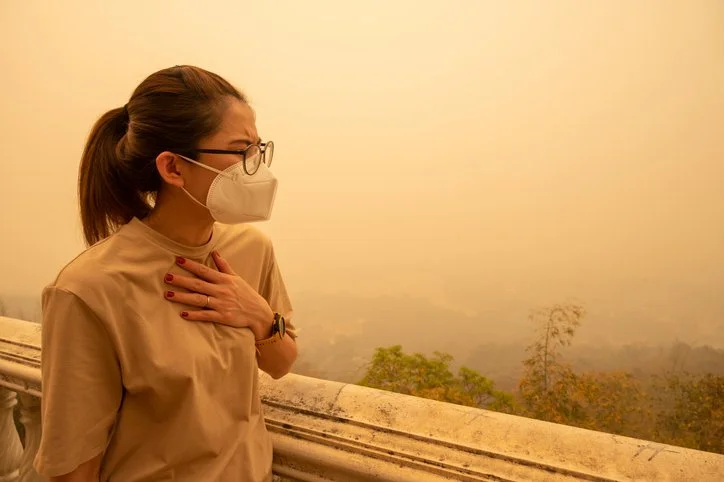
Wildfires, like other natural disasters and traumatic events, take a toll on the mental health of those directly affected and in the community. Whether the impact is the loss of a home, having to flee unexpectedly, dealing with the uncertainty of a fire’s path or worrying over smoke-filled skies, wildfires can lead to emotional distress. The Substance Abuse and Mental health Services Agency notes that feelings such as “overwhelming anxiety, constant worrying, trouble sleeping, and other depression-like symptoms are common responses before, during, and after wildfires” (APA, 2024). Within 48 hours of exposure to wildfire smoke, people (especially women, girls, and the elderly) are more likely to visit the emergency room for an anxiety condition (Zhu et al, 2024) and researchers have observed an increase in the use of antidepressants, anxiolytics, and mood stabilizers within six weeks of a nearby fire (Wettstein and Vaidyanathan, 2024). The impacts can be even more chronic - individuals exposed to fire may experience cognitive impacts, including a diminished ability to concentrate and other chronic symptoms of post-traumatic stress disorder, anxiety, and depression, up to a year after the fire exposure (Grennan et al., 2023).
Impacts on fire personnel
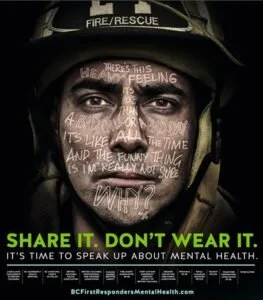
Firefighting, especially wildland firefighting, is a demanding occupation with many challenges: injuries and worker’s compensation challenges, long and irregular hours, housing difficulties, low pay that requires working significant overtime to make a living. It takes a lot physically (as exemplified by total daily energy expenditures that can exceed 6000 calories/day) while coping with complex physical and environmental situations (heat, altitude, chronic smoke exposure, compromised sleep and fatigue, elevated stress). These conditions challenge thermoregulatory responses, impair recovery, and increase short- and long-term injury/health risks. The occupation also imposes emotional strain on both firefighters and their families.
The long-term implications of wildfire management and suppression on the physical and mental health of wildland firefighters are significant, especially as the frequency and intensity of wildland fire outbreaks and the duration of the fire season is growing. Additionally, physical and mental challenges build off of one another - the occupational stresses experienced during a season (inconsistent sleep and diet, smoke, emotional stress, and changing levels of fitness) interact and may lead to slower performance recovery and deterioration of metabolic health after the fire season ends (Ruby et al., 2023). Some long-term clinical health impacts that have been observed include increased emergency room visits, suicidal ideation or behavior, higher rates of miscarriage, substance abuse or dependancy, PTSD, depression, and anxiety. The fireline is a workplace that pushes people to their limits - and sometimes beyond them - and the toll that this takes is a topic which is finally gaining international attention.
Resources for wellbeing
General Resources:
Follow these steps
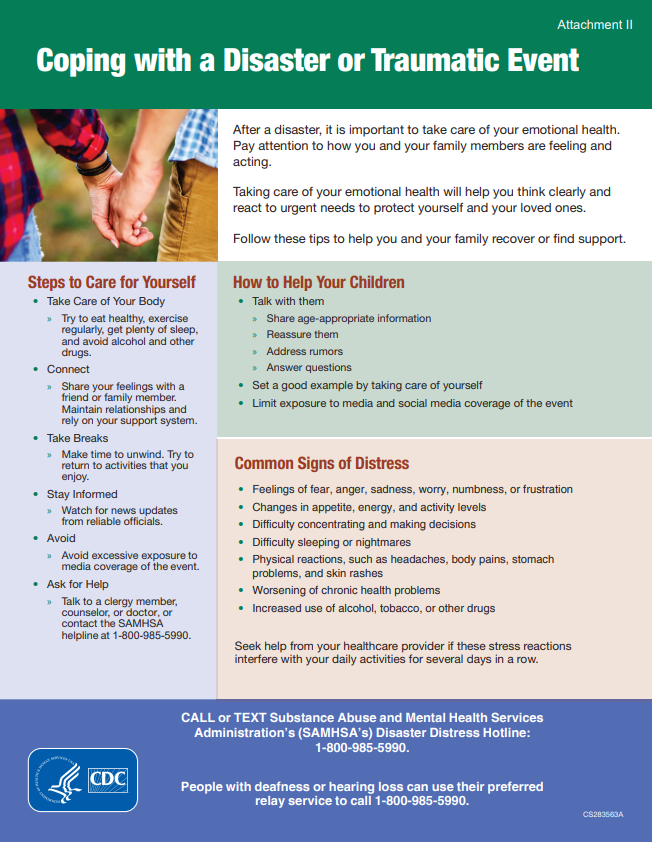
Take care of your body. Try to eat healthy, exercise regularly, get plenty of sleep, and avoid alcohol and other drugs. Substance Abuse and Mental Health Services Administration (SAMHSA)
Connect. Share your feelings with a friend or family member. Maintain relationships and rely on your support system. SAMHSA
Be kind to yourself. Some feelings when witnessing a disaster may be difficult to accept. You may feel relief that the disaster did not reach you, or you may feel guilt that you were left untouched when so many were affected. Both feelings are common. American Psychology Association (APA)
Take breaks. Make time to unwind. Try to return to activities that you enjoy. Although you’ll want to keep informed—especially if you have loved ones affected by the disasters—take a break from watching the news. SAMHSA / APA
Ask for help. Talk to a counselor, doctor, or clergy member, or contact a crisis helpline such as the SAMHSA Disaster Distress Hotline at (800) 985-5990.
APA - Recovering emotionally after a residential fire: this website provides background information and context as well as resources for recovery and coping. While it focuses on residential fire, many of the suggestions are applicable across areas of impact.
Helping Children Deal with Disaster: several resources are available for parents and caregivers helping children navigate a fire. The NTCSN guide on Preparing Children after a Wildfire Damages Your Community offers guidance on deciding whether or not a child should return to their home or neighborhood after it was damaged in a wildfire. FEMA offers a guidebook on Helping Children Cope with Disaster. For more information, call the FEMA publications warehouse at 1-800-480-2520. Additional resources can be found at the Department of Homeland Security’s Ready.gov and the National Child Traumatic Stress Network.
People may experience an emotional "high" after a disaster due to survival and communities coming together. The emotional "lows" may come later and can be triggered months or years after the event. For a detailed chart and an interesting article on this, visit the OperationSAFE website.
Disaster Distress Helpline: provides year-round, 24/7 phone and text-based crisis counseling for anyone experiencing emotional distress related to natural or man-made disasters. Those impacted by recent wildfires and experiencing distress can reach out for support. Call 1-800-985-5990 or text "TalkWithUs" to 66746 or "Hablanos" to 66746 for Spanish.
Crisis Text Line: Free, confidential mental health support for those struggling with anxiety, stress, or trauma due to the fires. Text HOME to 741741.
Fire personnel-specific resources:
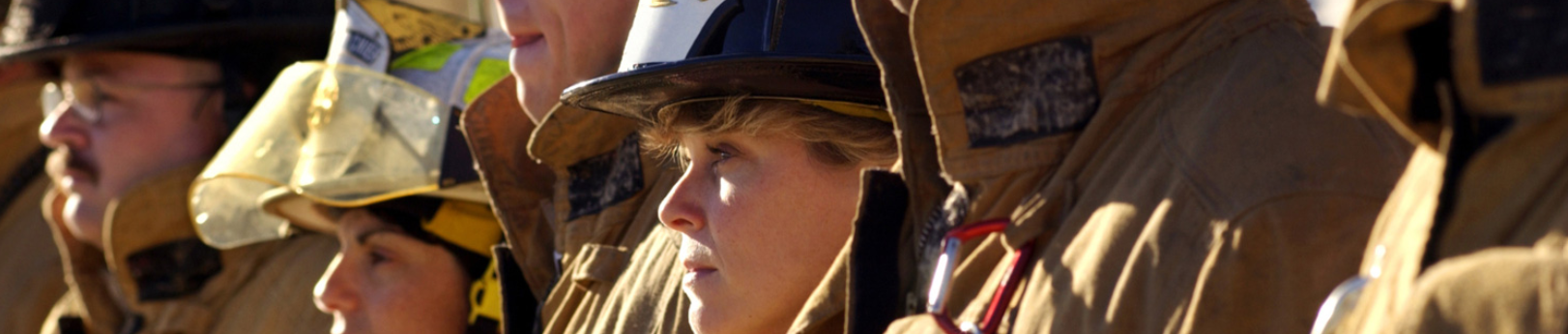
Share the Load™ Support Program for Fire and EMS: this program provides access to critical resources and information to help first responders and their families manage and overcome personal and work-related problems, including a Directory of Behavioral Health Professionals to find local assistance for behavioral health issues, resources, videos, educational courses, and more.
Hotshot Wellness: this Oregon-based nonprofit works to advance the health and wellness of wildland firefighters through health-focused advocacy, education, programs, and scholarships. They host a wellness library with resources for fire professionals, connect practitioners with medical professionals, offer adventure retreats and advocacy, and more.
Federal Wildland Firefighter Health and Wellbeing Program: this program supports wildland fire personnel across the US Departments of Agriculture and the Interior. The program is currently developing more comprehensive resources across Behavioral, Environmental and Occupational, and Physical Health and Readiness to better serve federal and Tribal wildland firefighters. Learn about their mental health support, expanded therapy services, and refer to their list of health and wellbeing contacts.
FUSEE: Firefighters United for Safety, Ethics, and Ecology (FUSEE) has fostered a vibrant online community of fire practitioners; it also hosts resources for firefighter wellbeing, including job-specific mental health providers, educational resources, a library of meditations, and annual retreats. They are also hosting a Firefighter Wellness Program Art Contest with submissions due by June 21, 2026.
Wildland Firefighter Foundation: the goal of the Foundation’s Mental Health Program is to promote the mental health and overall wellbeing of wildland firefighters and to address the unique mental health challenges faced by wildland firefighters, while providing confidential and immediate care to those in need. It provides resources and answers to frequently asked questions for those struggling with mental health, as well as the people who love and support them.
Cancer resources:
Over half of all firefighters may develop cancer. The Firefighter Cancer Support Network provides resources for fire personnel and retirees who are faced with a cancer diagnosis.
Firefighters, especially those who engage with structure fires, are at a higher risk of being diagnosed with mesothelioma, a rare cancer caused from exposure to asbestos that takes 20-50 years to develop. This guide provides information about mesothelioma that you may need to know when working as a firefighter.
Learn about the Honoring Our Fallen Heroes Act, a piece of federal legislation passed in late 2025 which financially covers service-related cancers for firefighters who die or are permanently disabled as a result of the disease.
Additional Resources
Trauma-Informed Communications Kit
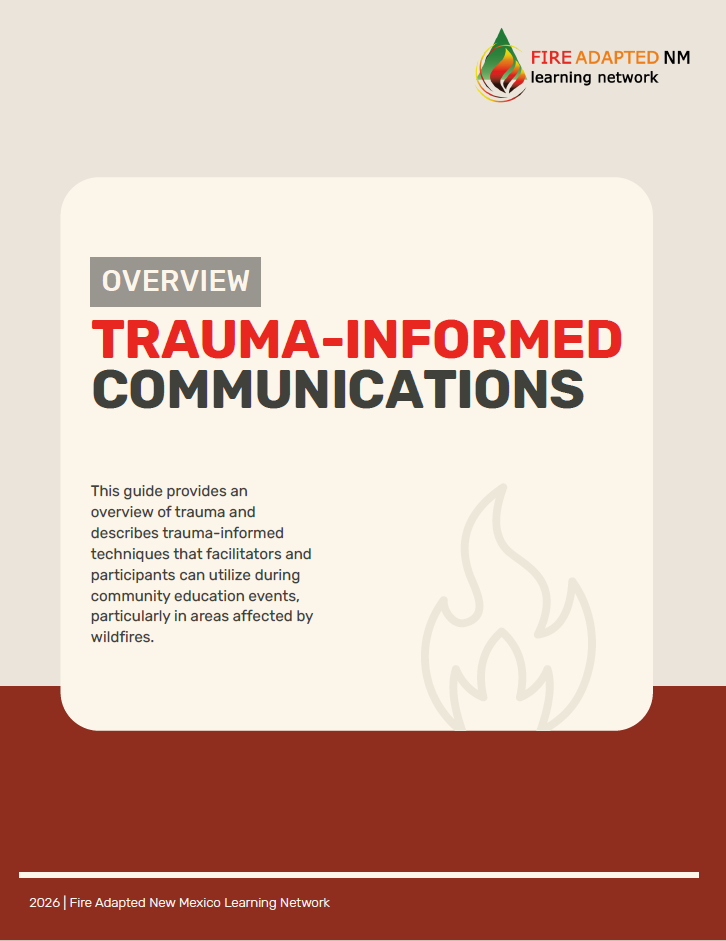
This guide provides an overview of trauma and describes trauma-informed techniques that facilitators and participants can utilize during community education events, particularly in areas affected by wildfire. It will be permanently stored and available on the Resources for Fire Professionals and Land Managers webpage. The kit includes:
Definitions and context to understand what trauma and trauma-informed are and what they mean
Descriptions of types of trauma
Step-by-step instructions for how to apply trauma-informed care techniques
Tips for how to self-regulate while interacting with individuals who have experienced trauma
Webinars
The Southwest Fire Season: 2025 Overview and 2026 Outlook: Tuesday, May 19, 2026,12pm MT
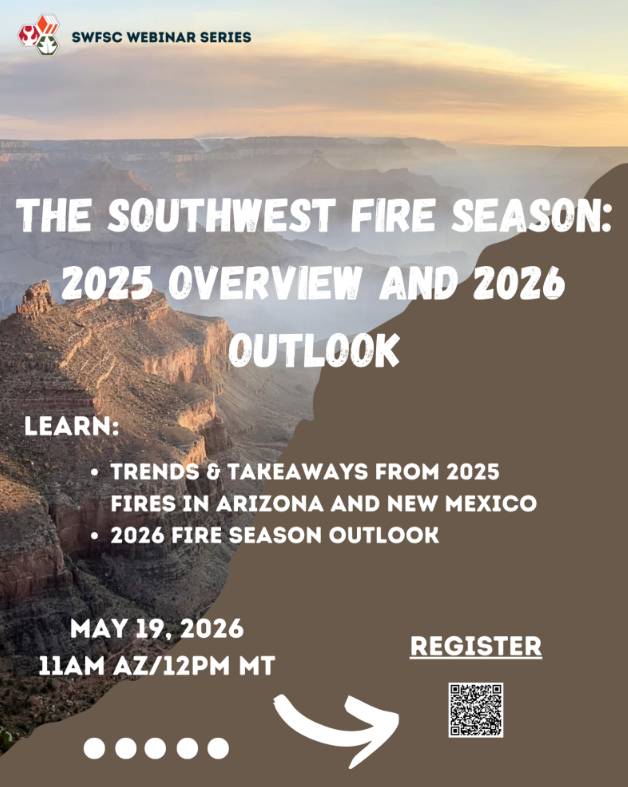
The 2025 wildfire season in the Southwest featured a steady progression from early and mid-season incidents of limited duration into a set of larger, more complex fires that defined regional operations. Together, these fires concentrated regional suppression resources and marked the peak of the 2025 fire season, underscoring the cumulative operational challenges posed by simultaneous large fires in fuel-rich landscapes. This webinar from the Southwest Fire Science Consortium will provide a review of the largest or most impactful fires of the 2025 Southwest fire season, including trends, impacts, and takeaways from our tactics and response. The presenters will also offer a 2026 fire season outlook based on the most up-to-date forecast from the NOAA predictive services.
Post-Fire Assessment and Recovery training webinar series
We are halfway through this six-part series on post-fire assessment and recover for foresters and land managers from the Washington DNR, Okanogan Conservation District, and Washington State Conservation Commission Center for Technical Development (wactd.org). Recordings of the webinars will be posted to the CDT’s website later this year.
📅 Webinar Schedule:
April 22 – Post-Fire Hazard Assessments
April 29 – Using the LEAF Assessment Template
May 6 – Erosion Assessment & Mitigation
May 13 – Debris Management & Danger Trees
May 20 – Building a Recovery Funding Portfolio
May 27 – Pre-Fire Recovery Planning
For Santa Fe County residents:
Santa Fe County Community Wildfire Protection Plan (CWPP) draft and updates: Wednesday, May 20, 2026 at 6pm MT
Southwest Environmental Consultants is hosting a public webinar on the draft Santa Fe County CWPP. This document is available for public review and comment until May 24.