
Hello FACNM community,
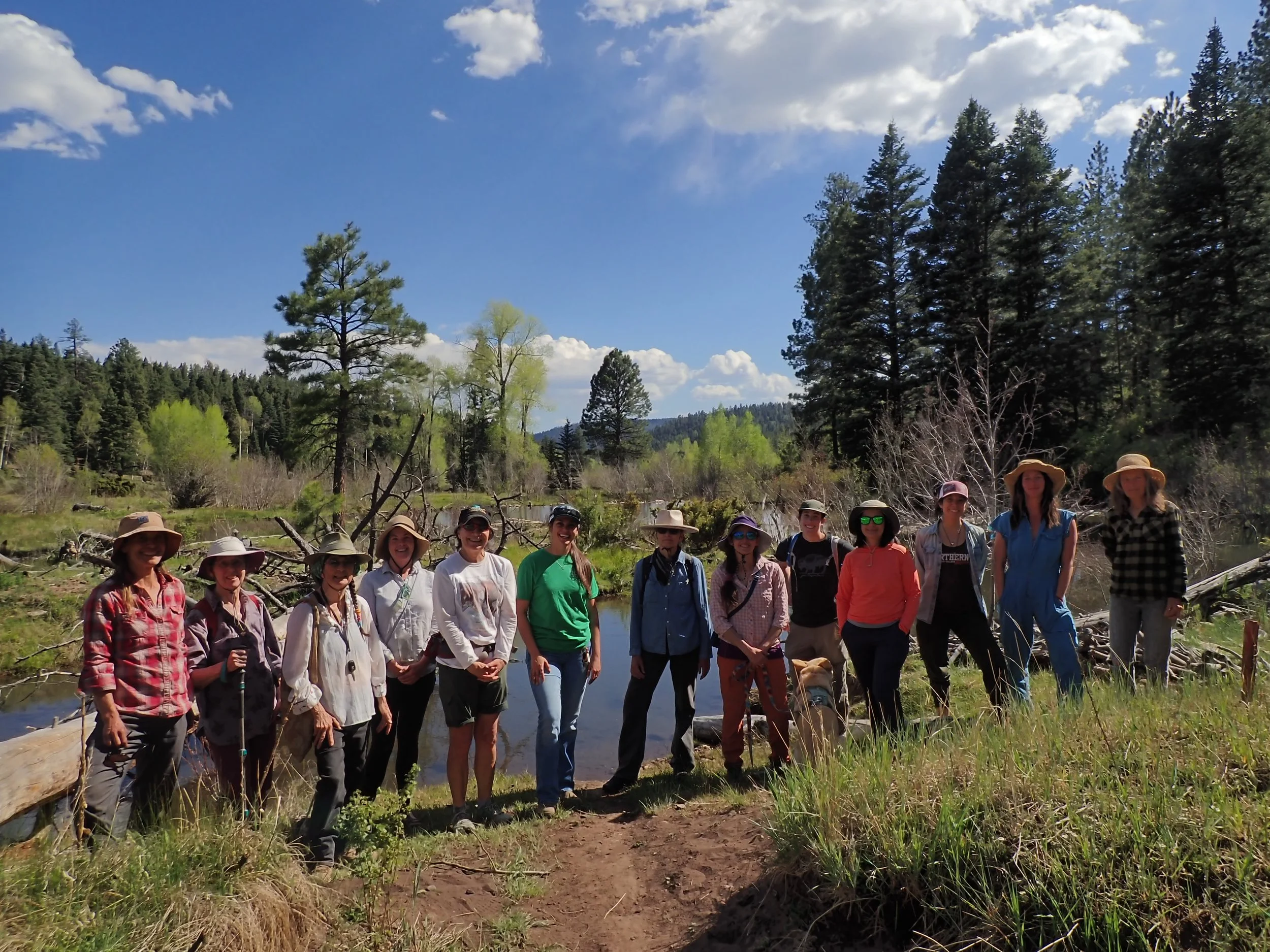
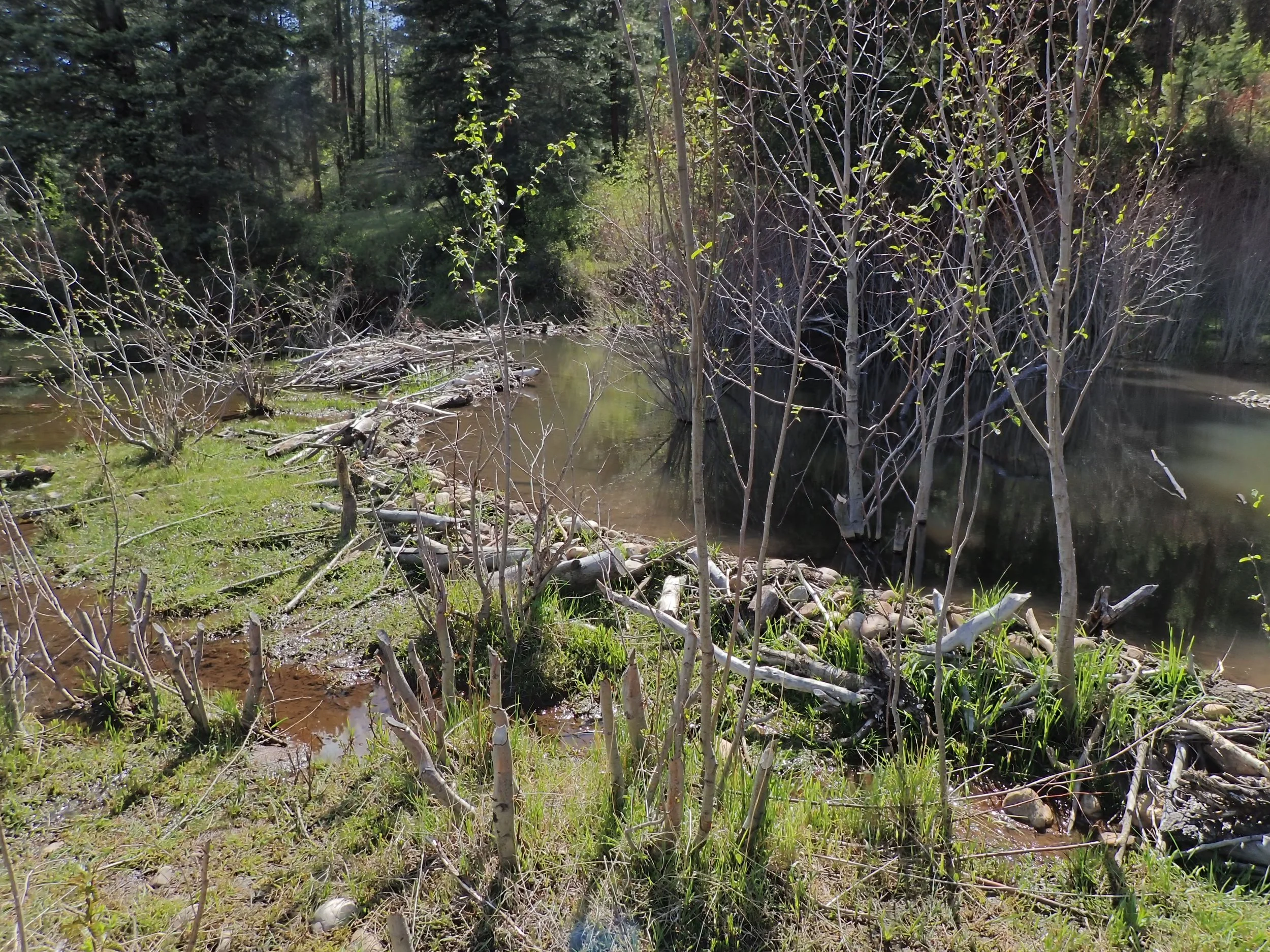
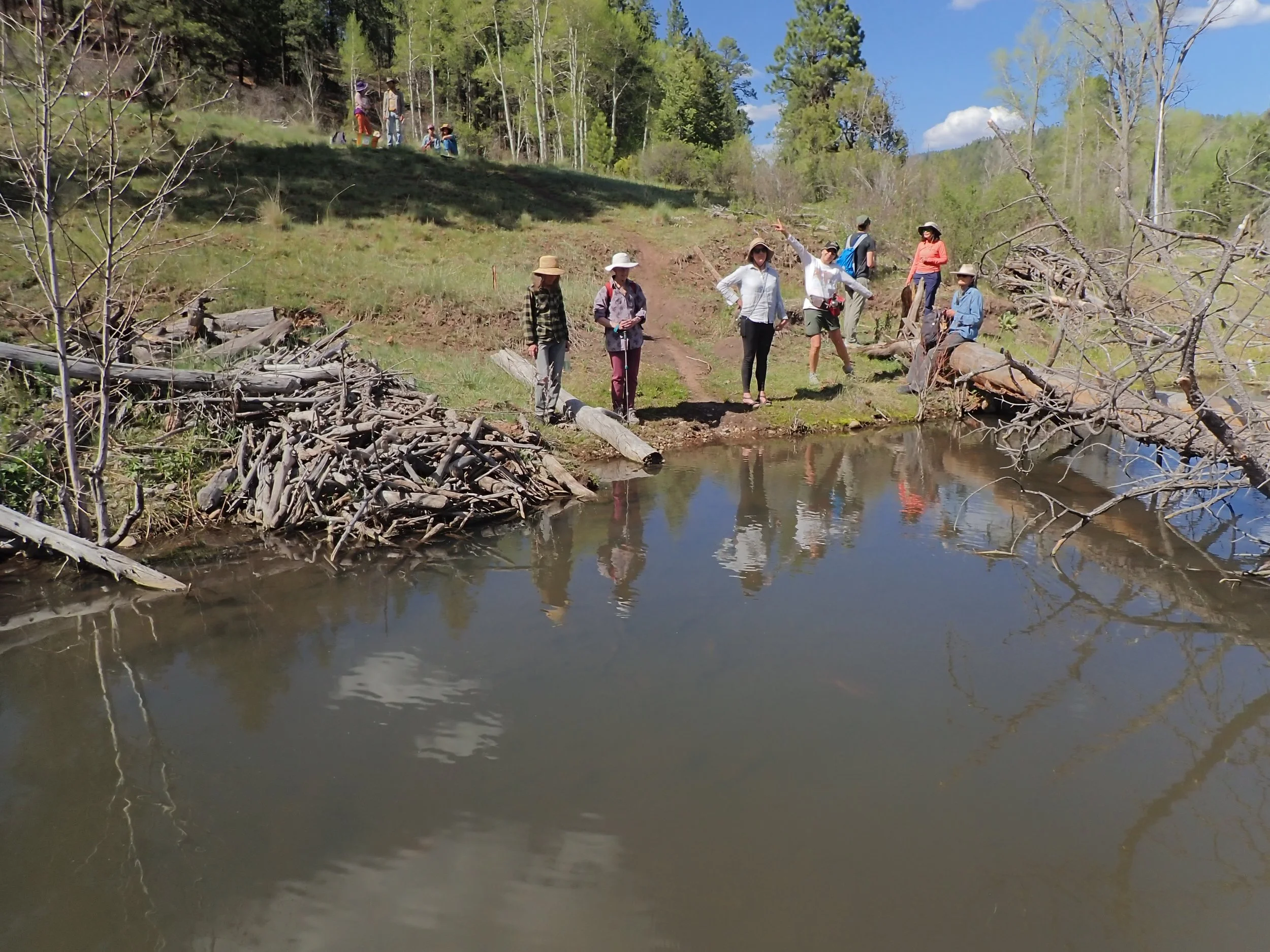
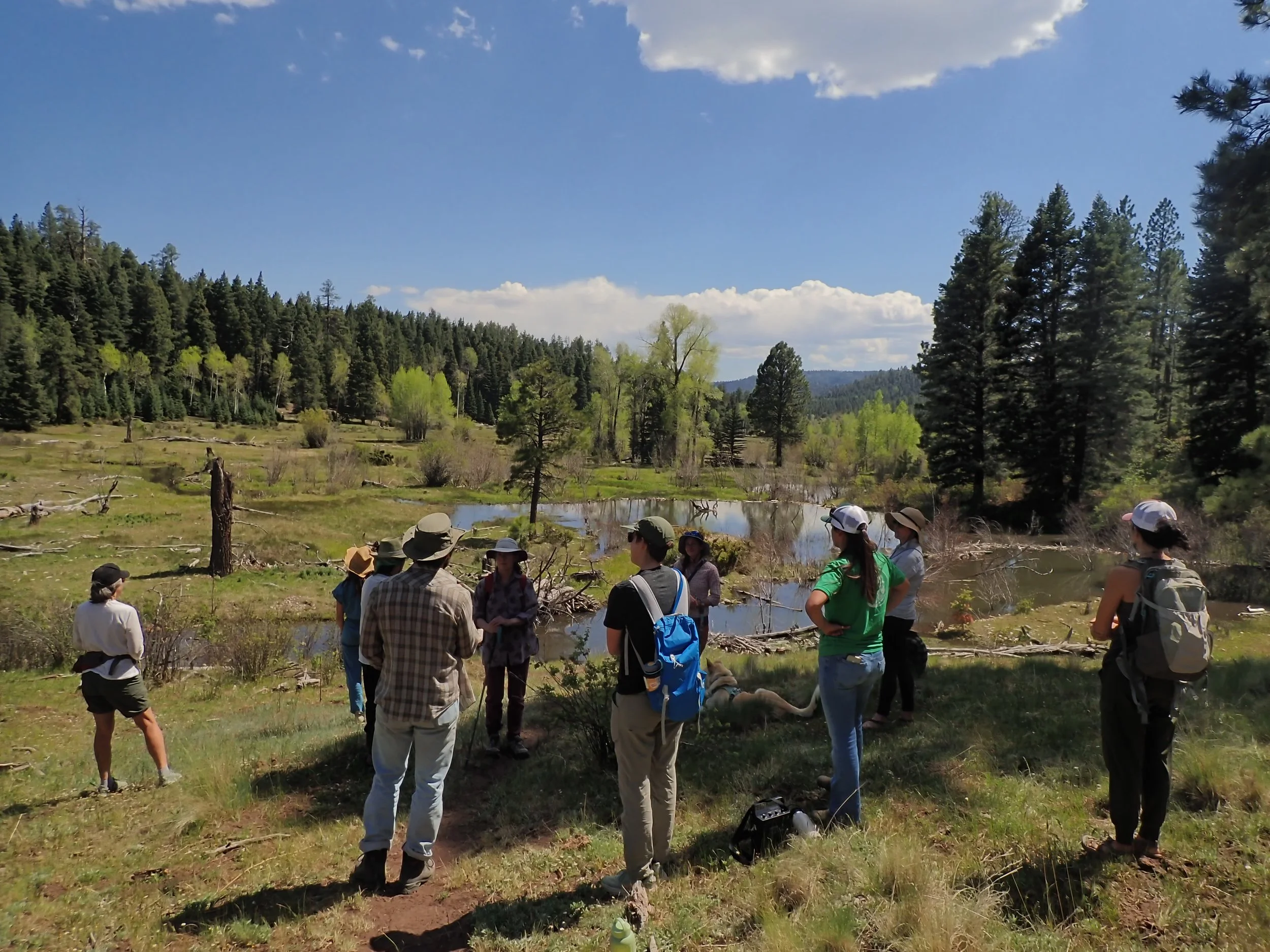
Today’s Wildfire Wednesday is inspired by the revitalization of Women Owning Woodlands (WOW) programming here in New Mexico. Last month, a group of women landowners, conservationists, and land management professionals gathered in El Rito, New Mexico, to tour a beaver dam complex along El Rito Creek. During the field visit, participants learned not only about the many ecological benefits beavers provide, including improved water storage and enhanced fish habitat, but also beaver’s ability to enhance wildfire resilience. At the same time, attendees discussed sources of human–beaver conflict and their desire for opportunities to promote better coexistence. In today’s blog, we highlight the benefits of beaver activity and examine the growing evidence that beavers are increasingly being considered allies in wildfire adaptation.
This Wildfire Wednesday features:
Beaver Restoration as Climate Adaptation
Benefits of Beaver on the Landscape
Beavers Reduce Wildfire Impacts
Landowner Support to Co-exist with Beaver
Stay safe and be vigilant,
Megan
Beaver Restoration as Climate Adaptation
Benefits of Beaver on the Landscape
Beavers are often described as ecosystem engineers because of their ability to reshape landscapes. Using wood, stones, and mud, beavers construct dams that transform narrow stream channels into ponds, wetlands, and complex riparian habitats. In addition to building dams, beavers dig networks of channels that extend from their ponds into the surrounding floodplain. These channels help distribute water across the landscape, increasing soil moisture and creating conditions that support a wide variety of plants and wildlife.
By slowing the flow of water, beaver dams allow more water to infiltrate into the ground, helping to recharge shallow groundwater supplies. This stored water is gradually released back into the surrounding environment, providing a more consistent source of moisture for riparian vegetation, particularly during dry periods. As a result, plants growing near beaver ponds often experience less water stress during drought than vegetation in streams without beaver activity. A study conducted in Nevada found that riparian areas influenced by beaver dams were better able to maintain vegetation productivity during both short-term and prolonged droughts compared to similar areas without beaver activity.
Watch this video for a brief history on why beavers were eradicated from the landscape, their ability to lessen the effects of drought, and how humans are helping reintroduce beaver into stream systems.
Beaver dams not only help reduce the impacts of drought, but wetlands created by beaver also provide important climate benefits. Wetlands are highly efficient at capturing carbon from the atmosphere and storing it in waterlogged soils, where decomposition occurs more slowly. As a result, wetlands can accumulate and retain large amounts of carbon over long periods, making them a valuable tool for mitigating climate change.
Beaver-created wetlands are also especially important for aquatic ecosystems. The ponds, side channels, and slow-moving waters associated with beaver complexes provide critical habitat for many fish species, particularly salmon and trout. Fallen trees, branches, and other woody material incorporated into beaver structures create shelter from predators and strong currents, offering refuge for juvenile fish as they grow. The deeper pools formed by beaver dams can also provide cooler water temperatures during hot summer months, helping fish survive periods of heat and low streamflow.
Beavers Reduce Wildfire Impacts
Beaver activity not only creates landscapes that are more resilient to drought-related stress, but ponds and wetland systems created by beaver reduce the impacts of wildfire. The wetlands and riparian corridors sustained by beaver dams maintain higher soil moisture, support greener vegetation, and create natural breaks in the continuity of flammable fuels across the landscape. As a result, these areas are often more resistant to burning than surrounding upland habitats.
Evidence for this effect comes from a 2020 study by Fairfax and Whittle, which examined the impacts of five large wildfires. The researchers found that riparian corridors with beaver damming were significantly less affected by wildfire than comparable stream corridors without beaver activity. Using satellite-derived Normalized Difference Vegetation Index (NDVI) data—a measure of vegetation greenness and productivity, with higher NDVI values indicating greener vegetation—they determined that beaver-influenced areas consistently maintained significantly higher NDVI values.
“The scaled NDVI differences in sections of creek that did not have beaver were on average more than three times as affected by fire as areas that had beaver.”
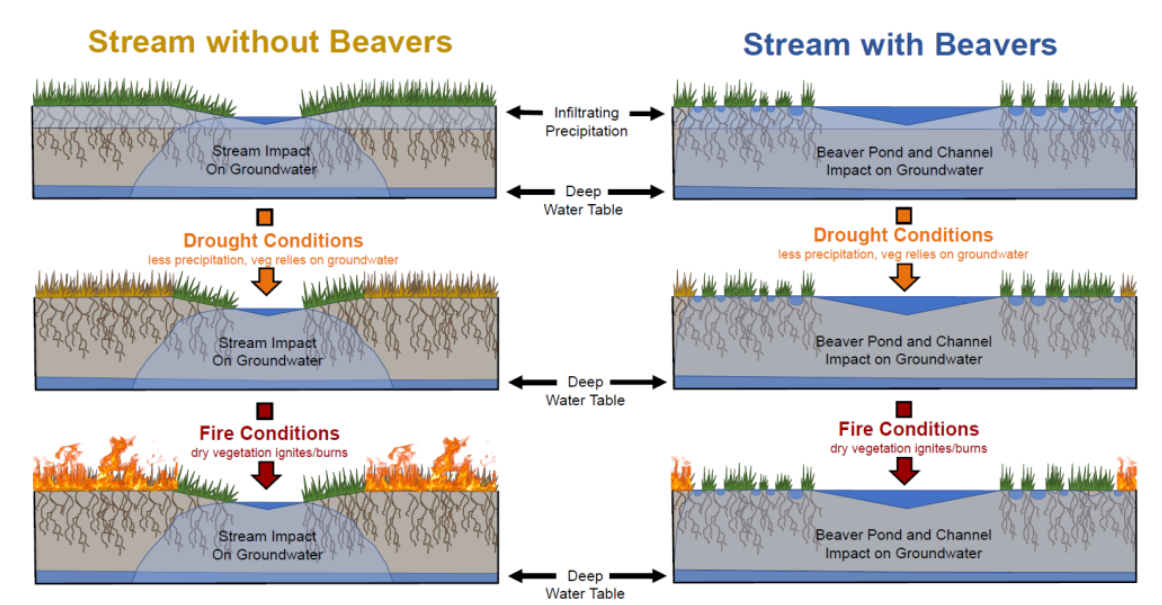
Figure from Fairfax, E. and Whittle, A. (2020), Smokey the Beaver: beaver‐dammed riparian corridors stay green during wildfire throughout the western USA.
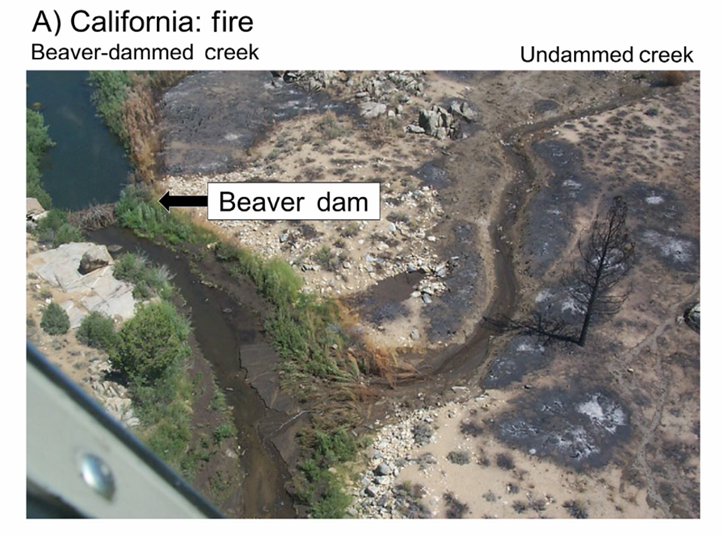
Photograph of vegetation response to wildfire in adjacent creeks with and without beaver damming during the Manter Fire in California.
Fairfax and Whittle’s results indicated that beaver damming played a significant role in protecting riparian vegetation during wildfires. However, they also found that the ability for a burned riparian area to recover after fire was not dependent on beaver activity. Overall, the findings suggest that water stored within beaver-dammed systems creates conditions that are less conducive to burning. In essence, these wet landscapes are energetically unfavorable to ignite and sustain fire, much like trying to start a campfire with damp wood.
Case Study: 2018 Sharps Fire
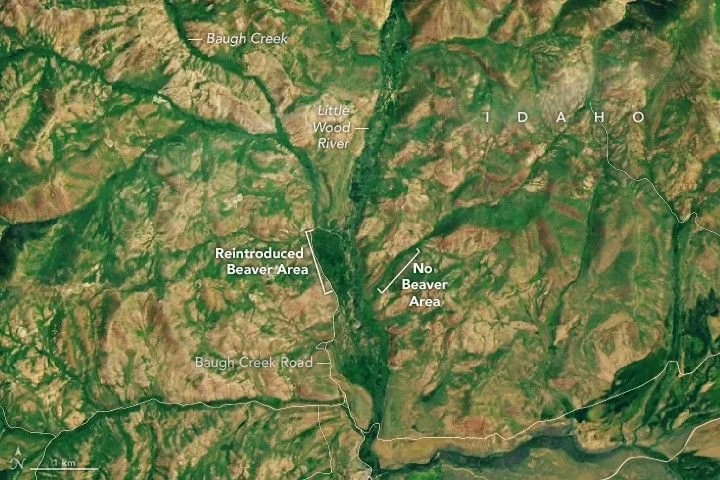
In 2018, the Sharps Fire burned about 65,000 acres, including large portions of the Baugh Creek watershed, which originates in the Pioneer Mountains of south-central Idaho. Baugh Creek was established as a relocation site for beavers that were considered a nuisance in populated areas of Idaho. Beavers began to pond water in the creek by building dams, resulting in wide patches of green vegetation surrounding creek banks. After the fire in 2018, areas where beaver had created wetland complexes remained vibrant green amid a sea of brown, burned land leading the area to be called an “emerald refuge” because of its resilience to fire
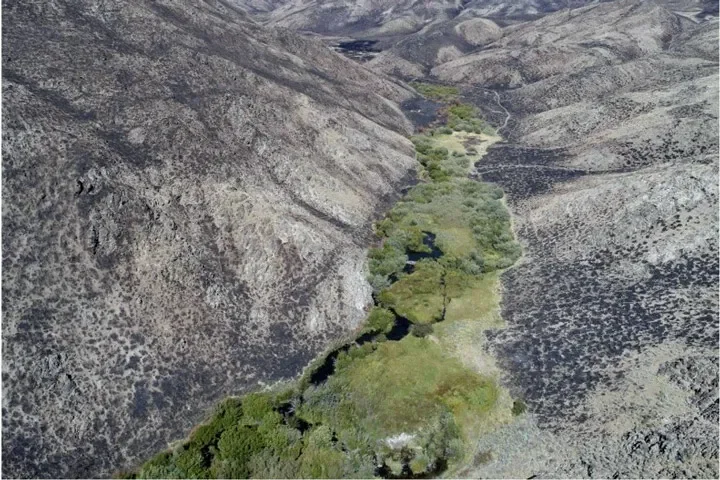
Aerial view of the wetlands around Baugh Creek after the fire.
These ribbons of fire-resistant riparian habitat created by beaver activity can serve as important refuges for wildlife during and after wildfire events. For species that cannot easily escape advancing flames, beaver-influenced wetlands can provide shelter and access to water. Fish, amphibians, small mammals, birds, reptiles, and invertebrates may use these areas as temporary refugia while surrounding upland habitats burn. Following a wildfire, these wet corridors can also act as sources for recolonization, supporting the recovery of wildlife populations. By creating and maintaining patches of moist, resilient habitat across the landscape, beavers help enhance both wildfire resilience and biodiversity in fire-prone ecosystems.
Landowner Support to Co-exist with Beaver
Protecting Trees
Beavers chop down trees for food and to build dams, and yet, protecting trees from beaver chewing is a very common concern for homeowners. While beaver trapping is a legal option, there are ways to protect selected trees without destroying the beavers and their wetland ecosystem. The Beaver Institute recommends a few techniques that are inexpensive, reliable, and relatively easy to implement almost immediately, including:
Fencing - Individual trees can be spared from beaver gnawing by placing wire cylinders around the base of their trunks.
Sand-Paint - Mixing exterior latex paint with mason or playground sand and applying it to the bottom three to four feet of tree trunk will dissuade beaver from chewing trees.
Taste Aversive Materials - Infuse vegetable or mineral oil with cayenne pepper and then paint on the tree trunks as a means of preventing beaver chewing.
Beaver Dam Flooding
As beavers build dams to create ponds for their own safety and habitat, serious flooding problems can occur for people. Fortunately, most beaver ponds can be safely controlled without having to trap or relocate the beaver using what’s known as a flow device. A flow device, typically made with fencing, pipes, or both, controls beaver damming to prevent flooding issues with humans.
A Flexible Pond Leveler pipe system can be a one effective solution. This flow device will create a permanent leak through the beaver dam that the beavers cannot stop, eliminating the need for repeated trapping
Beavers are also attracted to road culverts and other drainage structures because with a little work, they can create a large pond. There are multiple cost-effective flow devices that can protect culverts, sluiceways and drains from beaver damming. Learn more about three flow devices that protect drainage devices from beaver damming based on the specific site characteristics: Blocked Road Culverts and Drains.
Landowner Cost-Share Grants
With funding from the Animal Welfare Institute and others, Beaver Institute has created a grant program to financially incentivize landowners to avoid beaver removal, and/or encourage beaver occupancy at a site. The grant allows landowners to hire BeaverCorps professionals to nonlethally resolve beaver issues and restore wetlands. Any individual, town, business, or organization in North America interested in hiring a BeaverCorps Professional to nonlethally resolve conflicts or restore wetlands can apply.
Additional Resources about Wildlife and Wildfire
The Intersection of Pollinators and Bird Habitat with Forest Treatment and Prescribed Burns
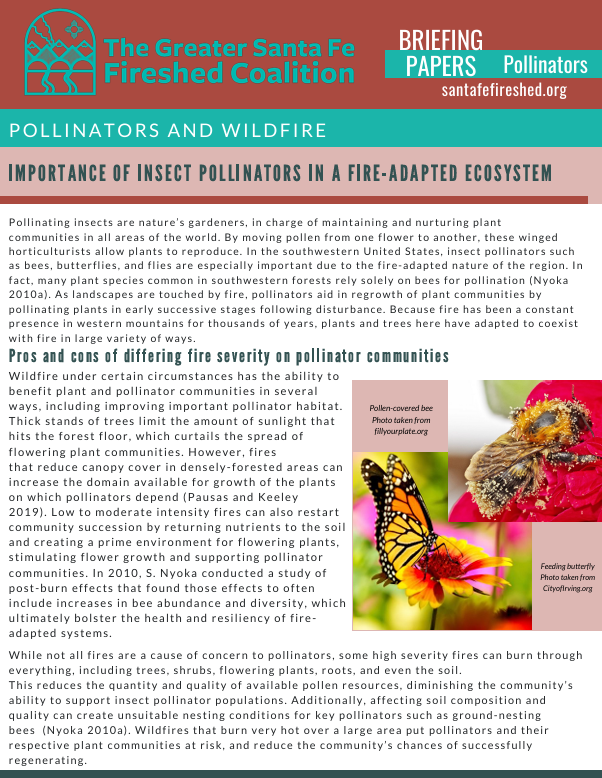
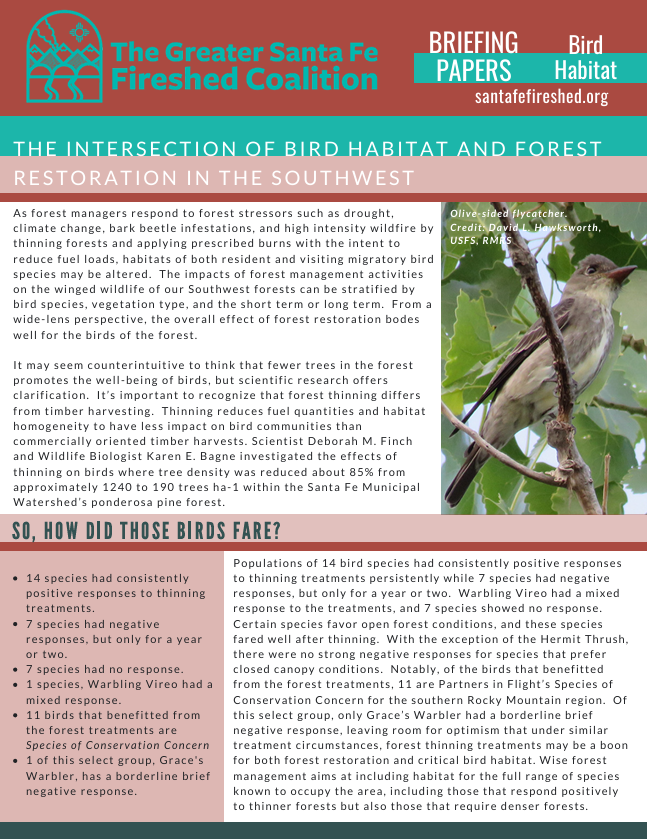
The Greater Santa Fe Fireshed Coalition published two briefing papers produced by the Forest Stewards Guild based on research from Coalition partners that detail 1) the importance of insect pollinators in a fire-adapted ecosystem and 2) detail the intersection of bird habitat and forest restoration in the Southwest. Read these short, two-page briefing papers to learn more about how birds fared after thinning treatments and prescribed fire, as well as the pros and cons of differing fire severity on pollinator communities and hummingbirds.
Integrating wildlife goals and wildland fire management in southwestern forests
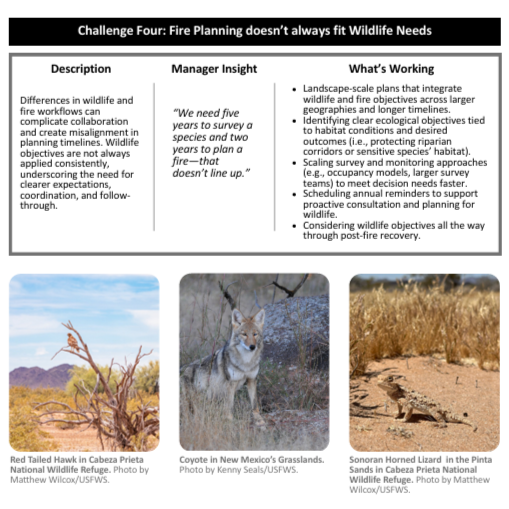
The Southwest Fire Science Consortium developed a fact sheet, based on the experience of more than 250 fire and wildlife professionals, that lists nine of the most persistent challenges and provides 36+ practical approaches to help align wildlife conservation and fire management. The fact sheet describes each challenge and presents at least three approaches per challenge that are working to combat the disconnect between wildlife and fire management. Some of the challenges include:
Wildlife and Fire Speak Different Languages
Fire Planning doesn’t always fit Wildlife Needs
Public Misunderstanding can be Limiting
Compliance Anxiety and Bureaucracy can Slow Action
Wildlife and fire perspectives and effects
In the first webinar of a series hosted by Rocky Mountain Research Station, a panel of experts discuss and share their experiences with fire effects on wildlife, managing for habitat in controlled burning, and different mindsets in the fire and wildlife discussion. Hear from Jonathan Grassmick, the Director of Ranch Properties for the Pueblo of Sandia, about what can be learned from comparing game camera pictures in a fuel break project in a wildlife corridor.
Forestry for the Birds
Forestry for the Birds uses the best available science on avian ecology and sustainable forest management to offer strategies for creating bird habitat in contemporary forests. This approach, on public and private forest lands, underscores the interconnectedness of forest ecosystems and the importance of managing them for multiple values, including biodiversity conservation. Although no programs are active in New Mexico, guides created for Minnesota, Central Appalachian Forests, and Western Oregon can serve as a starting point to adapt the framework to the distinct needs and opportunities of the Southwest.
Learn how the Forestry for the Birds program encourages a partnership between wildlife biologists and foresters that helps promote thoughtful silviculture to enhance forest bird habitat and bring value back to the landowner.