
Happy Wednesday FACNM community,
Next Thursday, July 2nd, marks National Wildland Firefighter Day which takes place during the annual Wildland Firefighter Week of Remembrance. This day is “an opportunity to honor wildland firefighters and fire support personnel, whose contributions to public safety and the safeguarding of natural resources are often unseen by the public” (National Interagency Fire Center). In the somber context of Week of Remembrance, when wildland firefighters remember lives lost and review lessons learned from fatality fires, National Wildland Firefighter Day reminds us to appreciate those who risk their lives to protect our landscapes and communities. This Wildfire Wednesday is not only an opportunity to thank dedicated wildland firefighters and support staff, but also a chance to share ways that your community can celebrate their service protecting the people and places we love and remember those who are no longer with us.
This Wildfire Wednesday features:
Additional Resources and Upcoming Opportunities
Job opportunities
The Fire Department Exchange (FDX) Program
Reforestation Resources
Continuing education - an article on rising wildfire costs and a webinar on bird population declines due to climate change
Wishing you a happy solstice and official start of summer,
Megan
Week of Remembrance - June 30 through July 6
Wildland Firefighter Week of Remembrance, observed annually from June 30 to July 6, is a time for the wildland fire community and the public to honor wildland firefighters who have lost their lives protecting our communities from wildfire. It is also a time to acknowledge the risks they face in the line of duty, including extreme heat, rapidly changing fire conditions, dangerous terrain, smoke inhalation, and more that contribute to both short- and long-term impacts. Longer term mental health and stress impacts are also increasingly being recognized as a risk faced by those on the fire line.
Wildland Firefighter Week of Remembrance begins on June 30, the anniversary of the 2013 Yarnell Hill Fire in Arizona, where 19 members of the Granite Mountain Hotshots lost their lives when extreme fire behavior cut off their escape route. The week concludes on July 6, the anniversary of the 1994 Storm King Mountain Fire in Colorado, which claimed the lives of 14 firefighters. Week of Remembrance provides agencies across the nation with an opportunity to reflect on the lessons learned from past fatality fires, honor the sacrifices of fallen firefighters, and recommit to the safety practices that help protect those who serve. It is also a time for all of us to remember those individuals who never returned home to their families and thank those who continue to answer the call to protect.
Wildland Fire Lessons Learned Center
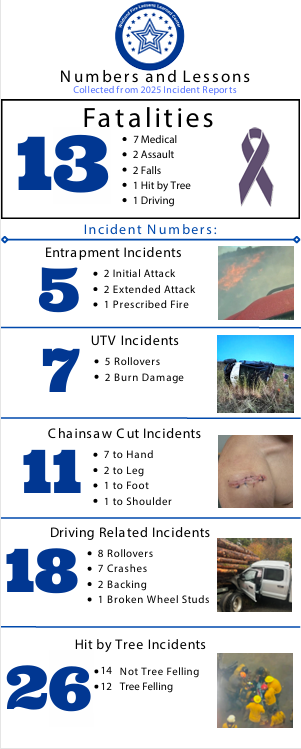
Observance of Week of Remembrance honors the fallen through learning and reinforces the importance of safety, training, and preparedness in wildfire response. The Wildland Fire Lessons Learned Center is a reflection of the wildland fire community’s commitment to this “honor through learning” principle. The Center operates as a national, interagency, federally-funded organization to promote learning in wildland fire by providing useful products and services that help reveal the complexity and risk in the wildland fire environment.
The Center provides an annual incident review that summarizes incidents from the past year and provides a comprehensive look at resulting wildland fire-based lessons. Their Data Points publication summarizes events that have similar circumstances and provides a specific call to action, empowering fire leaders at all levels to take proactive measures based on the experience of others. The Center also runs a podcast and quarterly publication, Two More Chains, dedicated to sharing relevant lessons, unique perspectives, and features from the wildland fire community.
Honoring the Granite Mountain Hotshots
If you have spent any time in in the wildfire community of the Southwest, you have likely heard of “the 19,” which references the tragedy of the 19 men lost during the 2013 Yarnell Hill Fire. The Yarnell Hill Fire was a wildfire near Yarnell, Arizona, ignited by lightning on June 28, 2013. On June 30, it overran and killed 19 of the 20 members of the Granite Mountain Hotshots, a group of firefighters within the Prescott Fire Department. The Yarnell Hill Fire forced vital discussions about wildland firefighting strategies and tactics, ultimately resulting in a comprehensive report after the State of Arizona convened an investigation team to review the conditions and events leading to the circumstances of the entrapment and deaths of the members of Granite Mountain Hotshots.
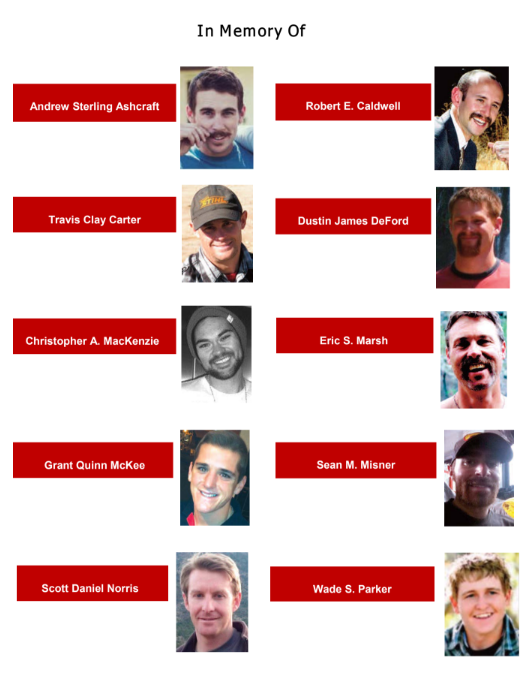
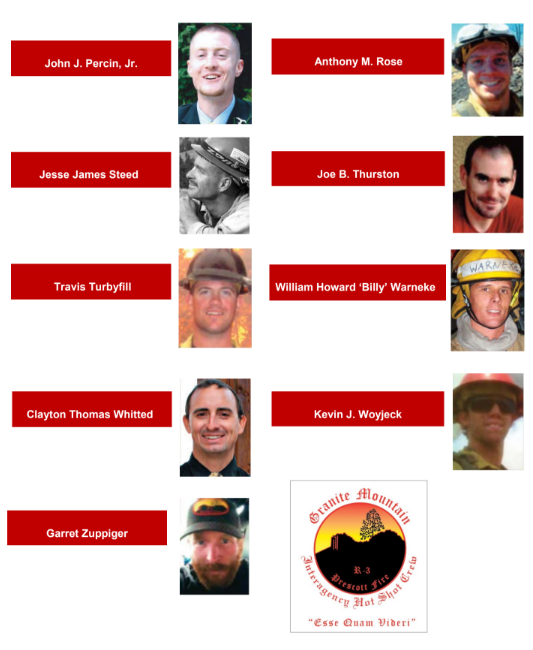
Following memorial services, the Granite Mountain Hotshots Memorial State Park was dedicated in 2016 as a place to remember the 19 fallen members of the Granite Mountain Hotshots. The park includes a 7-mile roundtrip hike - an opportunity to pay respects to the 19 firefighters and better understand the experience and landscape in which they lost their lives. The Granite Mountain Interagency Hotshot Learning and Tribute Center opened in 2018; the center is described as a “one-of-a kind wildland fire learning center that honors the legacy of the Granite Mountain Hotshots by educating, inspiring and motivating visitors to adopt behaviors that prevent wildland fires, resulting in fewer fire-related fatalities.”
The tragedy of the Yarnell Hill Fire has also been the subject of extensive reflection and storytelling in the years since the incident. Several books have chronicled the experiences of the Granite Mountain Hotshots and the events surrounding the fire, helping to preserve the lessons learned and honor those who were lost. In 2017, the feature film Only the Brave brought their story to a wider audience, providing an opportunity for the public to reflect on the sacrifices of wildland firefighters and gain a deeper understanding of the risks they face in the line of duty.
McDonough authored the 2017 book “Granite Mountain: The Firsthand Account of a Tragic Wildfire, Its Lone Survivor, and the Firefighters Who Made the Ultimate Sacrifice.”
Fernanda Santos, who covers Arizona and New Mexico as the Phoenix bureau chief for The New York Times, penned the 2017 book “The Fire Line: The Story of the Granite Mountain Hotshots.”
Kyle Dickman wrote “On the Burning Edge: A Fateful Fire and the Men Who Fought It,” in 2015.
National Wildland Firefighter Day - July 2
In 2022, National Wildland Firefighter Day was founded to recognize all federal, state, and local wildland firefighters and support staff who coordinate their efforts to protect the nation's wildlands.
The individuals who work to save lives, property, infrastructure, and precious natural and cultural resources every year deserve incredible gratitude for their professional skills and efforts. Past National Wildland Firefighter Day events have included in-person and virtual Fireline 5Ks, representation at professional sporting events, proclamations by state officials, and more. If you are looking for ways to celebrate National Wildland Firefighter Day in your community, the National Interagency Fire Center has provided many tools and templates to support and share.
National Wildland Firefighter Day Toolkit
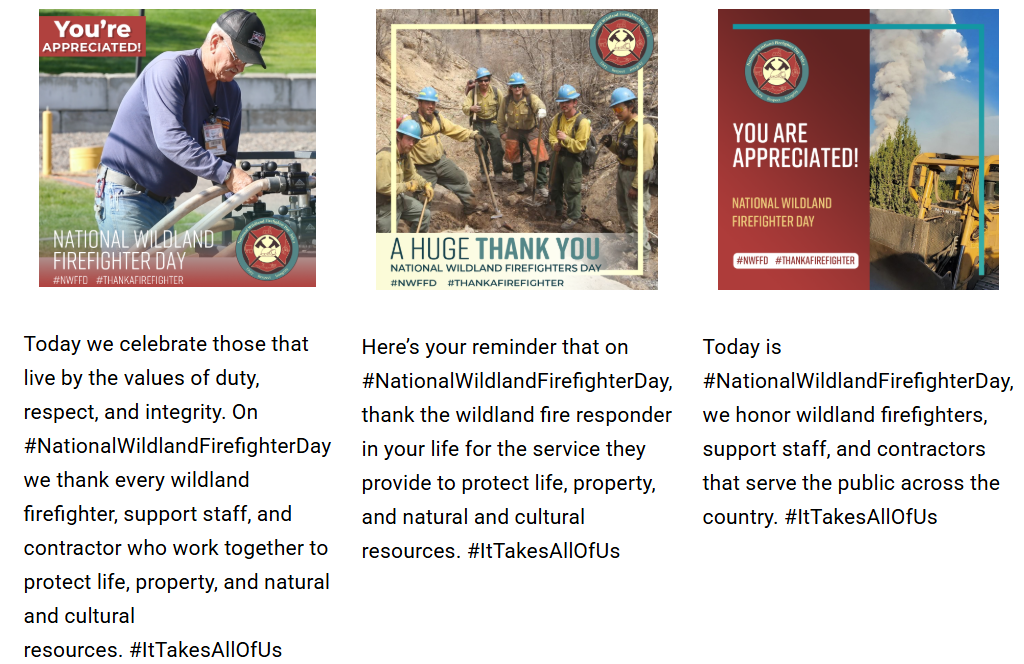
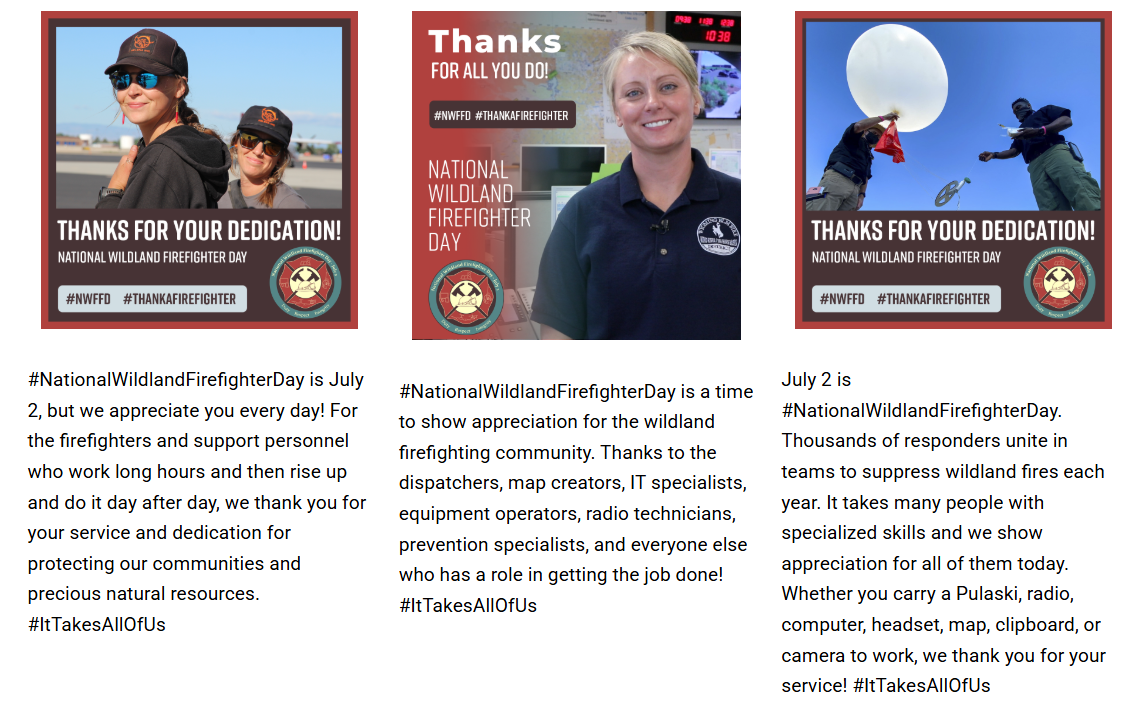
NWFFD Toolkit PowerPoint has campaign instructions, ready-made and customizable graphics for social media, and downloadable virtual meeting backgrounds. National Wildland Firefighter Day | National Interagency Fire Center also has short video clips that highlight wildland firefighters and support personnel from federal, state, and local agencies across the country to share on social media.
Use #NationalWildlandFirefighterDay, #NWFFD, and #ThankAFirefighter when posting on social media.
NWFFD Activity Book
Share or complete the Junior Wildland Firefighter Activity Book. This edition focuses on fire science and explores the role of fire in nature, fire science, campfire safety and other activities. Once completed, email BLM_FA_NIFC_Comments@blm.gov to earn a National Wildland Firefighter Day sticker!
Enhance Firefighter Safety Through Prevention Best Practices
Wildfires require three key elements to burn: heat, oxygen, and fuel. Firefighters work to suppress fires by removing or limiting these elements, particularly available fuel. You can help reduce wildfire risk and support firefighter safety by taking proactive steps to protect your home and community. Create and maintain defensible space around your home by removing excess vegetation and other combustible materials. Consider hardening your home with fire-resistant materials. Encourage your family, friends, neighbors, and coworkers to take similar precautions.
Always fully extinguish campfires, fire pits, and outdoor fires before leaving the area, and never leave a fire unattended. If you observe an unattended fire, report it immediately by calling 911.
Never throw lit cigarettes or smoking materials from a vehicle. Even a small ember can ignite dry grass or vegetation and quickly start a wildfire.
Follow all local burn bans, fire restrictions, and public safety warnings. During periods of hot, dry, or windy weather, extra caution is essential to prevent accidental ignitions.
When traveling in areas affected by wildfire or smoke, stay informed by monitoring local alerts, road conditions, and emergency announcements. If you operate a drone or other aircraft, never fly near a wildfire. Unauthorized aircraft in the area can force firefighting aircraft to be grounded, delaying critical suppression efforts and putting firefighters and communities at greater risk.
Remember to thank a wildland firefighter, support staff member, or contractor for their dedication to protecting lives, property, and our natural and cultural resources. While their service deserves recognition every day, July 2 provides a dedicated opportunity to express your gratitude, especially during one of the busiest and most demanding periods of the fire year.
Additional Resources and Upcoming Opportunities
Job Opportunities
Project Forester with the NM Forestry Division - Chama District
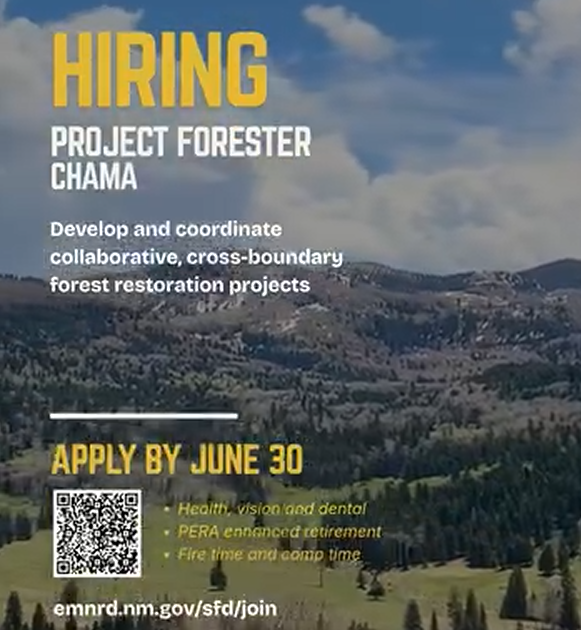
New Mexico Forestry Division is hiring a Forester for the Chama District (San Juan County, Rio Arriba County and western half of Taos County) to develop and coordinate collaborative, cross-boundary forest restoration projects. This position is responsible for programs such as the Commercial Timber Harvest Program and assists the District Forester with Wildland - Urban Interface (WUI) projects. Duties include:
writing stewardship plans,
drafting and releasing requests for proposal (RFP),
issuing commercial timber harvest permits, and
reviewing commercial timber harvest applications.
Apply by June 30. To learn more about the position and apply, visit Careers.
Volunteer Fire Assistance Coordinator with the NM Forestry Division
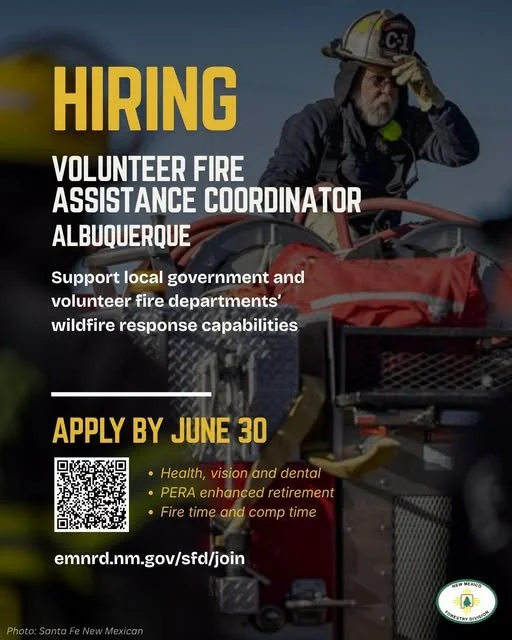
New Mexico Forestry Division is hiring a volunteer fire assistance coordinator to provide assistance to local departments and increase their wildland fire suppression capabilities. This position will manage the Federal Volunteer Fire Assistance Grant Program and assist the Resource Protection Bureau and Assistant State and State Fire Management Officer by providing current information about fires within the state, including coordination and mobilization of both Division and local fire department resources in-state and out-of-state for wildland fire suppression activity.
Apply by June 30. To learn more about the position and apply, visit Careers.
Continuing Education: The Fire Department Exchange (FDX) Program
The Fire Department Exchange (FDX) Program facilitates in-person exchanges for fire departments facing wildland-urban interface (WUI) challenges. The 3-day, in‑person information exchange will focus on real-world wildfire mitigation, preparedness, and response in the WUI. Led by experienced wildfire subject matter experts, the exchange emphasizes candid dialogue, shared experience, and practical application rather than traditional lectures.
Apply by June 25th to send two fire service personnel to the next Fire Department Exchange in Red Lodge, Montana, September 21 – 25, 2026!
Reforestation Resources: Conservation Seedling Program Distribution Opening Soon
New Mexico Forestry Division provides low‑cost seedlings for planting projects that support forest and watershed health in New Mexico. Ordering for the Conservation Seedling Program's fall distribution will open on July 6th, 2026 through the online ordering platform. Seedlings ordered during this window will be distributed in October, 2026. Seedlings may be used for ecological restoration, wind protection, erosion control, wood products, tree farms, and planting or up-potting for urban or community forestry needs.
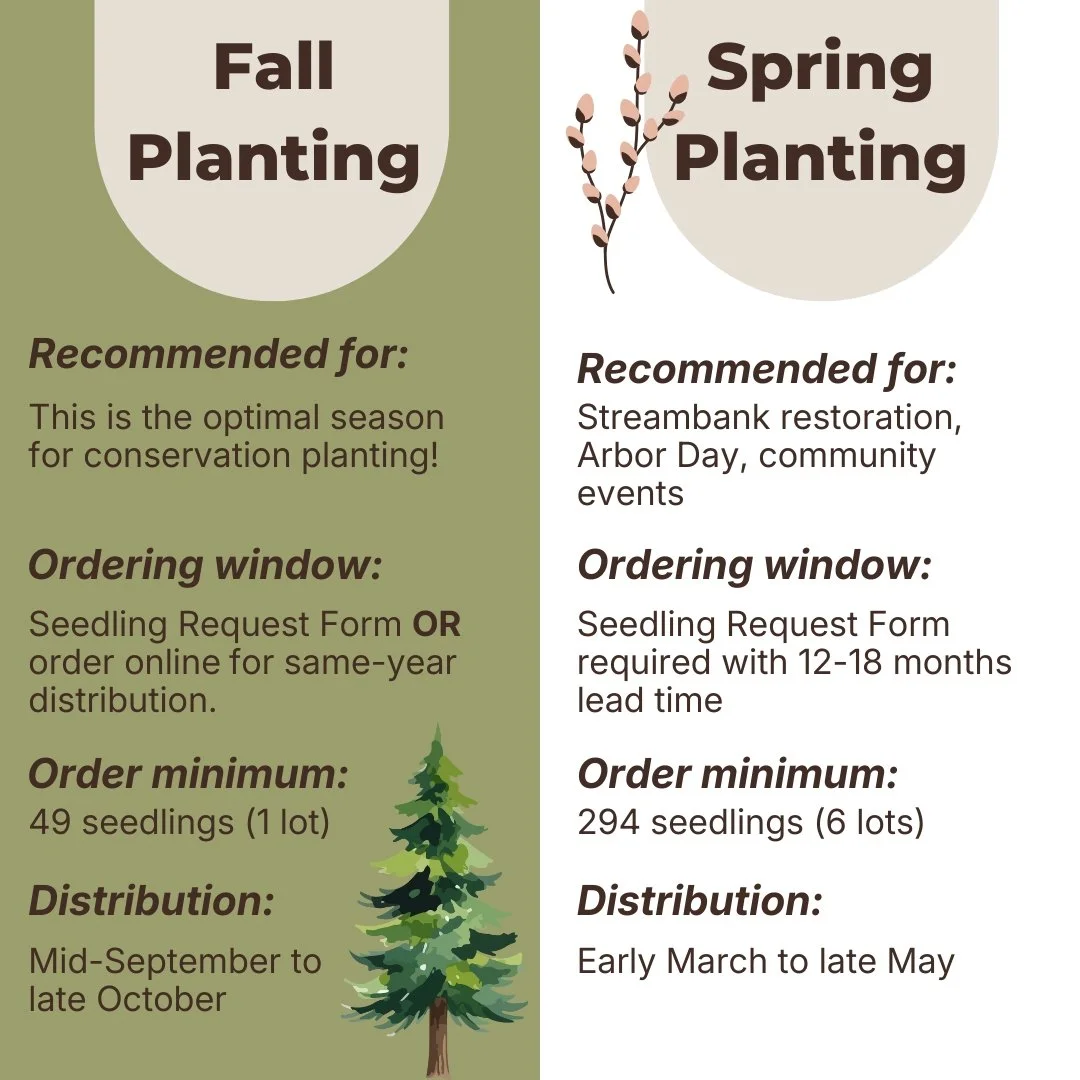
Note: Forestry Division does not anticipate offering seedlings for the Spring 2027 distribution but are accepting order requests for Fall 2027 and Spring 2028 distribution.
Early requests help Forestry Division source the species and quantities needed to support your conservation goals.
Share your needs using the advance request form: Seedling Request Form
To learn more about seedling selection and ordering, visit Conservation Seedling Program - Forestry.
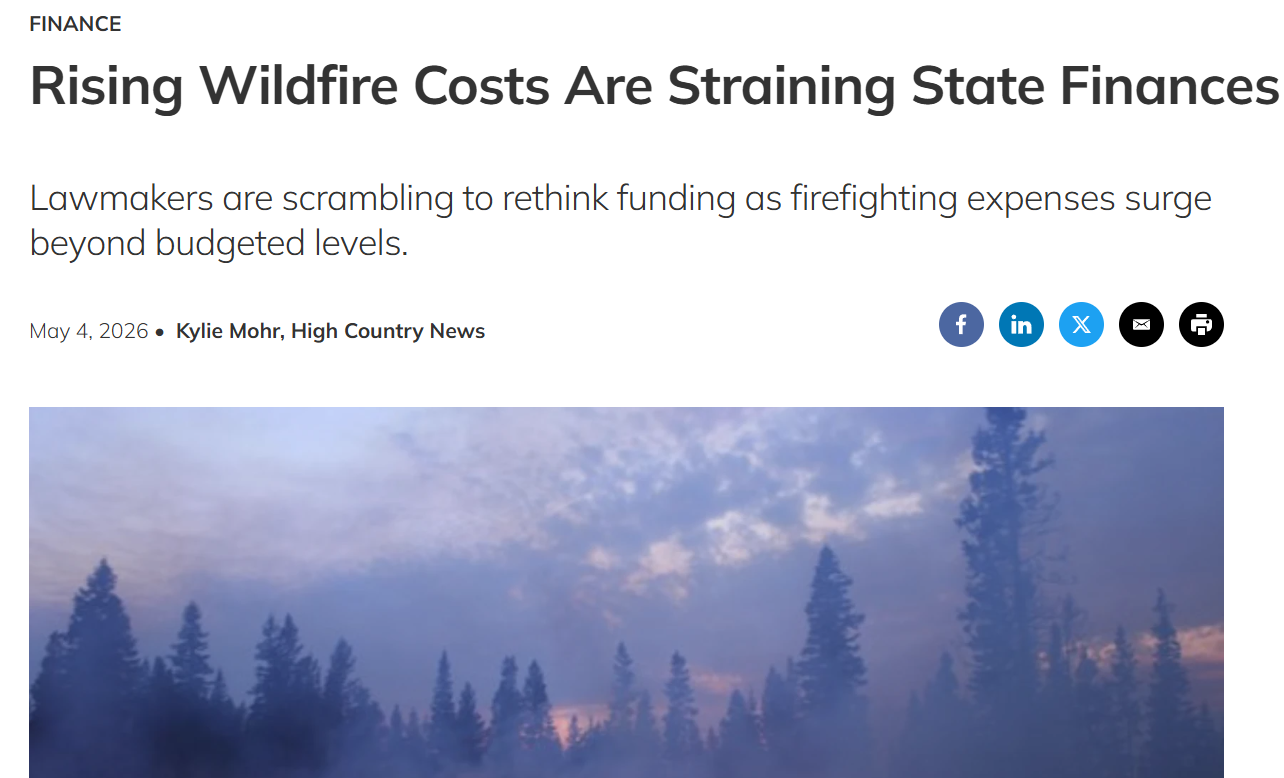
Article: Rising Wildfire Costs Are Straining State Finances
In recent years, states across the West have experienced wildfire seasons that far exceeded budgets originally allocated for firefighting efforts. This growing financial strain is concerning to many, especially as ongoing drought conditions and reduced snowpack will contribute to increasingly severe fire seasons that may require at least twice the available funding. Read this article to learn how states across the West are seeking to address these challenges, including funding for wildfire-specific accounts and identifying new sources of revenue to support firefighting and prevention efforts, with examples from Hawaii, Montana, Oregon, Idaho, and Utah.
Join the Southwest Fire Science Consortium to learn about a new multi-scale modelling framework that produces future projections for bird populations based on climate signals through vegetation for five climate scenarios. Attendees will learn that of 18 focal species present on the Kaibab National Forest in Arizona, USA, 11 are projected to decline by mid-century. Population simulations which only looked at fire as a disturbance factor produced markedly smaller bird population effects, demonstrating that climate-driven vegetation type shifts, not altered fire regimes alone, are the dominant driver of projected losses.