Happy Wednesday FACNM community,
Professionals working to reduce wildfire risk often emphasize the importance of place-based solutions and community-informed strategies. However, it is difficult to develop effective programs and outreach without first understanding the communities they are intended to serve. Every community has its own unique history, values, and relationships, but communities also share common characteristics that can help practitioners better understand how residents are likely to respond to wildfire risk and mitigation efforts.
In today's Wildfire Wednesday, we break down a social science study that identified four distinct community archetypes across the wildland-urban interface (WUI). The study explores how differences in local values, communication networks, relationships, and community characteristics influence wildfire preparedness and response.
This Wildfire Wednesday features:
Categorizing the Social Context of the Wildland Urban Interface
WUI Communities
How the Research Was Conducted
Community Archetypes
Key Takeaways
Additional Opportunities and Resources
Publication in the Santa Fe New Mexican
Job Opportunities
Upcoming Workshops
Hoping you and your loved ones are staying safe and cool,
Megan
Categorizing the Social Context of the Wildland Urban Interface: Adaptive Capacity for Wildfire and Community Archetypes
In their study, Categorizing the Social Context of the Wildland Urban Interface: Adaptive Capacity for Wildfire and Community Archetypes, researchers Tavis Paveglio, Cassandra Moseley, Matthew Carroll, Daniel Williams, Emily Jane Davis, and Paige Fischer explored whether communities could be grouped according to shared social characteristics. Their goal was to identify patterns that could help practitioners with a potential strategy to be more effective collaborating with diverse populations at risk from wildfire and designing tailored messages related to wildfire risk mitigation. Their analysis uncovered four consistent community archetypes.
WUI Communities
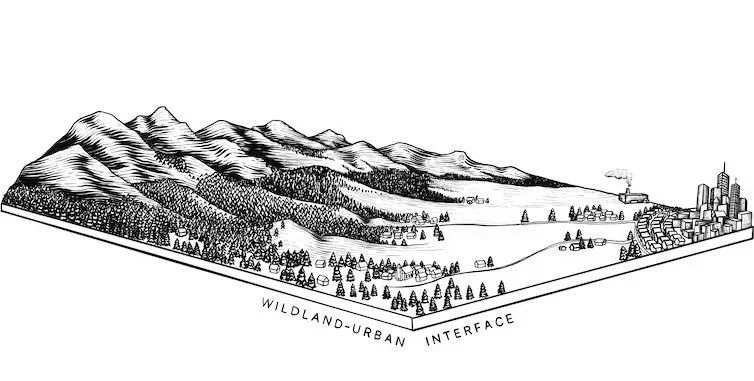
The study summarized below recognizes that the WUI is not geographically continuous and contains diverse sets of individuals. It also recognizes that there is a distinct social identity of rural and WUI communities based on the diversities of perspectives, uses of, and values for the landscape. Other previous wildfire social science has shown that a community's ability to prepare for and respond to wildfire depends on far more than fuels and fire behavior. Factors such as perceived wildfire risk, trust in government, community leadership, place attachment, financial resources, willingness to collaborate, previous wildfire experience, and local knowledge all shape how communities approach wildfire adaptation.
How the Research Was Conducted
This research synthesized findings from 18 case studies of community wildfire planning, mitigation, and recovery across the western United States. The researchers explored two main questions: (1) Are there patterns of influences on wildfire risk management that can be identified across case studies? and (2) does the evidence suggest that communities exhibiting similar patterns constitute distinct “archetypes” that approach wildfire risk differently from others?
By comparing communities across multiple case studies, the researchers found that documenting a community's local social context, such as its history, values, relationships, resources, and communication networks, can help better identify archetypes of communities to explain commonalities among diverse places.
Systematically documenting how a community's local context influences its ability to prepare for and respond to wildfire provides several benefits. It helps identify the social, economic, and cultural factors that shape wildfire mitigation efforts, documents the existing knowledge, skills, and resources communities bring to wildfire preparedness, and allows practitioners to more quickly recognize barriers to mitigation.
This study highlights the importance of tailoring policies, programs, and communication strategies to the unique characteristics of each community. Ultimately, the researchers sought to identify common patterns among diverse wildfire-prone communities to better understand the different pathways communities might pursue toward becoming Fire Adapted Communities. This work supports efforts to “segment” communities in order to develop messages or outreach strategies that resonate to specific local needs, circumstances, and risk perceptions.
Community Archetypes
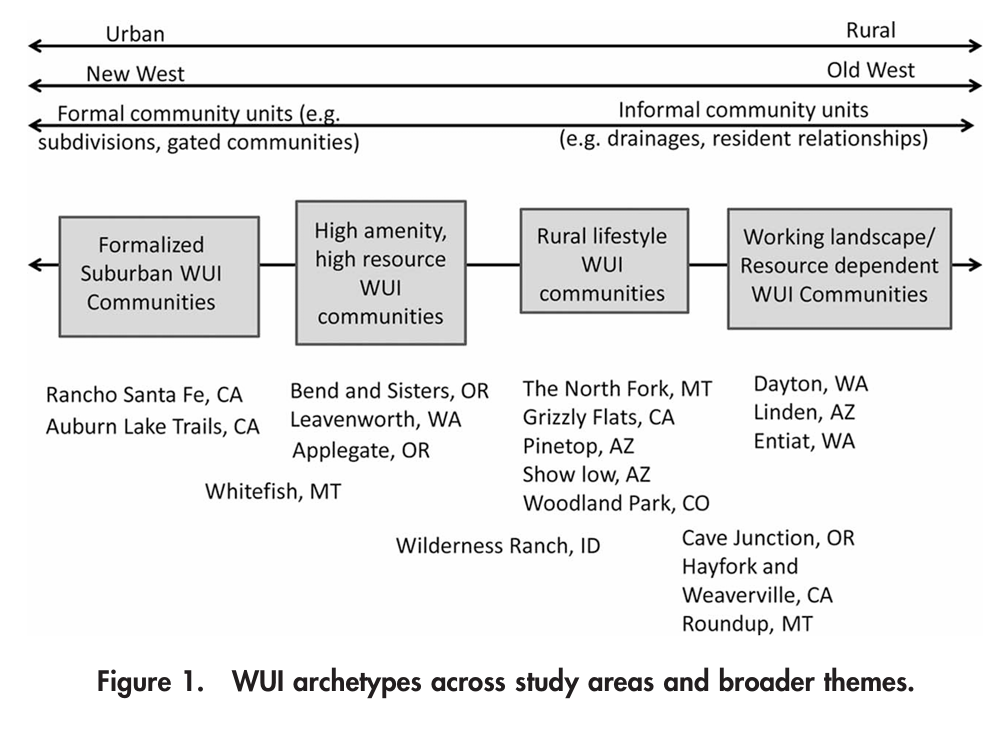
This comparison of case studies suggests there are four WUI community archetypes. The four archetypes were named in ways that reflect primary elements of their local social context, including: (1) formalized suburban communities; (2) high amenity, high resource communities; (3) rural life style communities; and (4) working landscape/resource dependent communities.
Formalized Suburban Communities
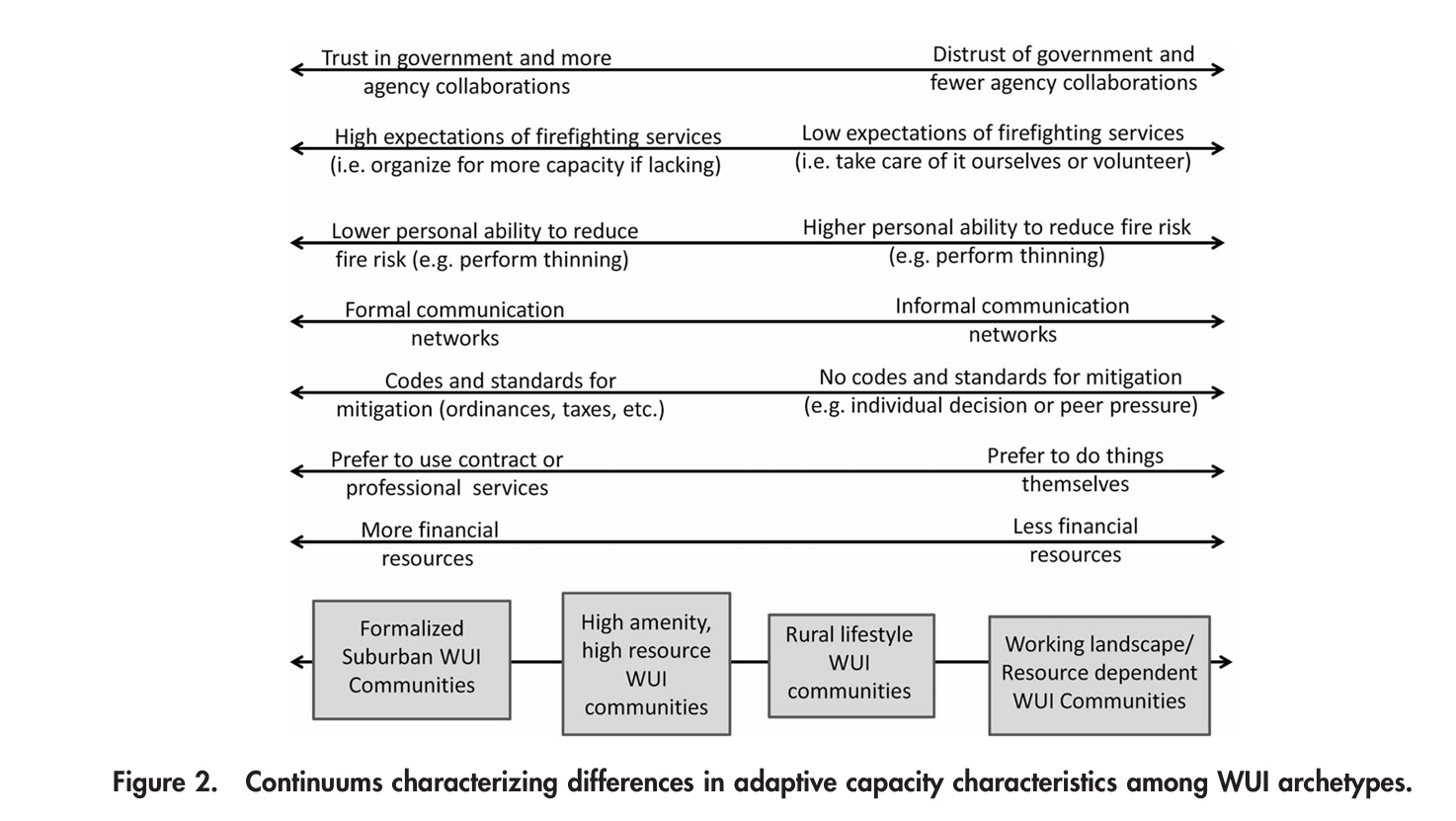
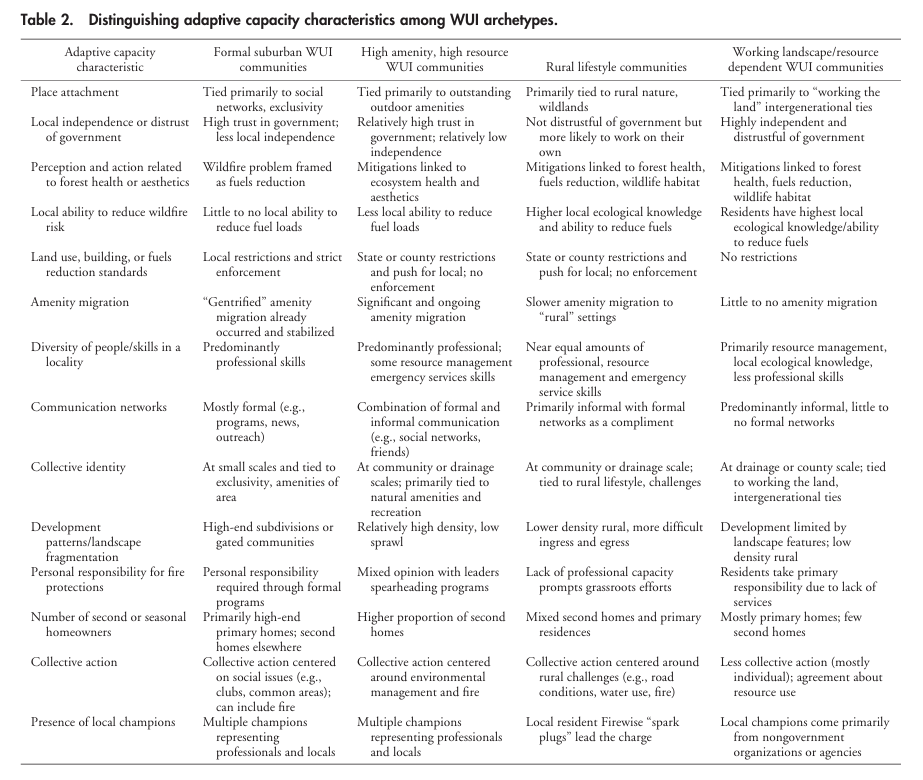
Formal suburban residents are mostly professionals, suburbanites, or transplants who display less diversity in local skills to support wildfire risk reduction. Residents of formal suburban communities tend to place a high level of trust in government agencies working on wildfire mitigation and are generally willing to collaborate with them on preparedness efforts. They also rely more heavily on outside services and nonlocal businesses for fuels reduction work. Rather than completing mitigation themselves, residents are more likely to hire contractors due to limited knowledge, equipment, skills, or physical ability to reduce fuels. In many cases, they have the financial resources to pay for these services.
In formal suburban communities, place attachment is often tied to recreational opportunities and the amenities the community offers. In communities such as Auburn Lake Trails and Rancho Santa Fe, California, residents' sense of community was closely linked to the exclusivity of living there, creating a strong group identity.
Because many formal suburban communities are organized around distinct, and often gated, neighborhoods, wildfire mitigation efforts tend to focus on protecting individual subdivisions rather than the surrounding landscape. As a result, these communities place less emphasis on landscape-scale conservation. Wildfire mitigation efforts in formal suburban communities are also more likely to be formalized through local policies, homeowner association requirements, or regulations that can be enforced.
High-Amenity, High-Resource Communities
High amenity, high resource community residents have more diversity in skills needed for wildfire adaptation, particularly related to professionals with applicable experience such as grant writing or emergency management, who also possess leadership and higher organizational capacity. Place attachment among high-amenity, high-resource communities, such as Leavenworth, Washington, and Whitefish, Montana, is often closely tied to exceptional outdoor recreation opportunities and the natural beauty of the surrounding landscape.
Like formal suburban communities, high-amenity, high-resource communities also tend to rely on outside services and nonlocal businesses for fuels reduction work. Residents are more likely to hire contractors because they lack some resource, like equipment or skill, needed to complete the work themselves. In addition, these communities generally have the financial resources to pay for professional mitigation services.
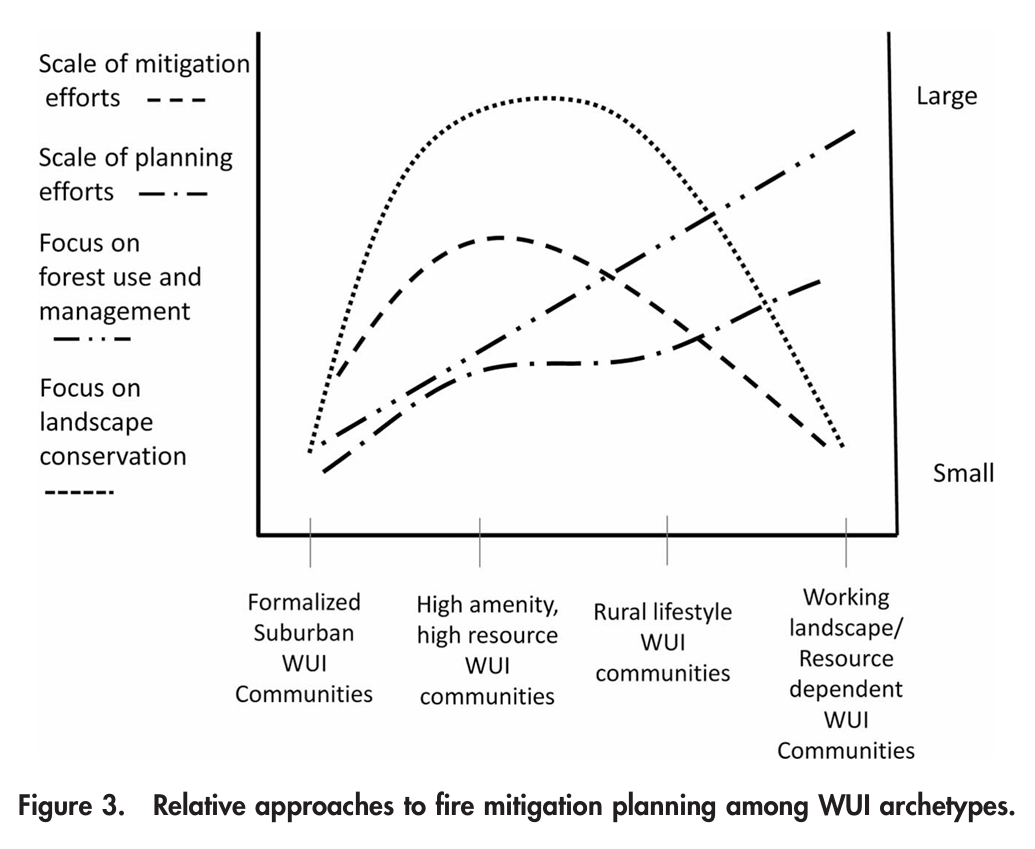
Wildfire mitigation efforts in high-amenity, high-resource communities are often planned at a regional or community-wide scale, requiring coordination and collective action among many partners. Residents are more likely to view wildfire management as an opportunity to restore forest health while also protecting the scenic landscapes and recreational opportunities that make their communities attractive places to live and visit.
Rural Lifestyle Communities
Rural lifestyle residents tend to have a higher diversity of skills that pertain to local ecological and wildfire knowledge and an ability to reduce fuels. Rural lifestyle communities often include residents who prefer to do wildfire mitigation work themselves or work together with neighbors to complete projects such as forest thinning. Place attachment in these types of communities, such as Woodland Park, Colorado, and Grizzly Flats, California, is closely tied to their rural character, limited development, and proximity to surrounding wildlands. In these communities, seen in North Fork, Montana, community attachment is also strengthened by a culture of neighbors helping one another with everyday challenges—such as road maintenance, chores, or erosion issues—and supporting each other with money or resources following a wildfire.
Residents of rural lifestyle communities generally value local independence and recognize the high wildfire risk where they live. At the same time, they place importance on maintaining the health of nearby forests and wildlands for traditional uses such as hunting, fishing, and gathering non-timber forest products.
Wildfire mitigation efforts in rural lifestyle communities are typically planned at the community or dispersed subdivision scale. These communities often emphasize neighborhood-level fuels reduction projects while also supporting broader landscape conservation efforts to maintain healthy forests and reduce wildfire risk over the long term.
Working Landscape and Resource-Dependent Communities
The people in working landscape communities are predominantly characterized by those in resource extraction professions such as forestry and mining or those related to agriculture and ranching. Like rural lifestyle communities, working landscape and resource-dependent communities often include residents who prefer to do wildfire mitigation work themselves or help their neighbors complete projects such as forest thinning. Place attachment in communities such as Hayfork, California, and Entiat, Washington, is closely tied to "working the land" and deep, often intergenerational, connections to the area. Strong family ties and long-standing relationships within the community also play an important role in fostering a sense of community and motivating residents to work together.
Wildfire mitigation efforts in working landscape and resource-dependent communities are often focused on individual properties or a small group of neighboring parcels. These communities generally place less emphasis on landscape-scale conservation and are less likely to support management decisions based on restoring historical ecological conditions.
Policies and regulations related to wildfire mitigation and prevention are often less acceptable in working landscape and resource-dependent communities. This is influenced by a greater distrust of government, a preference for organizing and managing wildfire risk locally, and less support for codes and standards. Instead, residents are more likely to rely on trusted local sources, such as firefighters, respected agency professionals, and other community leaders, for information and guidance. They often apply this information using their own traditional skills, local knowledge, and long-standing land management practices.
Key Takeaways
Overall, findings from this study demonstrate that communities with different social context are likely to establish different strategies for planning, mitigating, and recovering from wildfire. Characterizing the diversity of WUI communities into more manageable archetype classifications allows for needed differentiation without having to assume that every place is totally unique, something that is much needed when developing policy and specific adaptation strategies.
Recognizing community archetypes can potentially help develop tailored communication or outreach strategies. For instance, programs that foster grassroots organizing efforts with local leaders and use informal communication networks would be more effective in rural lifestyle WUI communities when compared to formal suburban communities. In formal suburban WUI communities, formal communication programs led by firefighting or emergency management professionals are a better communication strategy because those populations respond well to and are more apt to take advice from those with formal expertise.
Efforts to work with populations in fostering wildfire adaptation will require different communication strategies that correspond with the capacities local people have, need to develop, or already apply to risk reduction.
To read the entire study, with much more detail, view Categorizing the Social Context of the Wildland Urban Interface: Adaptive Capacity for Wildfire and Community Archetype
Additional Opportunities and Resources
PUBLICATION:
“A thank you to New Mexico's wildland firefighters” by Laura McCarthy
Published in the Santa Fe New Mexican, State Forester Laura McCarthy wrote a thank you to every firefighter, dispatcher and support person who dedicated their time this wildfire season. “Since the last week of March, crews from the Energy, Minerals and Natural Resources Department’s Forestry Division and wildland firefighters from municipal, county and volunteer fire departments have worked without pause.”
By early July, there had been 524 wildfires in the state, substantially more than NM’s five-year average of 321 wildfires by that point in the year.
73% of the wildfires were controlled before they reached 10 acres in size. Only 2% grew past 1,000 acres.
However, New Mexico did not avoid catastrophic wildfire this year by luck. The state was proactive in keeping fires small and positioned people and equipment to move fast and respond within minutes of a smoke report. Our state forester reminds us to say thank you to wildland fire crews who have worked tirelessly this summer to keep us safe from wildfire.
Read the article to find out more about policy changes that increased response capacity across NM.
JOB OPPORTUNITIES:
Angel Fire Wildfire Ambassador Coordinator
The Wildfire Ambassador Coordinator for Village of Angel Fire will play a critical role in advancing community wildfire preparedness, hazard mitigation, and homeowner education across the Village. The position will lead the Defensible Space Ordinance Home Assessment program, support implementation and continued improvement of the Defensible Space Ordinance, and provide direct support to residents working to reduce wildfire risk on their properties.
The position is open until filled. View more information about the position and apply online: Jobs • Fuels Management Wildlife Ambassador Coordinator
Forest Stewards Youth Corps - Santa Fe and Mountainair
The fall Forest Stewards Youth Corps (FSYC) program creates employment, education, and training opportunities for recent high school and college graduates (18-25). The Forest Stewards Guild has crew members for three Fire & Fuels crews based out of the Jemez Pueblo Natural Resources Department and the Mountainair and Espanola (based in Santa Fe) U.S. Forest Service Ranger Districts.
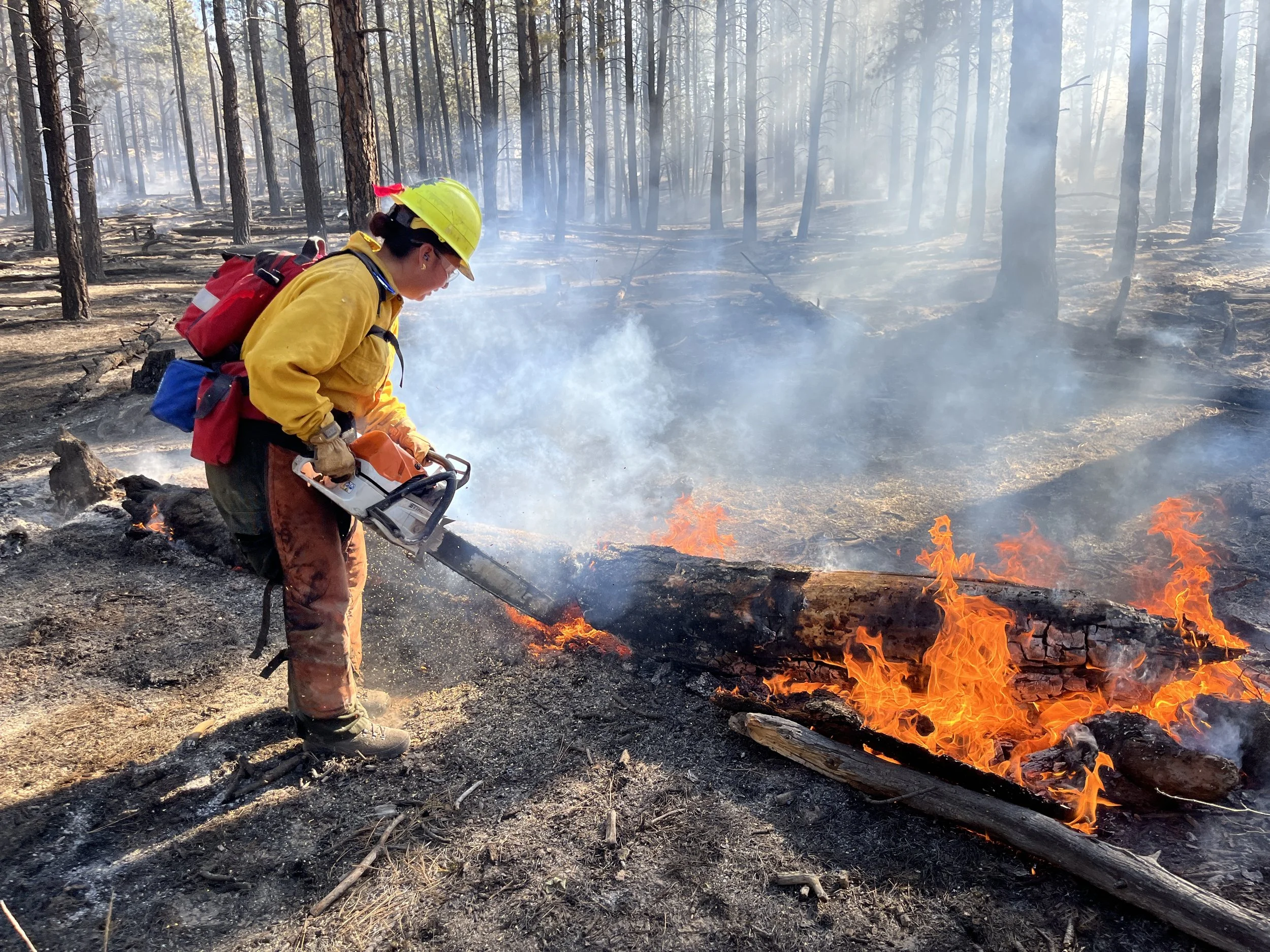
Crews complete natural resource management projects and participate in prescribed fire operations when conditions and weather permit. The program runs from August 19th - November 13th, and hiring is still open for positions in Mountainair and Santa Fe.
Contact Andrew Pearson (apearson@forestguild.org) with any questions. View the application to share with family and friends: Forest Stewards Youth Corps 2026 Fire & Fuels Crew Member Application: FALL.
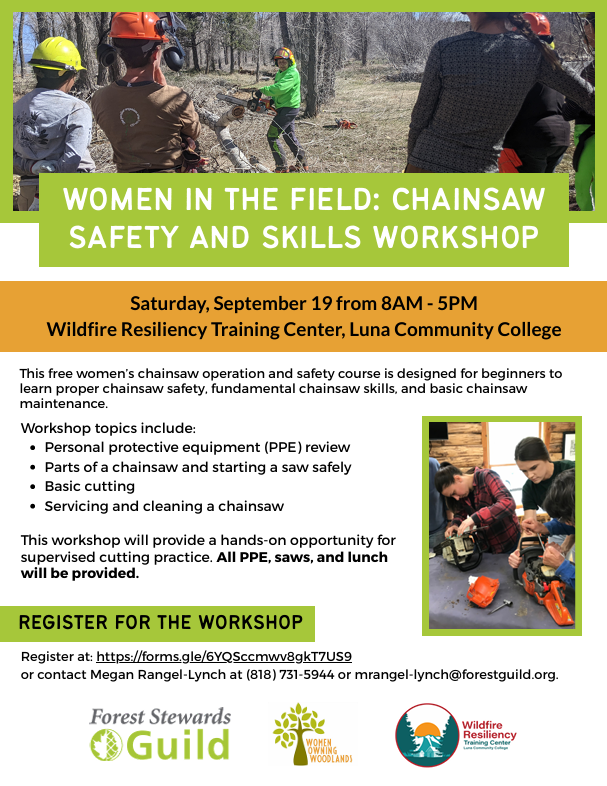
The Forest Stewards Guild is partnering with the Wildfire Resiliency Training Center to offer a Women's Chainsaw Operation and Safety Workshop. This Women Owning Woodlands (WOW) sponsored event is coming up on September 19 at Luna Community College.
This full-day, hands-on workshop is designed specifically for women and provides a welcoming, supportive environment to build confidence and develop practical chainsaw operation and safety skills. Whether you're interested in maintaining your property, reducing wildfire risk, or simply learning a new skill, this course is a great opportunity.
No prior chainsaw experience is required and all experience levels are welcome. Join for a day of learning, skill-building, and connecting with other women from across New Mexico!
New Mexico Wildland Urban Fire Summit
New Mexico's Wildland Urban Fire Summit (NM WUFS) is coming this fall, October 14–16, in Silver City, New Mexico. The Summit brings together community leaders, fire service professionals, nonprofit organizations, land managers, and federal, state, Tribal, and local government partners to share knowledge, strengthen partnerships, and advance wildfire resilience across the state.
This year's program will feature sessions on codes and standards for wildfire-adapted communities, youth engagement and workforce development, emerging technologies that support fire adaptation, and forest treatment and management strategies, along with many other timely topics.
Registration will open soon, and there is still time to submit a presentation proposal for the Summit's flash presentation session. If you have a project, partnership, or innovative effort related to this year's theme, "Adapting Together in a Changing Fire Ecosystem," consider sharing your work with attendees. See the call for presentations below for more information.