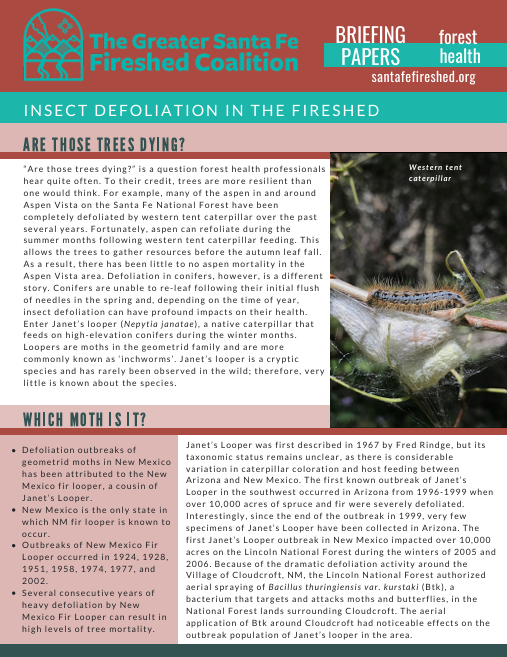
This insect is a strict defoliator, meaning that it feeds on the needles of trees; it does not feed on buds, it does not burrow into trees, it does not kill trees by girdling the tree stems. As the name suggests, Douglas fir is one of the hosts, but the tussock moth can also attack other trees such as spruce and true firs.
Douglas-fir tussock moths are defoliators. Does that mean they’re killing trees?
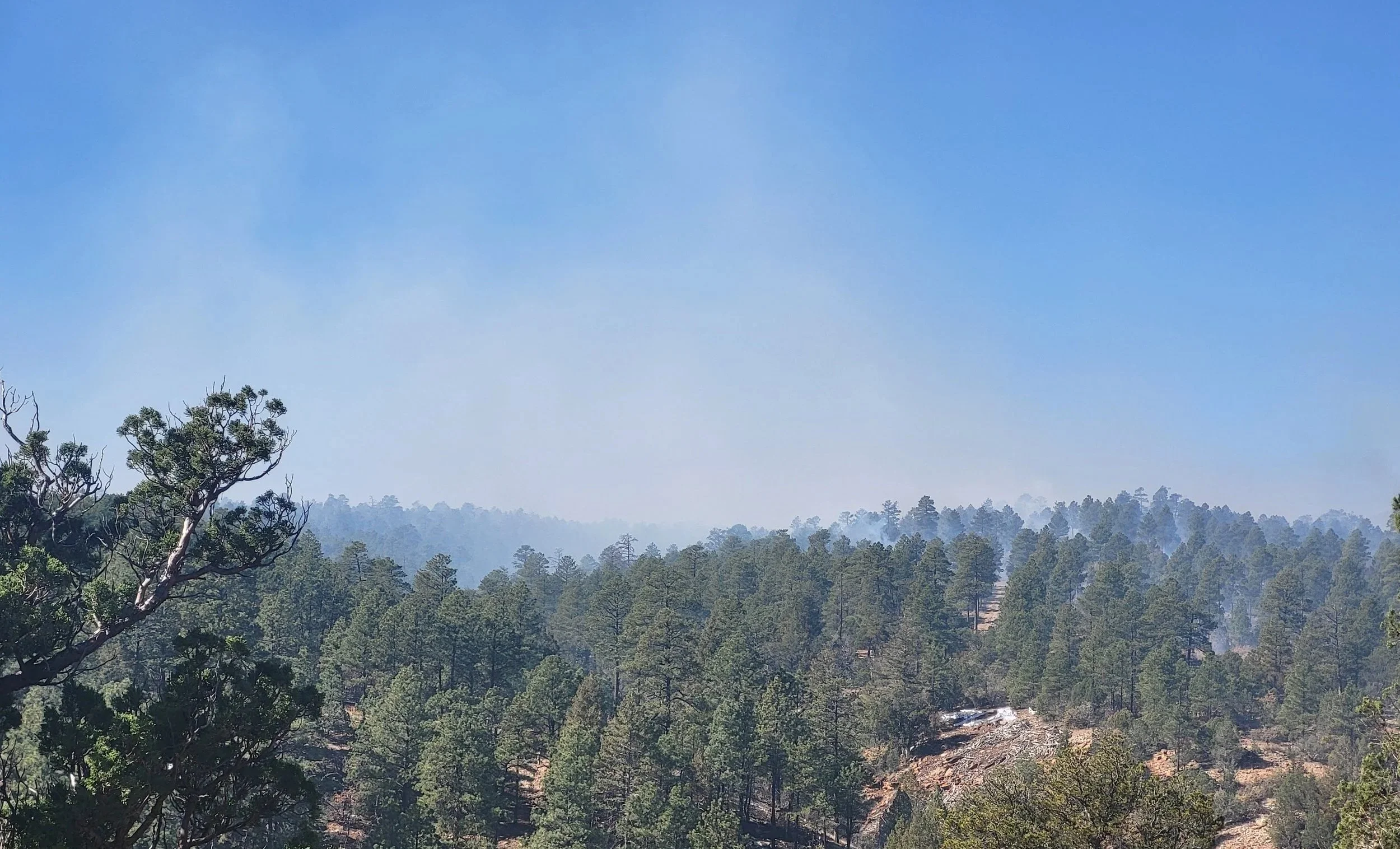
The affected trees, especially visible with their reddish-brown needles, are in different stages of defoliation. Many of them will die, and many of them will not.
Seeing the discolored tree canopies leads a lot of folks to wonder why the trees are dying. This has led to a lot of commentary, a lot of concern, and rightfully so; nobody wants to see the forest going from green to this. However, these needles are just responding to either one single bite or multiple bites from caterpillars.
So what is actually happening to the trees, post-defoliation? When we look closely, the buds of many impacted trees are, even now, starting to open. Defoliation stresses trees, but won’t necessarily kill them unless they are hit multiple years in a row. Victor Lucero has observed trees that are 80% defoliated, and the following year they break bud and are fine, given no other defoliation event by Douglas-fir tussock moth or another insect. That said, there will be some mortality. Driving through the forest, you’ll see some gray, dead trees; those will not come back, and those can be potential wildfire hazards.
What caused this outbreak in New Mexico?
It's important to note that whenever there's an outbreak of an insect, it usually is triggered by something else. In this case, there is a problem with too many trees per unit area (the forests are too dense) in many woodlands and forests. The reality is that this insect is responding to an abundance of food.
The Douglas-fir tussock moth has a high rate of mortality early after hatching because of either starvation or predation, but more so when needles aren't readily available. Our dense forests provide a veritable buffet table for the moths and provide a safe place for them to mate and lay their eggs, continuing the cycle. It’s common for Victor to count 50 trees in a 20-foot by 20-foot area, and that's just not sustainable for the viability of the tree or for the health of the entire forest.
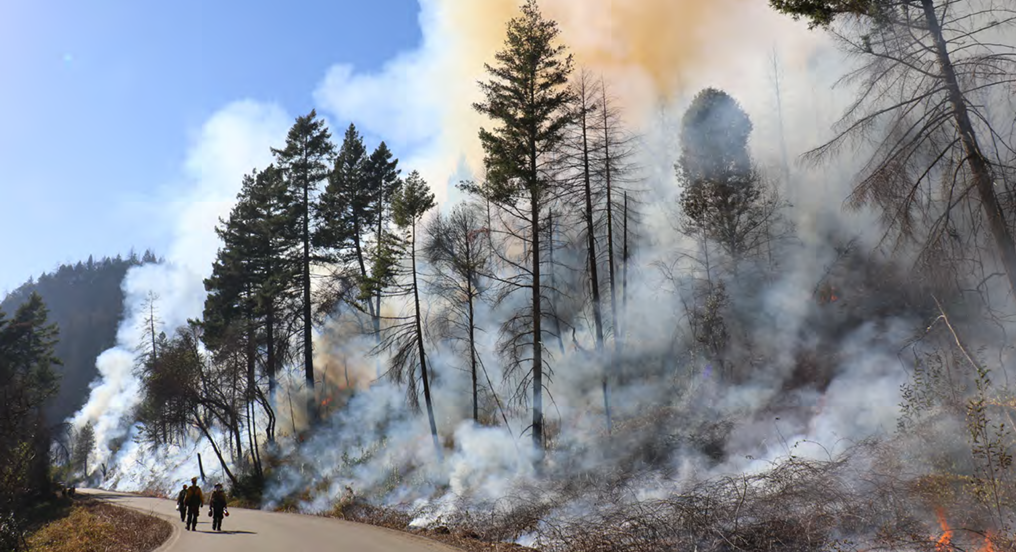
The Douglas-fir tussock moth has been attacking white fir because it is extremely overstocked in our high-elevation and northern forests. Fire, which we have long been unnaturally suppressing, belongs in our forests because it reduces the amount of fuel (flammable material) on the forest floor and keeps certain species of trees at levels that were historically documented. For white fir, historically, there were notably fewer trees per acre and were less widespread than they are now. The high density of a tree like white fir is supporting a very large population of the tussock moth which in turn is reaching the point of an outbreak wherever we see high densities of white fir.
How do we know how bad the outbreak is?
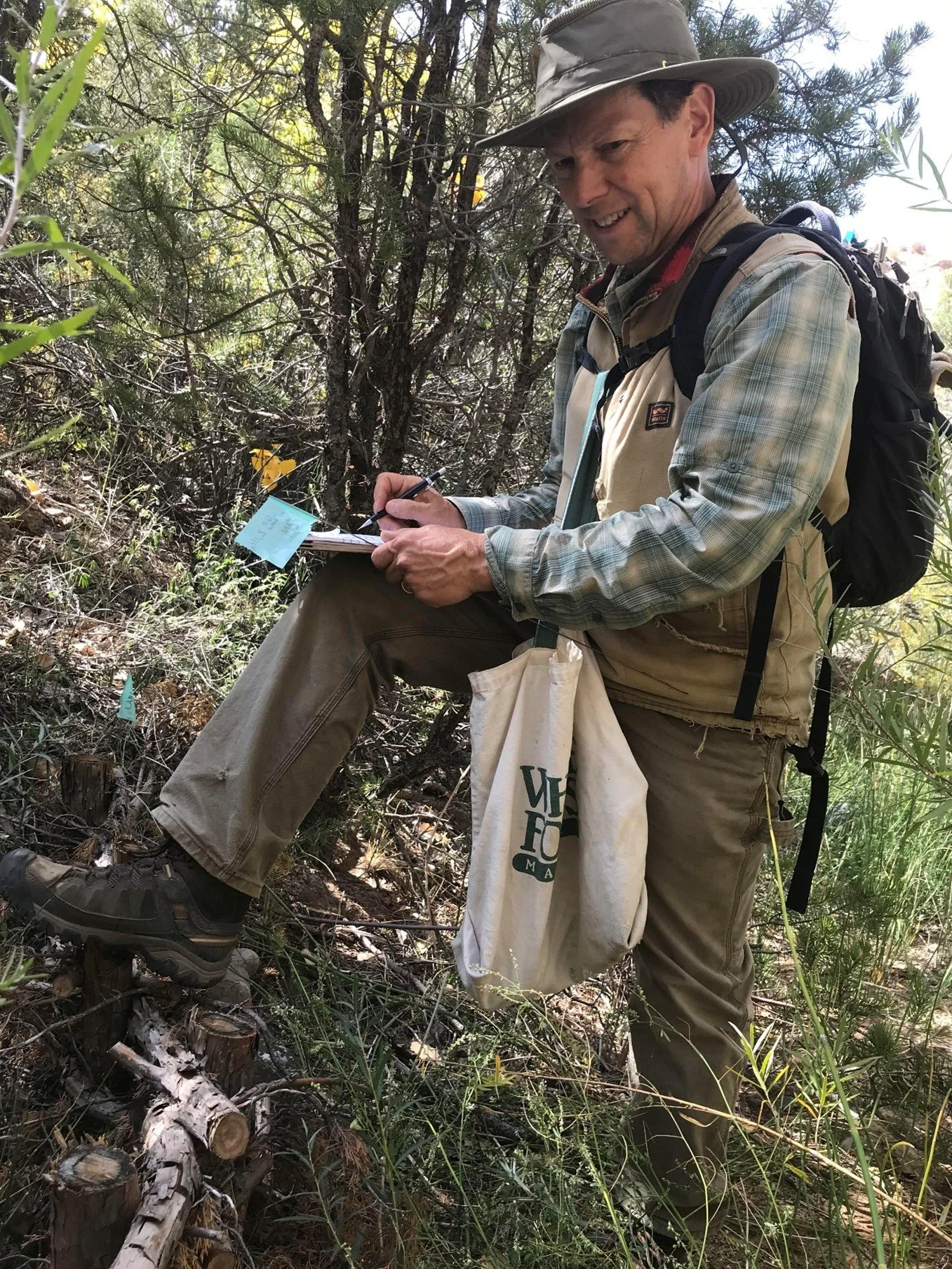
One way we monitor and track tussock moth activity is through pheromone traps. The traps have a lure and are coated with sticky glue impregnated with a sex pheromone to attract male moths (the females do not have wings and are not mobile). This acts as an early detection system – if we catch 25 male moths on average at a five-trap site, that triggers us to then go and subsequently count for egg masses.
Last year, in an area of Hyde Park (near Santa Fe Ski Basin), there were 300-400 egg masses in 29 trees. That’s a breaking point. Victor recently monitored six different sites in northern NM, from Black Canyon to the Aspen Ranch, and didn't find a single egg mass.